
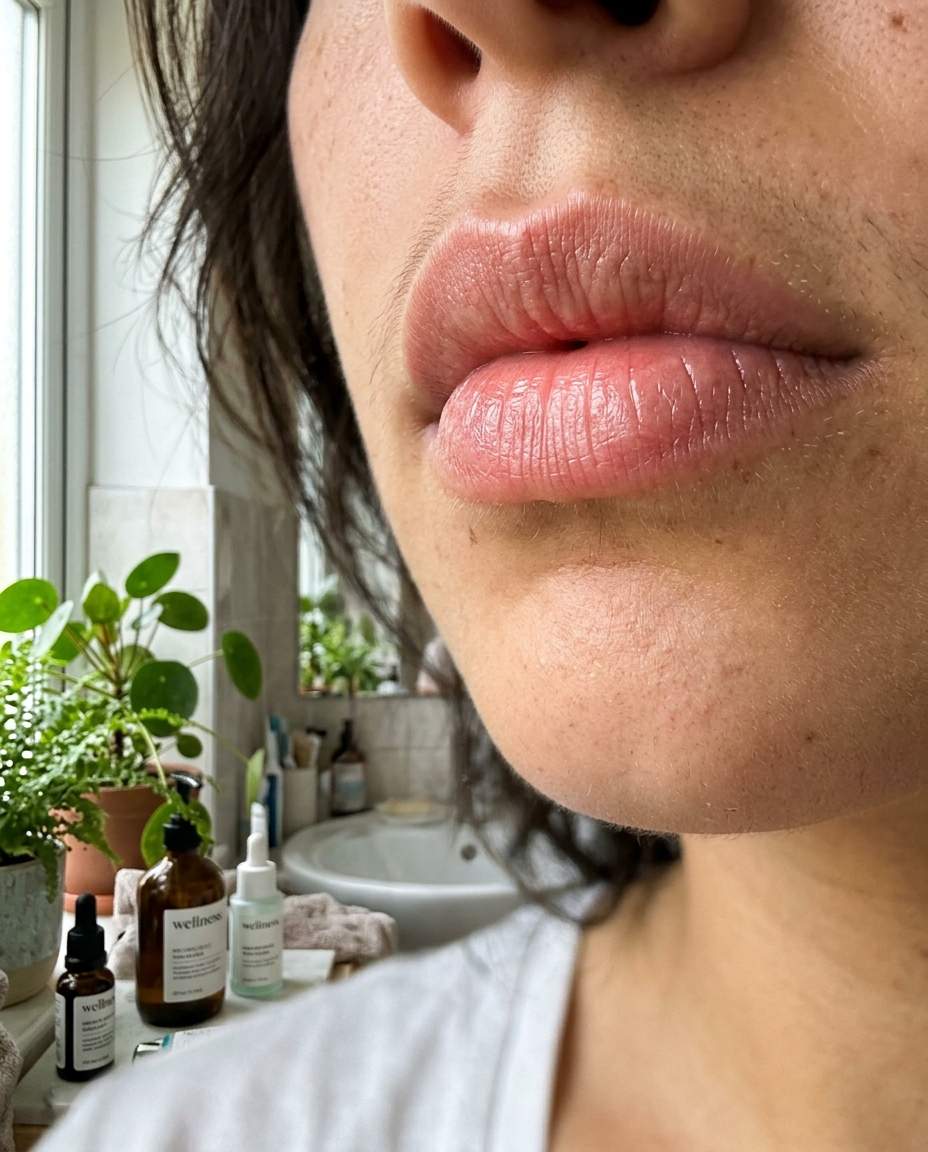
I caught my reflection in the mirror while brushing my teeth, startled by my unusually cracked and pale lips under the bright bathroom light.
Lips, often overlooked, can reveal surprising clues about our health and nutrient levels.
This list dives into the subtle and specific signals your lips might be sending about what your body truly needs.
1. Persistent Vertical Cracks Indicate Dehydration
Noticing consistent vertical cracks along your lips might seem like a minor cosmetic issue, but they often signify chronic dehydration or zinc deficiency.
I once underestimated this when my lips split painfully despite using heavy balms, only to realize I wasn’t drinking nearly enough water daily.
These small fissures are the skin’s response to a lack of moisture, which can be exacerbated by insufficient zinc that supports skin repair.
In colder months or dry climates, lips lose normal hydration faster, but the problem worsens when hydration isn’t replenished internally.
A common mistake is relying solely on lip balms containing occlusive ingredients like petroleum jelly that trap moisture outside but ignore internal fluid needs.
You might feel relief temporarily, but the underlying dryness persists.
The key is to increase daily water intake to at least 2.5 liters, complemented by a diet rich in zinc—think pumpkin seeds and lean meats supplying around 11mg for men and 8mg for women daily.
Using balms with hydrating ingredients like hyaluronic acid can support healing.
Listening to your lips’ cracked signals helps prevent pain and protects against infection.
2. Angular Cheilitis Reveals B-Complex Deficiency
That painful cracking at the corners of your mouth, known as angular cheilitis, can be perplexing and persistent.
When I experienced this, constant licking and topical creams didn’t solve it.
Digging deeper, I found a deficiency in B vitamins, particularly B2 (riboflavin) and B12, which are crucial for maintaining healthy mucous membranes.
Without enough B vitamins, the skin becomes fragile and susceptible to fungal infection, perpetuating the soreness.
Often mistaken for simple dryness or fungal infections alone, angular cheilitis reflects systemic problems.
For vegetarians or strict vegans, inadequate B12 intake is common because it mainly resides in animal products — ironically making their lip corners vulnerable.
Many rely too heavily on creams without addressing dietary causes.
A precise approach includes consuming fortified cereals or supplements supplying 1.3mg of riboflavin and 2.4mcg of B12 daily.
Topical antifungal treatments help if an infection is present, but replenishing B vitamins is essential for lasting healing.
Early recognition and targeted nutrition prevent chronic discomfort and scarring.
3. Pale Lips Suggest Iron-Deficiency Anemia

I noticed my lips losing color and looking unusually pale one morning, accompanied by fatigue and breathlessness during simple tasks.
This was more than tiredness; it pointed to iron-deficiency anemia affecting my blood’s oxygen transport.
Iron is vital for hemoglobin production, and when depleted, lips lose their usual rich pink hue as capillary oxygenation drops.
Many people overlook lip color changes, attributing pallor to makeup or lighting.
However, if your lips seem washed out along with common anemia symptoms like dizziness, it’s a red flag.
The tricky part is that not everyone manifests pale lips distinctly, so subtle observation is key.
Laboratory confirmation of hemoglobin below 12 g/dL for women or 13.5 g/dL for men calls for dietary shifts.
Increasing intake of heme-iron sources (like red meat or liver) complemented by vitamin C-rich foods to enhance absorption is essential.
For instance, 100mg of vitamin C per meal aids iron uptake significantly.
Monitoring lip color can provide a simple, early visual clue to this widespread deficiency.
4. Swollen, Puffy Lips Indicate Vitamin B5 Deficiency
After months of poor nutrition, I experienced swelling in my lips alongside a burning sensation that puzzled me.
This symptom stemmed from a deficiency in vitamin B5 (pantothenic acid), which plays a key role in synthesizing coenzyme A, essential for fatty acid metabolism and maintaining healthy skin barrier function.
Without enough B5, lips can become inflamed and swollen as cellular repair stalls.
Most people, including myself initially, fail to connect lip puffiness to nutrient shortage, assuming allergies or trauma.
However, unlike episodic allergic reactions, B5 deficiency results in gradual, persistent swelling, often with accompanying skin inflammation elsewhere.
Improving pantothenic acid intake through foods like avocados, sunflower seeds, and mushrooms—targeting around 5 mg daily—helps reduce swelling over weeks.
Avoiding excessive alcohol and processed foods is also important as these deplete B vitamins.
When lips swell without obvious cause, thinking beyond allergies to micronutrients can speed resolution.
5. Deep Vertical Lines Signal Collagen Deficiency
Looking closely in a daylight mirror, I was shocked to see deep, distinct vertical lines cutting across my lips — more than just fine wrinkles.
This sign pointed to low collagen production, often due to vitamin C deficiency or aging compounded by lifestyle factors like smoking.
Since collagen maintains skin’s firmness and elasticity, its absence manifests prominently around such delicate areas.
People often dismiss these lines as inevitable aging or dehydration, missing the nutritional angle.
Unlike superficial dehydration lines that fade with moisturizers, collagen deficiency lines persist and deepen, reflecting impaired skin regeneration.
This misunderstanding leads many to overuse lip-plumping products without addressing the root cause.
To rebuild collagen, consuming about 75-90 mg of vitamin C daily from citrus fruits, kiwis, or supplements is critical, along with amino acids supplied by proteins such as fish or chicken.
Additionally, topical application of vitamin C serums formulated at 15-20% concentration can stimulate local collagen synthesis.
Protecting lips from UV exposure with SPF 30+ chapsticks further preserves collagen integrity.
6. Bluish Lips May Reveal Circulation or B12 Issues

One chilly evening, my lips took on a subtle bluish tint that I hadn’t noticed before, causing immediate concern.
Bluish or purplish lips, especially in the absence of cold exposure, indicate low oxygen levels in the blood and can relate to poor circulation or vitamin B12 deficiency causing neurological and vascular issues.
This coloration, known as cyanosis, signals impaired oxygen delivery.
Many overlook gradual lip color changes, attributing them to makeup or lighting effects.
However, persistent bluish lips warrant medical evaluation as they can signal serious conditions from heart or lung problems to pernicious anemia.
People with B12 absorption issues, like those with pernicious anemia or gut disorders, are susceptible.
Correcting the underlying cause involves increasing vitamin B12 intake through injections or high-dose supplements (up to 1,000 mcg daily), and addressing cardiovascular health with exercise and diet changes.
Paying attention to this hue shift early can prevent progression and improve overall oxygenation, evidenced by lips returning to their healthy pink shade.
7. White Patches Indicate Oral Thrush or Vitamin Deficiency
I once noticed white, curd-like patches forming on my lips and at the edges of my mouth, which wouldn’t wipe away easily.
These lesions were oral thrush (candidiasis), a fungal infection often linked to iron, folate, or vitamin B deficiencies.
The immune system weakens in these states, allowing Candida to proliferate on mucous membranes like the lips.
Many assume these patches mean poor hygiene or contagion alone but ignore underlying nutritional gaps.
This delays proper treatment and leads to recurring outbreaks.
Immune deficiency due to lack of folate (around 400 mcg daily) or iron directly lowers resistance to opportunistic infections like Candida.
Treatment requires antifungal medications paired with diet enhancements rich in folate (dark leafy greens) and iron sources.
Ensuring adequate protein intake also supports immune restoration.
Observing white patches on lips early and correlating with dietary habits prevents chronic infection and discomfort.
8. Chronic Lip Peeling Indicates Essential Fatty Acid Deficiency
Despite rigorous lip care routines, I struggled with relentless lip peeling and flaking, often mistaking it for eczema or allergy.
This led me to discover an essential fatty acid (EFA) deficiency—particularly omega-3s—which play a crucial role in maintaining the skin’s lipid barrier and reducing inflammation.
Without enough EPA and DHA from fish oil or flaxseed, lips can become dry, itchy, and prone to peel.
A frequent error is overusing harsh scrubs or medicated ointments that strip natural oils further, worsening the condition.
Many suspect external irritants rather than an internal nutrient shortfall.
Unlike dehydration alone, EFA deficiency causes chronic barrier disruption resistant to topical hydration.
The solution is to consume at least 250-500 mg of combined EPA/DHA daily through fish oil supplements or fatty fish twice a week.
Complementing this with a topical balm containing ceramides and fatty acid–rich plant oils (such as rosehip or jojoba oil) helps restore lip skin resilience.
Recognizing persistent peeling as a nutritional sign speeds recovery.
9. Bright Red, Sore Lips Signal Niacin Deficiency
I was surprised when my lips suddenly became intensely red, inflamed, and tender, far beyond typical irritation from sun exposure or windburn.
This condition, sometimes called pellagra’s glossitis, signals a niacin (vitamin B3) deficiency impacting skin and nerve health.
Niacin deficiency disrupts energy metabolism and causes the lips and tongue to become painful, swollen, and bright red.
Most people dismiss such symptoms as allergies or cold sores, delaying diagnosis.
Since niacin is widely present in food, deficiency is rare but can occur in cases of alcoholism or malabsorption syndromes.
Ignoring these warning signs risks worsening systemic issues like dermatitis and neurological symptoms.
Boosting niacin intake via foods like turkey, peanuts, or supplements (around 16 mg daily for adults) helps rapidly reduce inflammation.
However, addressing underlying absorption problems and ensuring balanced B-complex vitamins intake is essential to full recovery.
If your lips turn bright red and painful without other causes, niacin deficiency should be considered.
10. Dry, Scaling Lips May Reflect Vitamin A Deficiency

On a trip to a remote area, my lips began drying out severely with scaling and rough texture that topical emollients barely softened.
This dryness relates to vitamin A deficiency, critical for maintaining mucous membranes and skin renewal.
Without enough vitamin A or its precursor beta-carotene (about 700-900 mcg/day), epithelial tissues like lips become keratinized and cracked.
People often mistake this for seasonal chapping or eczema, using steroid creams that can worsen the problem by thinning the skin.
Often, vitamin A deficiency occurs in contexts of malnutrition or fat malabsorption since it’s fat-soluble and requires dietary fat for absorption.
Incorporating vitamin A–rich foods like sweet potatoes, carrots, and liver, or carefully dosed supplements under medical guidance, restores skin smoothness over weeks to months.
Adding a balanced fat source such as olive oil during meals enhances absorption.
By respecting these cues from your lips, you can prevent chronic discomfort and maintain healthy skin barriers.




Leave a Reply