
Spring is the perfect season to bring fresh color and life into your environment with creative planter ideas.
Whether you have a spacious garden or a small balcony, these inspiring ideas show how to maximize space, combine textures, and use containers in imaginative ways for vibrant spring displays.
Choosing the Right Spring Planter Idea
Successful spring planter ideas solve common challenges like limited space, seasonal interest, and maintenance demands by choosing suitable plants and containers.
These ideas focus on elevating your décor with color, texture, and vertical or horizontal use of space, whether indoors or outdoors.
Before selecting a planter idea, consider factors like the amount of natural light available, space restrictions, climate conditions, and your available time for maintenance.
Your choice should balance aesthetic goals with practicality to ensure healthy plants thriving throughout spring.
1. Fragrant Hyacinths with Baby’s Breath in Wicker

Combining fragrant spring bulbs with delicate filler flowers can create volume and contrast in a portable indoor arrangement.
White wicker baskets are ideal decorative containers that highlight vibrant hyacinths, which offer color and scent, while baby’s breath surrounds them, adding airy softness.
Positioned near a window, natural light emphasizes flower texture and freshness, making this a great early spring planter that brightens interior living spaces.
To replicate this look, choose bulbs during peak bloom and loosely space baby’s breath around the edges to prevent overcrowding.
The basket handle not only adds charm but also makes the arrangement easy to move for optimal light exposure.
2. Tulip Bulbs in Clear Glass Fishbowls

Forcing tulip bulbs indoors using clear glass containers is an effective method to enjoy spring blooms before outdoor gardens awaken.
The transparency allows you to monitor root growth and water levels, while smooth river pebbles anchor the bulbs and promote drainage.
Individual spacing inside each fishbowl ensures root space, preventing crowding and encouraging healthy development.
This minimalist arrangement suits modern interiors flooded with natural sunlight, providing pastel hues and fresh living décor.
For best results, maintain water just below the bulb base and rotate containers regularly to encourage even growth.
3. Hanging Baskets with Pansies and Creeping Jenny

Maximizing vertical space through hanging baskets is an excellent solution for small porches or decks.
Geometric metal frames lined with coir liners support bright spring pansies paired with trailing golden creeping Jenny, which cascades and softens edges.
Spacing baskets to facilitate airflow combats moisture issues common in spring’s variable weather.
Using bold color paired with lush foliage textures provides both visual impact and practical benefits like preventing overcrowding and promoting airflow.
To extend bloom times, deadhead pansies regularly and ensure the baskets receive adequate sunlight.
4. Vertical Wall Planter for Fresh Herbs

Transforming exterior walls into vertical herb gardens conserves limited outdoor space while keeping culinary plants within easy reach.
Weathered wooden planter boxes with multiple tiers can house fresh spring herbs like mint, parsley, and chives.
Proper spacing allows airflow and healthy growth, reducing disease risks.
Mounting vertically beneath windows uses often-underutilized space elegantly.
For success, ensure herbs receive sufficient light and well-drained soil.
Regular trimming encourages bushier growth and prevents herbs from becoming leggy.
5. Elevated Easter Lily with Dusty Miller Contrast

Combining height and contrasting textures in pots creates indoor focal points during spring.
A tall Easter lily paired with silvery Dusty Miller adds layered visual interest, with the lily’s vertical form complemented by soft, textured foliage at its base.
Placing the arrangement in a glazed ceramic pot on a wooden stand further elevates its prominence.
Such combinations work well near sunlit windows where indirect light enhances the plant’s health and aesthetics.
Consider pots with drainage and stands to protect flooring, and choose foliage that complements seasonal blooms for year-round indoor appeal.
6. Layered Snake Plants with Grape Hyacinths

Creating visual balance indoors involves pairing hardy architectural plants with seasonal blooms.
Tall snake plants provide upright structure and year-round greenery, while grape hyacinths add soft color and delicate texture at the base.
A glossy white ceramic planter adds contrast and modern appeal, suitable for entryways or confined spaces.
This layering technique ensures lasting interest by combining low-maintenance foliage with spring flowering bulbs.
Proper plant spacing and a clean container with adequate drainage promote growth.
Re-potting bulbs yearly helps sustain vibrant blooms alongside the resilient snake plants.
7. Bold Foliage and Purple Alliums in Metal Planter

Urban planters benefit from architectural contrast using bold-leafed perennials and tall floral accents.
Chartreuse hostas form a lush textural base, while towering purple allium blooms add vertical drama.
Using a weathered rust-colored metal container contributes industrial charm and durability.
Such combinations thrive in patios or plaza settings where ground planting may be limited.
Selecting low-maintenance perennials ensures longevity; alliums’ globe-shaped flower heads bring seasonal interest in late spring.
Allow spacing for airflow to prevent fungal issues common in dense foliage.
8. Rustic Basket with Boston Ferns and Pink Tulips

Combining feathery ferns with seasonal flowering bulbs in woven baskets creates casual, naturalistic porch planters.
The dense Boston ferns provide a textured green backdrop, while pale pink tulips offer vertical pops of color throughout spring.
Choosing natural fiber containers like seagrass complements rustic settings and allows breathability.
Balance scale by matching container size to plant growth potential, leaving room to prevent crowding.
This mix delivers ongoing seasonal interest, as ferns maintain greenery when tulips fade.
Regular watering and indirect sunlight extend plant health in outdoor sheltered areas.
9. Woodland Terrarium with Moss and Spring Ephemerals

Terrariums offer a compact way to bring natural spring landscapes indoors or onto covered patios.
A clear glass and black metal frame container houses moisture-retentive moss, delicate early spring bloomers like Anemone or Hepatica, and natural elements such as twigs, simulating a miniature woodland.
This layered planting technique requires careful moisture control to avoid rot while maintaining humidity.
It suits small urban spaces where traditional gardening isn’t feasible.
Position terrariums in indirect sunlight and use opened vents if necessary to balance airflow and humidity.
10. Succulents in Hollowed Driftwood Planter

Repurposing natural driftwood as a container creates sustainable, low-maintenance planters ideal for succulent arrangements.
Succulents such as Echeveria and Sempervivum thrive in well-drained media, with their fleshy leaves contrasting the rough wood texture.
Adding coastal plants like sea thrift adds seasonal color.
This technique suits dry or coastal climates where drought tolerance is essential.
Close but not crowded spacing promotes airflow and prevents rot.
Position in full sun, and incorporate shallow soil layers to mimic natural rocky habitats, enhancing the planter’s aesthetic and success.
11. Combined Water Feature and Layered Greenery

Integrating a water fountain within a planter bed elevates spring garden ambiance, providing soothing sound and vertical interest.
Surrounding the base with shade-tolerant hostas and white impatiens creates textural contrast and continuous blooming.
Trailing ivy and Boston ferns soften hard edges and add height above.
This combination is suitable for shaded or partially shaded courtyards.
It solves space limitations by layering plant heights around a feature.
To maintain health, balance watering between fountain seepage and soil moisture, and select plants that tolerate mild humidity.
12. Japanese Maple with Hellebores on Balcony

Small ornamental trees like Japanese maples provide year-round structure for balcony planters, combining well with groundcover plants like hellebores to maximize space.
The maple’s colorful lobed leaves and twisted trunk add sculptural interest, while hellebores offer early spring blooms and rich foliage at the base.
Using a sleek matte black container emphasizes foliage colors and fits urban aesthetics.
Consider container depth for root growth and ensure adequate drainage.
Layering plants with staggered heights creates fullness without overcrowding, making this combination ideal for limited balconies.
13. Concrete Planter with Ornamental Grasses and Tulips

Contrasting plant textures enhance minimalist containers, like pairing fine-textured Festuca glauca with upright, elegant white tulips in concrete planters.
The grasses provide a dense, spiky base that highlights the tulips’ smooth petals, creating visual interest through texture and form.
Concrete containers are durable and complement modern garden styles, suited for small patios.
Maintain proper spacing to allow air circulation and healthy root development.
Select tulip varieties compatible with your climate, and trim grasses if they encroach on blooms to maintain balance.
14. Classical Urn with White Hydrangeas and Ivy

Using stately urn planters elevates spring displays, especially when combining large flowering shrubs like hydrangeas with trailing vines such as English ivy for cascading movement.
This creates a dynamic presence ideal for formal gardens or entryways.
Ornamental urns, made of weathered stone or metal, provide a timeless backdrop that contrasts with fresh spring blooms.
To maintain, regularly water hydrangeas during bloom, and prune ivy to avoid overtaking flowers.
Position urns in locations where their height and trailing elements can be appreciated.
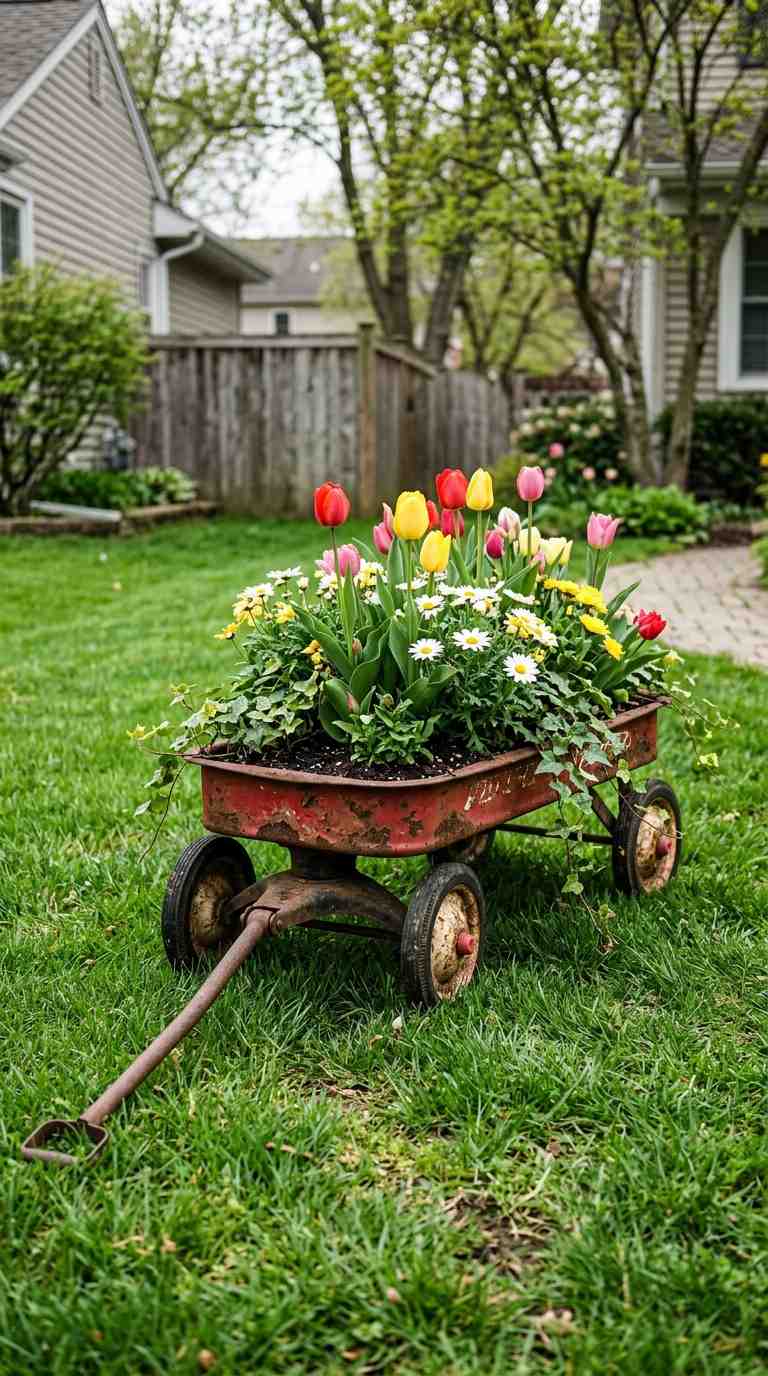
15. Repurposed Red Wagon with Mixed Spring Blooms

Upcycling vintage objects like metal wagons as planters adds charm and mobility to garden design.
Filling the wagon densely with straightforward spring bulbs and flowers,tulips, daisies, and trailing ivy,creates a colorful, compact display.
This rustic container works well on lawns or patios and is particularly useful for shifting seasonal color.
To prevent overcrowding, space bulbs and plants evenly and monitor moisture due to limited drainage.
Adding trailing plants softens hard edges, making this approach flexible and dynamic.
16. Succulent Fire Pit Planter

Converting stone fire pits into succulent planters repurposes unused garden features into thriving, drought-tolerant displays.
Succulents such as Echeveria, Sedum, and Sempervivum arranged densely form a moisture-conserving dome with varied colors and textures.
This low-maintenance option suits areas with limited watering or sunny spots.
Ensure the container has adequate drainage, and use well-draining soil to prevent rot.
Dense planting minimizes weeds and maximizes aesthetic impact, ideal for sustainable spring garden upgrades.
17. Stacked Painted Tires as Vibrant Vertical Planters

Upcycling old tires by stacking and painting them in bright colors offers an imaginative vertical planting solution for limited gardens.
Filling tires with colorful snapdragons and marigolds provides dense, bold spring blooms with good airflow between tiers.
This pyramid structure adds height and visual interest while maximizing space.
Use untreated tires for safety and drill drainage holes to avoid waterlogging.
Regular deadheading encourages prolonged bloom cycles in this budget-friendly, eco-conscious setup.
18. Urban Hanging Wire Baskets with Snapdragons

Employing hanging wire baskets lined with coir is an efficient way to add spring color and greenery in small urban outdoor spaces.
Tall red snapdragons offer vertical bloom spikes that create eye-catching splash without occupying floor area.
Grouping several baskets on metal frames creates cohesive continuity across patios or cafés.
For longevity, ensure baskets have good drainage and sunlight exposure, and water consistently.
Combining striking flowers with lush foliage balances aesthetics and plant health in limited environments.
19. Teapots as Indoor Crocus Containers

Repurposing vintage or mismatched teapots as containers allows compact, whimsical indoor spring planting, featuring early bloomers like crocuses.
The varied textures and colors of ceramic teapots add charm while showcasing vibrant purple, yellow, and white crocus flowers.
Maintain healthy growth by spacing bulbs adequately and providing well-drained soil.
Position planters on bright windowsills to optimize light.
This upcycling approach suits small interiors or windows lacking outdoor garden space, offering affordable decorative spring greenery.
20. Birdbath Planter with Forget-Me-Nots and Violas

Elevating spring blooms on unique containers like stone birdbaths utilizes vertical space while adding garden focal points.
Dense plantings of blue forget-me-nots and white violas create a soft color palette with moss accents enhancing natural woodland appeal.
Suitable for shaded or sun-dappled areas, this compact arrangement benefits from seasonal timing to ensure full floral displays.
Moss helps retain moisture and integrate planter with surroundings.
Regular thinning prevents overcrowding, keeping blooms vibrant throughout spring.
21. Galvanized Metal Tub with Mixed Bulbs

Reusing galvanized metal tubs for spring planters blends vintage charm with functional outdoors planting.
Daffodils and hyacinths combined in a single basin create contrasting color and texture, maximizing impact within compact spaces.
Metal tubs are durable but require drainage holes to prevent root rot.
Even spacing of bulbs ensures adequate air circulation and bloom success.
This container style suits porches or narrow garden spots and works well with multiple bulb varieties to extend flowering periods.
22. Clustered Primroses in Terracotta Pots

Grouping terracotta pots of varying sizes filled with colorful primroses creates a layered spring display ideal for patios or entryways.
The natural terra cotta material offers breathability and a rustic aesthetic highlighted by mineral deposits and weathering.
Primroses flower early and tolerate cooler spring temperatures, extending seasonal color.
Even plant spacing maximizes bloom coverage and avoids root crowding.
This modular setup allows stacking or arrangement flexibility to fit limited outdoor spaces or enhance focal points near entrances.
23. Yellow Rain Boots as Fence-Mounted Planters

Upcycling rubber rain boots as brightly colored vertical planters transforms plain fences into playful garden features.
Vibrant blue lobelia fills the boots, providing cool color contrast and elevated blooms close to eye level.
Mounting boots securely on fence slats optimizes otherwise unused vertical space, especially in small or uneven gardens.
Ensure drainage holes prevent waterlogging in the boots.
This technique offers a whimsical way to enliven fences and increase planting area during early spring blooms.
24. Copper Planter with Boston Ferns and Azaleas

Using elongated copper planters for spring displays maximizes narrow outdoor spaces such as walkways.
Pairing evergreen Boston ferns with bright magenta azaleas balances feathery foliage and clustered flowers, creating continuous seasonal interest.
Copper’s warm metallic glow complements plant colors and withstands urban conditions.
Ensure even light and watering for both plant types.
This setup suits early to mid-spring by combining hardy evergreens with showy seasonal blooms, enhancing entrances or urban patios.
25. Indoor Vertical Felt Planter with Ivy and Pansies

Vertical fabric pocket planters enable growing spring flowers and trailing vines inside small urban homes when outdoor space is scarce.
Combining bright yellow pansies with trailing English ivy offers colorful blooms and textured greenery.
Felt pockets provide good drainage and aeration, preventing waterlogging and root diseases common in dense containers.
Situate near industrial-style windows for abundant natural light.
Regular watering and fertilizing maintain health.
This is a practical, space-saving approach ideal for brightening small interiors during spring.
26. Step Ladder Display with Pansies and Herbs

Repurposing wooden step ladders into multi-tiered planter stands organizes plants vertically, maximizing limited outdoor garden areas.
Arranging pansies and culinary herbs like thyme and mint improves accessibility and provides diverse color and texture.
Spacing pots on each step promotes airflow and light penetration.
Use durable containers such as terracotta and galvanized metal for longevity.
Position in partial sun for optimal pansy blooming and herb growth, making this a functional and visually appealing spring planter solution.
27. Wildflower Barrel Planter for Pollinator Gardens

Creating informal wildflower displays in rustic wooden barrels promotes biodiversity and supports pollinators during spring.
Combining hardy species such as poppies, daisies, cornflowers, and California poppies produces a dense, vibrant meadow effect.
This low-maintenance approach adapts to variable spring conditions by using resilient native or well-adapted plants.
Maintain healthy spacing to avoid overcrowding, while the vintage barrel container adds rural charm.
Position in full sun for extended color and ecological benefits.
28. Brass Wall-Mounted Planter with Ranunculus

Wall-mounted metal planters enable growing delicate bulbs like white ranunculus in narrow spaces, combining vertical gardening with modern aesthetics.
The warm brass tone contrasts with natural stone walls, enhancing seasonal floral displays.
Narrow but deep planter design supports root systems without consuming ground space.
Position for morning or afternoon sun, and maintain moist but well-drained soil.
This approach is great for patios or homes with limited beds, bringing spring blooms into immediate viewing height.
29. Urban Window Box with Ranunculus and Alyssum

Window boxes offer classic urban spring planting solutions by layering vibrant blooms and cascading filler flowers.
Rich red ranunculus paired with trailing white alyssum delivers contrast in color and texture while optimizing narrow ledge space.
Proper spacing in a modern metal container ensures airflow and prevents overcrowding, encouraging full bloom.
Position window boxes in full sun to part shade for best growth.
Regular deadheading and watering will prolong seasonal impact and curb appeal.
30. A-Frame Vertical Wooden Planter with Petunias

Maximizing limited ground space through tiered vertical wooden planters creates dynamic spring displays with layered blooms and foliage.
Pink petunias pop against trailing English ivy, combining upright and cascading forms to enrich outdoor patios.
Weathered wood adds rustic character and durability.
Spacing in multiple tiers improves airflow and access for care.
This setup suits modern backyard corners or decks, delivering vibrant seasonal color while solving common small garden space challenges.
Leave a Reply