
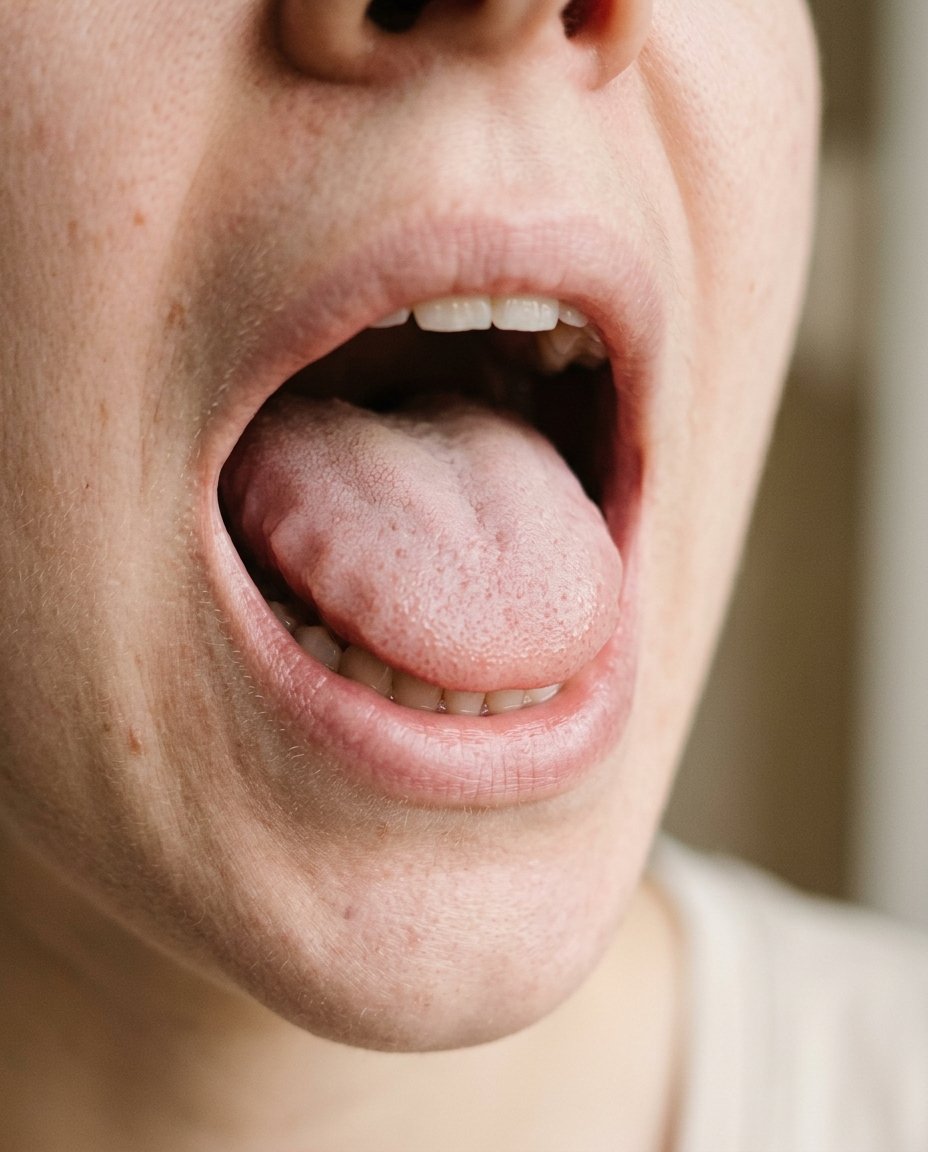
I sat at my kitchen table, sipping coffee and suddenly noticed a strange soreness on my tongue that wasn’t just irritation from the morning’s scalding brew.
That subtle discomfort led me down a path of discovery about how my tongue was silently signaling a deeper nutritional problem—vitamin B12 deficiency.
If you’ve ever ignored tongue symptoms thinking they’re minor, this guide reveals eleven specific red flags that your body is quietly sending.
1. Glossy, Smooth Tongue Surface
One of the most telling signs of vitamin B12 deficiency I discovered was my tongue’s glossy appearance, almost like the texture had been polished smooth by an invisible force.
This happens because the vitamin shortage leads to the atrophy of papillae, those tiny bumps on the tongue surface responsible for texture and taste sensitivity.
It’s often overlooked since we mistake a smooth tongue for cleanliness or hydration rather than a deficit in essential nutrients.
When I first noticed this change, I assumed it was due to dehydration or mouthwash overuse until a visit to my doctor pointed me toward B12 as the culprit.
People often confuse this sign with fungal infections or glossitis caused by other reasons, leading to ineffective treatments.
The critical takeaway is to examine your tongue’s surface regularly and consider nutritional causes if the texture feels unusually slick or bald.
Address this by tracking your dietary intake, especially if you follow a vegetarian or vegan lifestyle where B12 deficiency is more common.
Integrating B12-rich foods like clams, fortified cereals, or supplements that provide 500 mcg daily can help reverse the surface changes.
Remember, a smooth tongue rarely self-corrects without addressing the underlying deficiency, so proactive testing is key.
2. Persistent Tingling or Numbness
A subtle but persistent tingling sensation in my tongue and lips was a silent alarm I initially dismissed as anxiety-induced paresthesia.
However, this sensation is a classic neurological manifestation of B12 deficiency, where nerve sheath damage begins to impair sensory feedback.
Unlike transient tingling from cold or stress, this symptom lingers and may escalate as the deficiency worsens.
What I learned is that many people mistake it for dental irritation or allergic reactions, often applying topical anesthetics or avoiding spicy food without relief.
This confusion delays the critical step of checking one’s vitamin levels.
If you experience ongoing numbness or prickling, especially alongside other symptoms, it suggests your nervous system is impacted, not merely superficial causes.
You should seek a blood test measuring serum B12 and methylmalonic acid to clarify deficiency status.
Early intervention with high-dose oral or intramuscular B12—ranging from 1000 mcg injections weekly for several weeks—can halt nerve damage progression.
Lingering numbness after supplementation still warrants medical supervision to prevent permanent loss.
3. Unexplained Tongue Discoloration Spots

During a random self-check in daylight, I noticed faint patches of dark purple and red scattered unevenly across my tongue—a puzzling and alarming sight.
These discoloration spots can be a sign of submucosal hemorrhages caused by B12 deficiency-induced megaloblastic anemia, where fragile blood vessels break under minimal trauma.
This often escapes notice because minor tongue spots are frequently attributed to trauma from biting or infections.
My mistake was initially dismissing these isolated spots as a reaction to acidic foods or small burns, which delayed seeking professional advice.
Recognition requires knowing these spots rarely fade in a few days and often accompany other systemic symptoms like fatigue or pallor.
If these patches persist or multiply, they’re a signal your body lacks critical B12 support.
The practical step is to document spot size and color intensity with photos and consult your healthcare provider for a complete blood panel.
Supplementation adjusted to address the anemia—often cobalt-based B12 at 1000 mcg daily—promotes vascular recovery visible over weeks.
Ignoring these spots risks worsening vascular and nerve damage beyond the tongue.
4. Difficulty Swallowing or Sore Throat
I noticed my throat felt raw and swallowing became a chore, accompanied by a dull ache radiating to my tongue.
This symptom turns out to be a silent warning that vitamin B12 deficiency is causing glossitis-associated swelling and inflammation that extends beyond the tongue to the oropharynx.
Many people confuse this with viral infections or acid reflux, leading to ineffective treatments.
This confusion stems from the non-specificity of soreness and swallowing difficulty that is common in many illnesses.
However, the hallmark here is that traditional remedies don’t relieve symptoms and the soreness often recurs alongside tongue changes.
Without addressing the root B12 shortage, damage worsens and increases risk of secondary infections.
To counter this, maintaining a diet rich in animal proteins or fortified plant foods combined with immediate medical B12 supplementation is essential.
Particularly, intramuscular injections administered weekly can reduce inflammation rapidly.
Monitoring swallowing difficulties closely is key because they hint at systemic involvement beyond oral symptoms.
5. Tongue Swelling Without Injury
One morning I woke up surprised by noticeable swelling of my tongue, without biting it or any obvious trauma.
Vitamin B12 deficiency can cause this unexplained swelling due to the accumulation of inflammatory cells and tissue hypoxia from poor oxygen delivery.
It is a silent sign often missed because people attribute tongue swelling to allergies or infections and take antihistamines unnecessarily.
A common pitfall is dismissing recurrent tongue swelling episodes as benign or sporadic, ignoring the possibility of a nutritional deficiency at play.
The difference here is swelling persists or fluctuates with fatigue and other systemic symptoms like pallor or irritability.
This subtlety requires awareness and observation over time rather than reactive treatment.
The best practice is to document instances and seek a targeted blood test for B12 and iron levels.
Using prescribed B12 supplements—oral doses starting at 500 mcg twice daily or injections depending on severity—helps reduce inflammation and tissue edema.
Regular follow-up is necessary to monitor if swelling resolves or if other causes emerge.
6. Changes in Taste Perception

I distinctly remember my morning coffee tasting flat and somewhat metallic for several days, a strange alteration that perplexed me.
Vitamin B12 deficiency affects the taste buds by causing atrophy of the papillae and disrupting normal nerve function, leading to hypogeusia or dysgeusia (reduced or distorted taste).
This subtle shift usually flies under the radar because people rarely link taste changes with vitamin deficiencies and instead blame the food quality.
Many underestimate this sign, assuming taste changes simply correlate with temporary illnesses or medications, missing the underlying nutritional imbalance.
People also fail to notice because taste changes develop gradually and the brain adapts, making alterations less consciously obvious.
However, persistent taste modification—especially paired with other tongue symptoms—should raise suspicion.
To support taste function, incorporate reliable B12 sources such as beef liver (rich in 70 mcg per 100 grams) or daily cyanocobalamin supplements of at least 1000 mcg for absorption assurance.
Additionally, maintaining proper oral hygiene without over-brushing helps preserve delicate papillae.
If taste changes persist post-supplementation, consult specialists for further neurological evaluation.
7. Chronic Burning Sensation
After several weeks of ignoring a mild tongue burn, I realized it was a chronic, persistent discomfort unlike a mild spice irritation.
This burning sensation is a distinctive neuropathic symptom caused by B12 deficiency-induced nerve damage leading to burning mouth syndrome.
It is often missed because patients and clinicians attribute burning to oral thrush, dry mouth, or stress.
The complexity arises since burning may fluctuate throughout the day and worsen with acidic or spicy foods, causing people to self-treat with topical gels or mouth rinses without addressing root causes.
The key mistake is overlooking the nutritional history and neurological involvement that differentiate B12-related burning from other causes.
You can combat this symptom effectively by ensuring adequate B12 supplementation—sublingual methylcobalamin forms at 1000 mcg effectively target nerve repair—and improving overall dietary quality.
Additionally, avoiding irritants like tobacco and alcohol can prevent symptom exacerbation.
Persistent burning warrants follow-up with a neurologist to assess nerve recovery progress.
8. Tongue Cracking and Fissures
Noticing fine cracks and fissures on my tongue’s surface startled me and made me wonder if it was a harmless dry mouth issue.
Tongue fissuring is yet another oral sign of vitamin B12 deficiency, where deficiencies impair mucosal regeneration and increase susceptibility to minor trauma.
Such fissures are often superficial but provide entry points for bacteria, further complicating oral health.
Most people assume tongue fissures come solely from dehydration or geographic tongue, delaying crucial investigation into nutritional status.
I learned that fissures tied to B12 deficiency tend to be deeper, more persistent, and often worsen alongside soreness or swelling.
Ignoring fissures risks secondary infections and prolonged discomfort.
Maintaining adequate hydration and using precise B12 supplementation protocols—such as intramuscular hydroxocobalamin doses spaced weekly—improves mucosal health.
Using gentle tongue scrapers (silicone, not metal) post-supplementation can also aid recovery.
Consistency in supplementation and oral care is essential to close fissures sustainably.
9. Pale or Yellowish Tongue Hue

One evening under warm 3000K lighting, my tongue appeared unnaturally pale with a faint yellow tinge that I hadn’t noticed under natural daylight.
This discoloration often reflects underlying anemia caused by vitamin B12 deficiency, where reduced red blood cell production diminishes oxygen delivery and impacts tongue coloration.
The yellowing can also signal mild jaundice from increased breakdown of defective blood cells.
Many attribute pale or yellow tongues to poor oral hygiene or mild infections, missing the link to blood health.
I initially tried stronger mouthwashes and whitening products without relief, illustrating a common but fruitless approach.
The essential insight is to consider systemic causes when tongue color shifts persist beyond normal variations.
Precise diagnosis via complete blood count and B12 serum assays is vital.
Treatment typically involves restoring vitamin B12 levels through high-dose oral supplements or injections around 1000 mcg thrice weekly until blood counts normalize.
Avoid self-diagnosis; always involve your healthcare provider to monitor color change resolution.
10. Increased Sensitivity to Temperature
I once startled when a sip of lukewarm tea suddenly felt burning hot on my tongue, a sharp sensitivity that made eating uncomfortable.
This increased temperature sensitivity is caused by disrupted nerve signaling in vitamin B12 deficiency, rendering the tongue hyper-reactive to stimuli.
This sign is subtle and often confused with mouth ulcers or nervous hypersensitivity.
People typically overlook this symptom since it varies daily and seems linked to food or drink temperature fluctuations.
The risk is escalating nerve damage when one ignores or masks symptoms with topical analgesics rather than nutritional support.
I learned to track temperature pain intensity alongside dietary patterns to distinguish this from other causes.
The recommended approach involves timely B12 correction, ideally with sublingual forms like methylcobalamin that directly aid nerve repair at doses of 1000 mcg daily.
Avoiding extreme hot or cold foods during therapy can minimize discomfort.
Monitoring the gradual return of normal sensation helps gauge treatment effectiveness.
11. Recurrent Infection-Prone Tongue
I was surprised that my tongue became a frequent target for oral thrush infections despite rigorous oral hygiene routines.
Vitamin B12 deficiency weakens immune defense and disrupts the normal flora balance on the tongue’s surface, making recurrent fungal or bacterial infections more likely.
This is an insidious sign because infections are often treated symptomatically without exploring the underlying deficiency.
Many people mistakenly attribute infections to medication side effects or poor brushing technique, ignoring nutritional immunology.
I learned that stubborn infections alongside other tongue symptoms strongly hint at compromised systemic health and nutrient insufficiency.
Early nutritional intervention reduces dependence on repeated antimicrobial treatments.
Treating this requires consistent oral hygiene coupled with adequate B12 restoration, preferably via injections in persistent deficiency cases.
Incorporating probiotics and maintaining a balanced diet rich in antioxidants supports microbial balance and recovery.
If infections recur after supplementation, consult your healthcare provider for further immunological assessment.




Leave a Reply