

Sitting in a cheap chair for ten hours a day will ruin your back and kill your focus. You need a setup that supports your posture while staying out of the way of your workflow. This list of music producer chairs covers everything from high end ergonomic builds to budget options that actually last. You will find the right seat to keep you comfortable during those long mixing sessions.
1. Ergonomic Mesh Task Chair
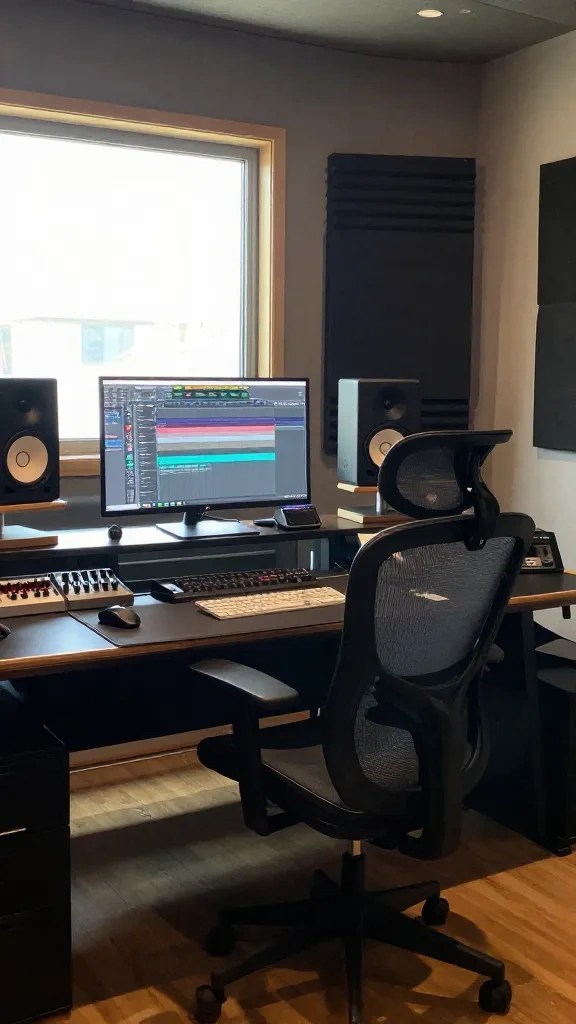
Spending ten hours straight in a basement studio can turn your back into a literal knot if you don’t have proper airflow. When you’re deep in a mix, your body heat builds up and a leather seat quickly becomes sticky and uncomfortable. Mesh task chairs solve this by letting your skin breathe while providing firm, springy support that doesn’t sag over time.
These chairs usually feature a high tension mesh back that conforms to your spine’s natural curve. This design keeps your posture upright so you aren’t slouching toward your studio monitors during long vocal tuning sessions. The material is durable enough to handle years of constant use without losing its shape or trapping dust like thick fabric cushions do.
To get the most out of this setup, look for a model with flip up arms. This is a huge deal for guitarists and bass players who need to move their instruments freely without banging into the chair frame. You can keep the arms down while clicking through your DAW, then tuck them away when it is time to record a take.
2. High Back Executive Chair
| Feature | Executive Chair | Mesh Task Chair |
|---|---|---|
| Back Height | Full head and neck support | Mid-back support |
| Padding | Thick foam or leather | Thin breathable fabric |
| Aesthetics | Professional studio look | Modern office look |
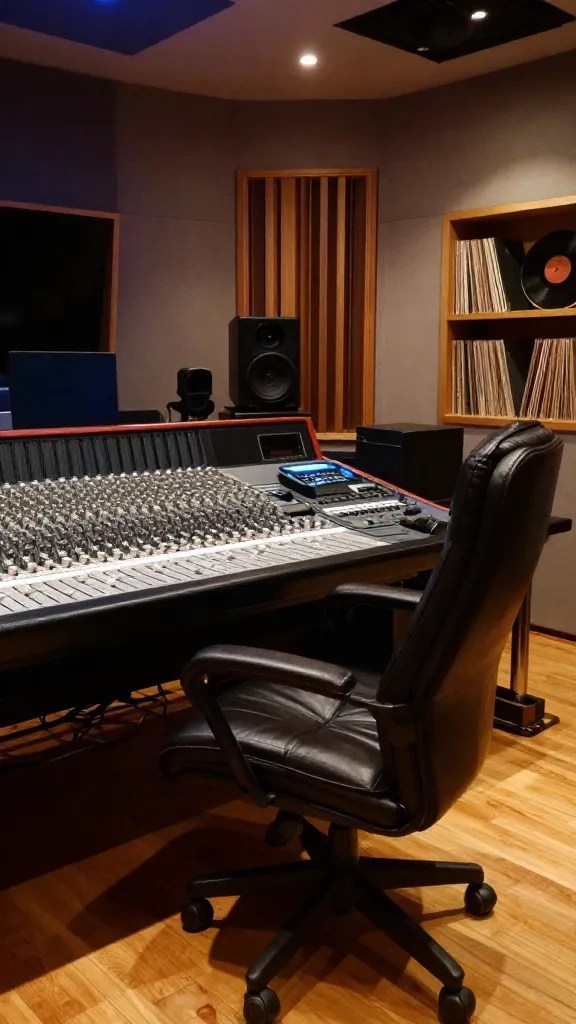
When you’re deep in a mixing session for six hours straight, your upper back and neck usually take the most heat. A high back executive chair is built to catch your head when you lean back to listen to a playback, which keeps your spine from screaming.
These chairs often use thick bonded leather or high density foam that feels much more substantial than a standard office seat. The extra padding helps dampen some vibrations from your sub if you sit close to your desk, plus it just looks authoritative in a studio setting.
You should look for models with flip up arms so they don’t hit your MIDI controller or guitar body while you play. Having that extra headrest space means you can actually relax your neck muscles while focusing on fine EQ adjustments.
3. Gaming Chair for Long Sessions
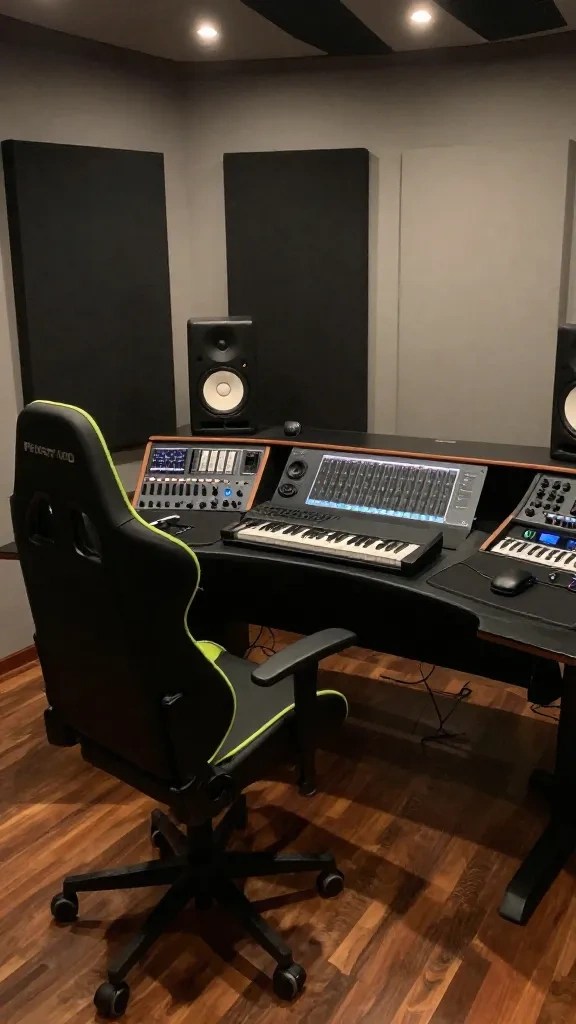
A high quality gaming chair is actually the smartest move for producers who spend ten hours straight in the box. These seats are built for professional streamers who don’t move for half a day, so they handle the physical toll of a long mix session better than most office furniture.
The high back design supports your entire spine and keeps your shoulders from slouching while you’re reaching for your MIDI controller. Look for models with 4D armrests because you can drop them down or swivel them out of the way when you need to play guitar or bass.
Most of these chairs use cold-cure foam which stays firm and keeps its shape for years instead of sagging after a month of heavy use. The built-in neck pillows and lumbar cushions are lifesavers when you’re deep into a vocal editing marathon and forget to check your posture.
You can lean the backrest almost flat during long rendering breaks to give your lower back a quick reset. It’s a practical choice that prioritizes your physical health over the traditional studio aesthetic.
4. Saddle Seat for Active Sitting
A saddle seat forces you to sit with a wider hip angle than a standard desk chair. This position naturally arches your lower back and keeps your spine aligned while you reach for faders or tweak knobs on a rack.
Since these stools lack a backrest, your core stays engaged throughout the session. You can lean forward toward your monitors without slouching or putting pressure on your tailbone.
- Choose a model with locking casters so you don’t roll away while playing foot pedals.
- Look for a split-seat design to improve airflow and reduce heat during long mixing sessions.
- Pair this with a height-adjustable desk to find the perfect elbow height for your keyboard.
It takes a few days for your muscles to adjust to the new posture, but your lower back will definitely feel the difference after a ten hour day.
Subscribe
Enter your email below to receive updates.
5. Drafting Chair for Standing Desks
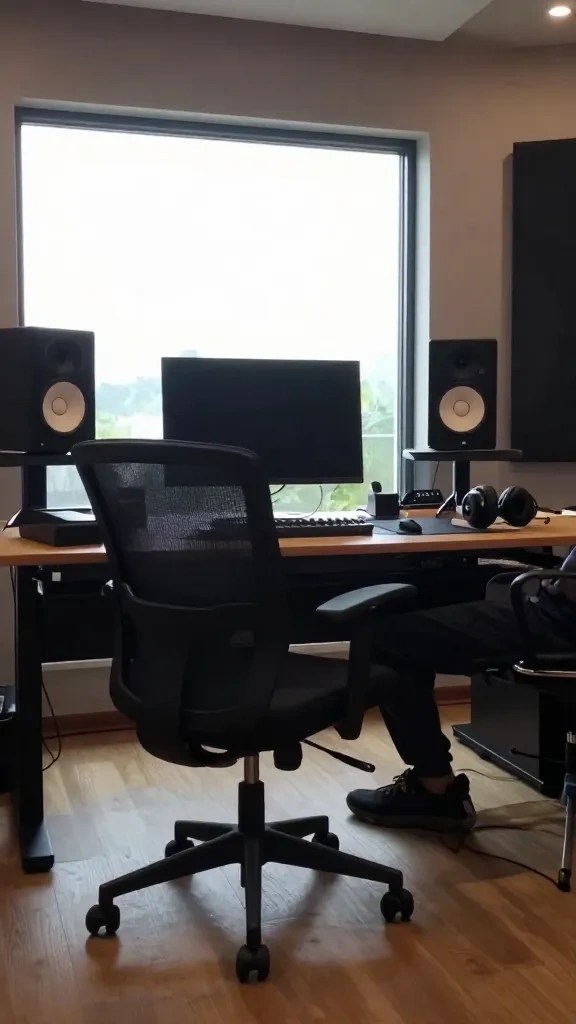
If you’re like me and find yourself constantly switching between sitting and standing while mixing, a drafting chair is the way to go. These stools are built with extra height and a sturdy foot ring so your legs don’t just dangle while you work at a tall desk.
I’ve found that having a foot ring is actually a secret weapon for guitar players. It gives you a solid place to brace your foot while tracking parts, which is way more comfortable than a standard office chair. You can easily slide it under your standing desk when you want to stretch your legs and get some energy back into your workflow.
Make sure you look for a model with flip up arms so they don’t hit your MIDI controller or guitar body. Many producers prefer a mesh back for these chairs because it stays cool during those long, ten hour sessions in a small studio. It’s a practical choice that keeps your posture upright without the bulk of a massive executive seat.
6. Heavy Duty Big and Tall Chair
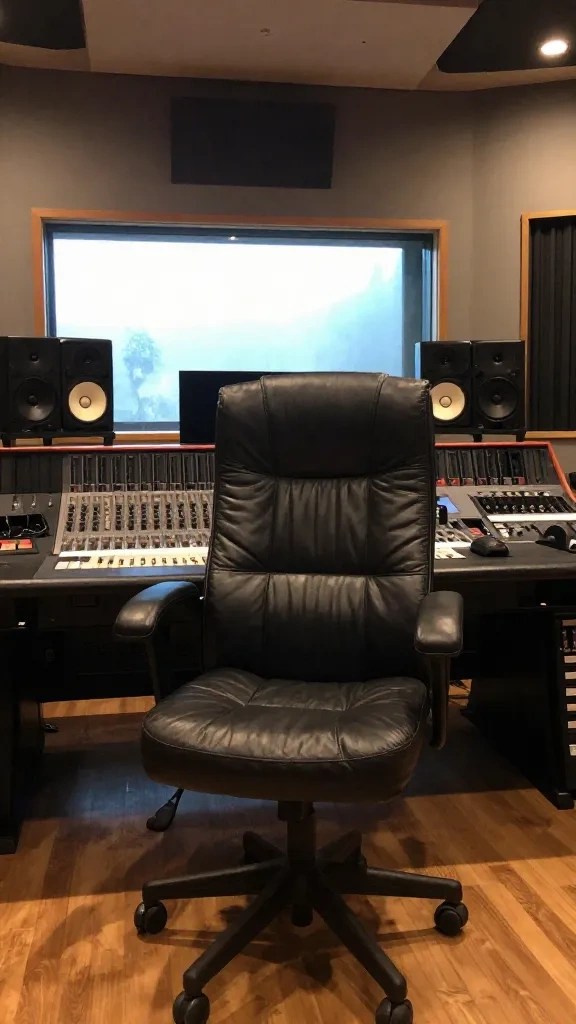
Most standard studio chairs are built for a specific weight limit that just doesn’t work for everyone. If you’re a bigger producer, you need a frame that won’t creak or wobble every time you lean back to check a mix.
These heavy duty models feature reinforced gas lifts and wider seat bases to ensure you aren’t cramped during ten hour sessions. The extra stability means you can focus on the speakers instead of worrying about the chair’s structural integrity.
- Weight Capacity: These chairs typically support between 350 and 500 pounds without straining the hydraulic system.
- Seat Width: You get several extra inches of hip room which prevents the armrests from digging into your legs.
- Dense Padding: The foam is much thicker so it won’t bottom out and leave you sitting on hard plastic after a month.
- Steel Bases: Most of these units swap out cheap plastic legs for solid metal components that handle high pressure easily.
The real benefit is the long term durability of the tilt mechanism. It stays smooth and silent even after years of daily use in the studio.
7. Balance Ball Chair Option
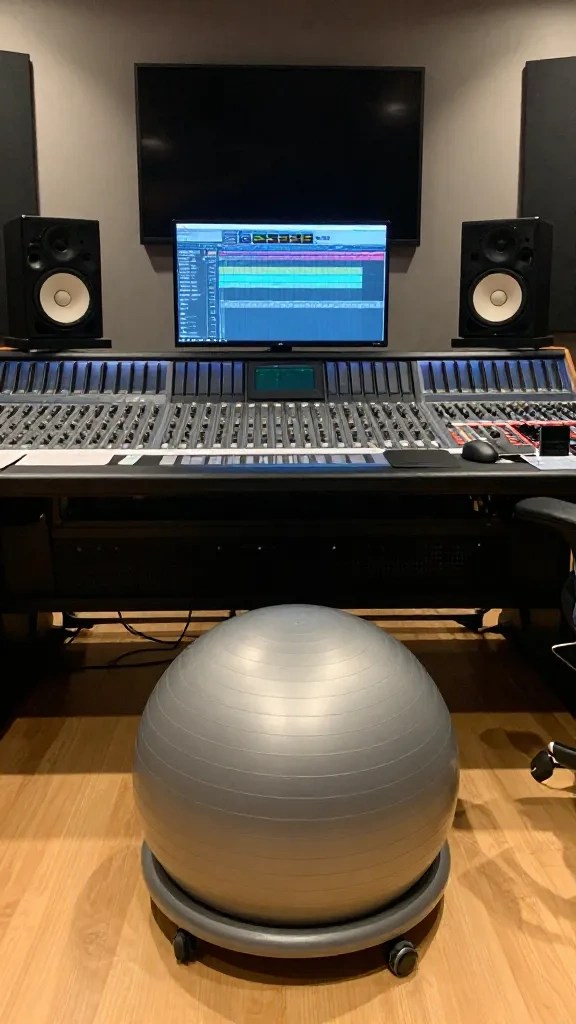
Traditional office chairs often lead to a slumped posture during long mixing sessions. A balance ball chair forces your core to stay engaged, which can prevent that typical lower back ache after six hours at the DAW.
You can choose a standalone yoga ball or one with a wheeled base and backrest. The simple ball is cheaper and forces more movement, while the base version offers a bit more stability when you need to focus on fine automation tweaks.
I recommend going with the wheeled base model if you have a larger desk setup. It gives you the ergonomic benefits of active sitting without the risk of rolling away when you reach for a rack synth or a guitar.
8. Leather Swivel Recliner
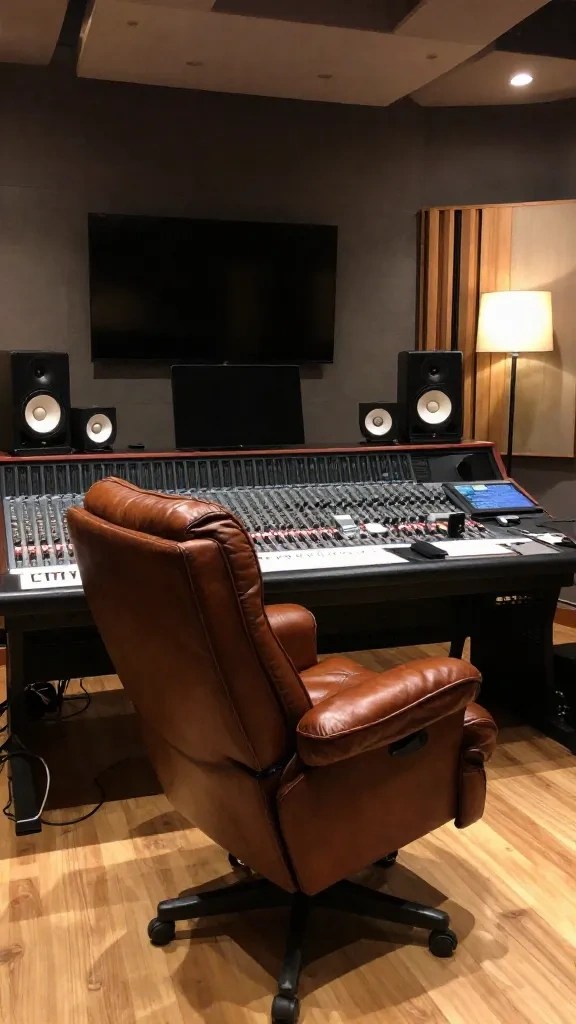
Long mixing sessions can wreck your lower back if you are sitting in a stiff task chair. A leather swivel recliner gives you a way to shift your posture when you are just listening back to a track or editing automation. It bridges the gap between a focused workstation and a comfortable lounge spot.
Most of these chairs feature a heavy duty pedestal base that allows for a full range of motion. You can spin between your rack gear and your MIDI controller without getting up. The leather material is easy to wipe down after a long night of coffee and snacks, and it stays cool if you get high quality top grain hides.
Try placing this chair in the sweet spot of your studio monitors for critical listening. You can kick the ottoman out to relax during a playback session with a client. It provides a more professional look than a standard gaming chair while offering much better support for your spine during twelve hour days.
9. Adjustable Armrests Importance
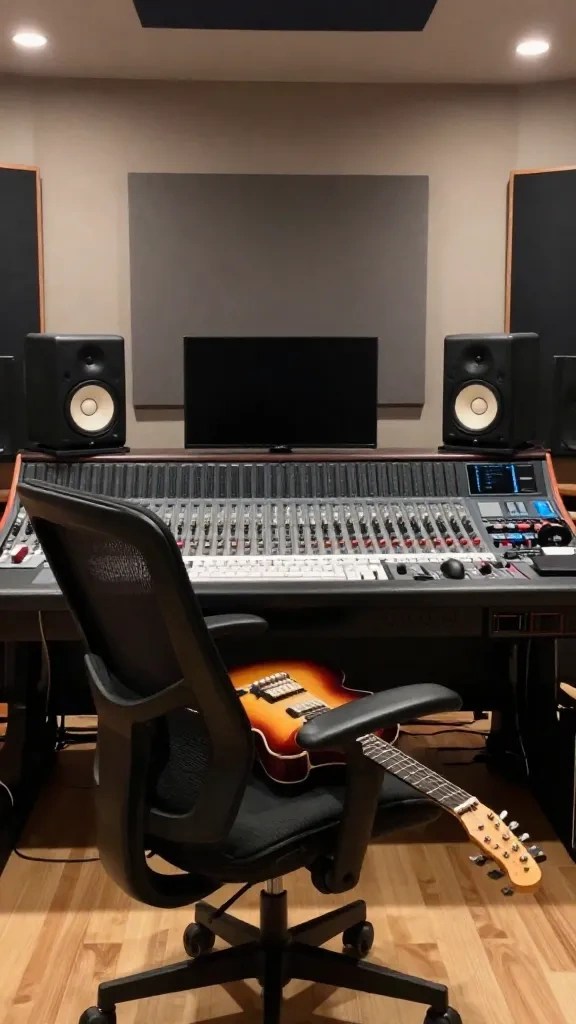
| Feature | Fixed Armrests | 4D Adjustable Arms |
|---|---|---|
| Guitar Clearance | Often hits the body | Lowers or pivots away |
| Desk Alignment | May get stuck under rim | Slides to match height |
Imagine you’re mid-take on a difficult guitar solo and your elbow keeps banging into a plastic armrest. It ruins your flow and forces you to sit at a weird, uncomfortable angle just to play your instrument.
Adjustable armrests solve this by letting you drop them out of the way or pivot them inward while you type. This flexibility is vital when you’re switching between a MIDI keyboard and a mouse all day.
If your arms aren’t level with your desk, you’ll start feeling a dull ache in your shoulders and neck after just an hour. Being able to tweak the height and width ensures your wrists stay neutral while you’re clicking through plugins.
Look for 4D arms if you can afford them. They move in every direction, which is a life saver when you need to pull your chair in close to the monitors.
10. Lumbar Support Pillows
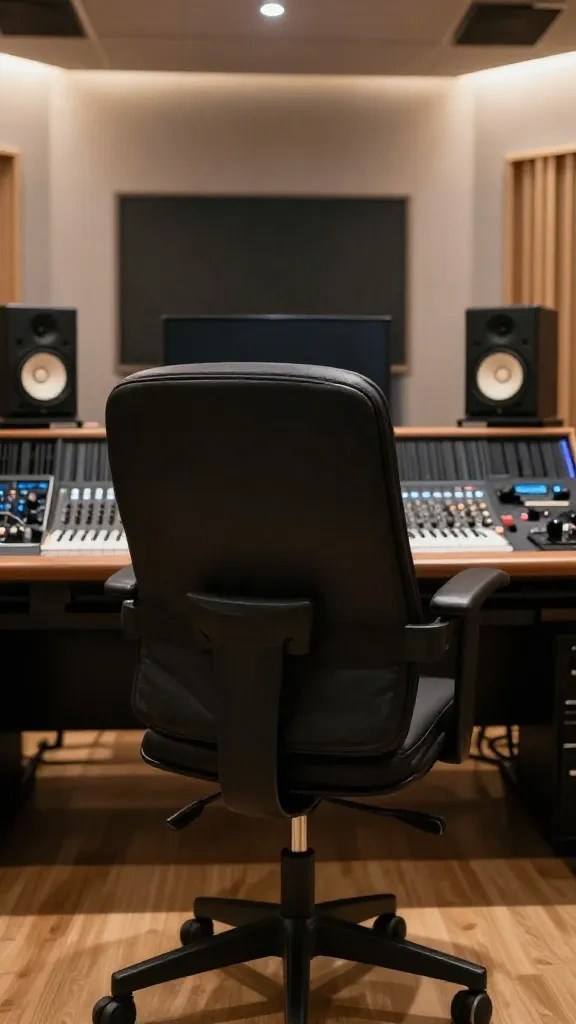
Your expensive studio chair is actually useless if it leaves a gap between the backrest and your lower spine. Most producers end up slouching forward during a long mix session, which puts massive pressure on the L5-S1 vertebrae.
A dedicated memory foam pillow fills that void and forces you to maintain a healthy curve without even thinking about it. Look for one with a dual-strap system so it doesn’t slide down every time you stand up to grab a guitar.
Firmness is the most important factor here because soft pillows just flatten out after an hour. High density foam provides the resistance needed to keep your posture upright while you’re focused on your DAW.
Breathable mesh covers are a must to prevent your back from getting sweaty during summer sessions. These small upgrades cost less than a plugin but will save you from thousands in physical therapy bills later on.
Subscribe
Enter your email below to receive updates.
11. Silent Caster Wheels
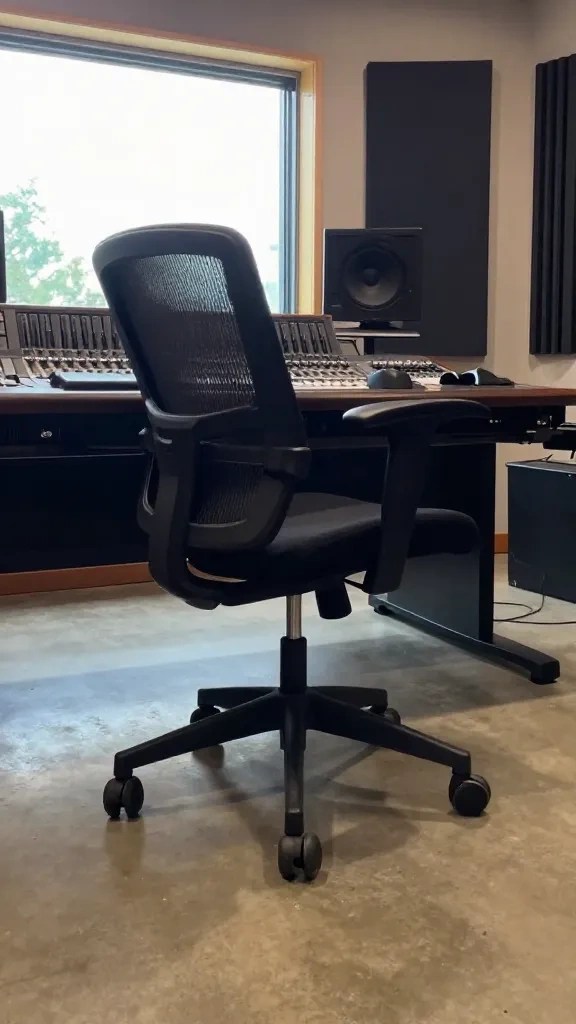
Standard plastic wheels are the loudest part of any home studio. When you’re trying to capture a sensitive vocal take or record an acoustic guitar, that sharp grinding sound of a chair moving across the floor will ruin your track.
Switching to high quality rollerblade style wheels solves this instantly. These wheels use soft polyurethane that glides over hardwood or tile without making a peep, even when you’re spinning around to reach your rack gear.
- Look for precision ball bearings to ensure the swivel motion doesn’t squeak or click during recording.
- Choose soft tread wheels to protect your floors from scratches without needing a bulky plastic floor mat.
- Verify the stem size, usually 11mm, to make sure they fit your specific chair base.
It is one of the cheapest ways to lower the noise floor in your room. You will notice the difference the very first time you slide back from your desk to check a mix.
12. Budget Friendly Entry Level Chairs
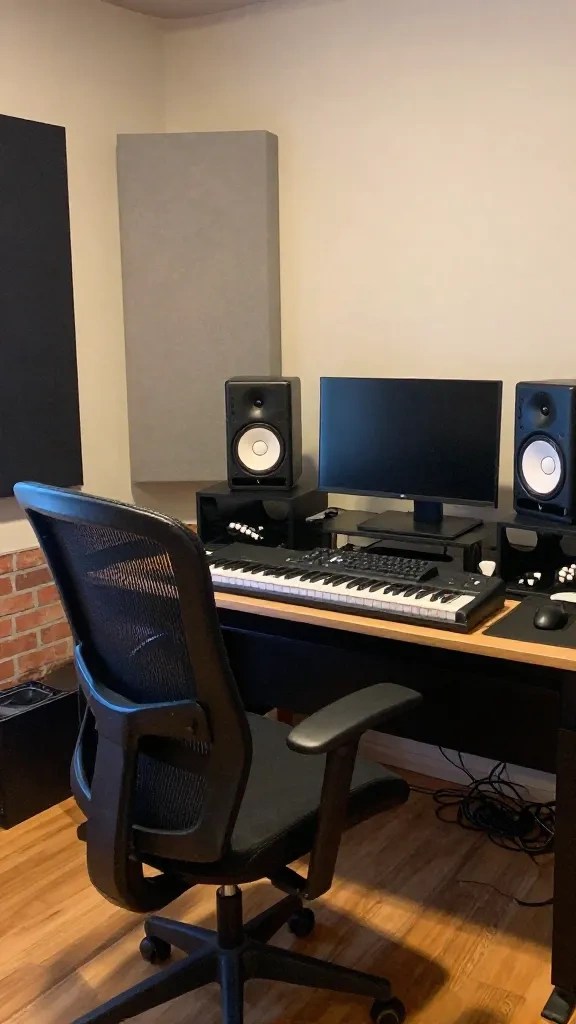
You don’t need to drop a thousand dollars just to keep your back from hurting during a long mixing session. If you’re just starting out, the IKEA Markus is a surprisingly solid choice that many pros still keep in their spare rooms. It has a high back and built-in lumbar support that actually stays firm over time.
Another reliable pick is the Union & Scale Dexley from Staples. It features a full mesh seat and back, which is a lifesaver if your studio gets hot while your gear is running. The headrest is adjustable, so you can lean back and listen to your playback without straining your neck.
The Yaheetech Ergonomic Mesh Chair is a great shout if you’re on a strict budget under a hundred dollars. It’s basic, but the flip-up arms are a huge win for guitar players who need space to move. You won’t get fancy materials, but it beats sitting on a wooden kitchen chair while you’re trying to finish a beat.
Wrapping Up
Choosing the right seat is about more than just style. These twelve music producer chair ideas should help you find a balance between back support and comfort for those long nights in the studio. Pick the option that fits your budget and your workflow. Now it is time to grab your favorite pick and get back to making great music.




Leave a Reply