
Driveway landscaping is more than just curb appeal; it shapes first impressions and sets the tone for your entire property.
These modern ideas reveal how to harmonize hardscapes with greenery, balancing aesthetics, sustainability, and practicality for a driveway that welcomes and works effortlessly.
Mastering Modern Driveway Landscaping
Creating a modern driveway landscaping design is about solving common challenges like harsh surfaces, poor drainage, and maintenance issues while enhancing visual appeal.
By integrating natural elements, smart materials, and thoughtful planting, you transform often-overlooked spaces into inviting, functional entryways that resonate with the home’s architecture and environment.
Before choosing a design, consider your climate, available space, and maintenance capacity.
Materials and plants that thrive locally reduce upkeep and costs.
Budget also impacts material and lighting choices, while your skill level will guide the complexity of installation and upkeep.
These ideas range across styles and regions to inspire a driveway that suits your lifestyle beautifully.
1. Natural Stone Blends with Native Wildflowers

Blending hardscape with softscape using large, irregular bluestone pavers and a low dry-stacked natural stone wall creates texture and a tactile layering effect.
Incorporating wildflowers like purple coneflowers, black-eyed Susans, and Queen Anne’s lace amid ornamental grasses promotes biodiversity while softening the driveway’s edge.
This approach is ideal when you want a natural transition from road to home that’s ecologically mindful.
Using durable woodland materials minimizes maintenance and the informal garden behind the stone wall prevents the driveway from feeling harsh or artificial, fostering a welcoming, seasonally dynamic landscape.
2. Gravel Paths with Corten Steel Planters

A gravel driveway paired with large slate stepping stones offers a permeable surface that controls erosion while guiding visitors safely.
The addition of rust-colored corten steel raised planters introduces weathered industrial texture and holds shade-loving plants like ferns and ornamental grasses, providing layered greenery that complements woodland settings.
Soft ambient lighting and dense evergreens help maintain a moist microclimate ideal for low-maintenance plants.
This design balances tactile contrasts and erosion control, making it practical for forested, misty environments while integrating native vegetation naturally.
3. Xeriscape Cobblestone with Desert Succulents

For arid climates, cobblestone pavers combined with smooth concrete walls create clear structure and clean lines.
A central dark paver strip visually directs the eye and breaks monotony.
Surrounding gravel beds planted with low-water desert species like blue agave, prickly pear, yucca, and saguaro cacti create a minimalist, heat-resistant xeriscape.
Spacing these succulents evenly prevents overcrowding and helps withstand drought stress.
This solution reduces irrigation and maintenance while maintaining a warm, natural palette that complements desert backdrops with practical, drought-tolerant landscaping techniques.
4. Incorporating Sculptural Metal and Textured Plantings

Integrating artful metal elements such as rust-colored corten steel sculptures into driveway landscaping adds vertical interest and elevates otherwise bland spaces.
Pairing these with minimalist, low-maintenance ornamental grasses and dark gray river rocks contributes tactile contrast and sophistication.
Using sleek concrete as a reflective surface balances the composition.
Neatly pruned small trees create structure and visual flow while maintaining low upkeep.
This strategy transforms a functional driveway into a gallery-like experience that blends hardscape precision with soft, textured planting.
5. Vertical Fern Walls Soften Narrow Spaces

Maximizing greenery in tight driveway corridors is achievable with vertical garden walls featuring dense ferns such as Boston and maidenhair varieties.
Paired alongside large concrete pavers spaced with river rocks, this creates both drainage and visual contrast.
Adding smaller potted ornamental grasses and seasonal interest with a Japanese maple balances the scale.
This solution addresses limited planting zones by using living walls, which soften hard surfaces and enrich the space with lush, green texture without sacrificing the modern aesthetic.
6. Classic Masonry Meets Automated Irrigation

Warm-toned travertine or limestone pavers lend a timeless appeal to gently curving driveways, supported by mature shade trees like live oaks that provide natural cooling.
Layered ornamental grasses and neatly trimmed boxwoods frame the turf, which in turn is maintained efficiently through a sprinkler irrigation system.
Smart irrigation planning is crucial here to sustain healthy turf in shaded areas prone to moss or disease.
Employing native shade trees mitigates erosion and the need for excessive lawn care, merging classic aesthetics with modern technology for effortless maintenance.
7. Circular Gravel Islands with Boxwood Sculptures

Incorporating a circular island within an asphalt driveway breaks up vast pavement expanses visually and functionally.
Filling the island with white gravel provides high contrast, while symmetrical boxwood spheres add formal greenery and texture, with an abstract bronze sculpture as a focal point.
Discrete low-voltage LED path lighting enhances nighttime curb appeal and safety.
This combines art and greenery within a minimalist framework, offering an elevated yet low-maintenance landscaping technique that efficiently manages large driveway footprints.
8. Birch Tree Islands for Naturalistic Softening

A circular island planted with slim white-barked birch trees amid ornamental blue fescue grass effectively softens asphalt driveways.
The steel-blue groundcover and large natural rocks add textural variety and sculptural interest without overcrowding.
Using durable plants that tolerate partial shade beneath taller evergreens creates a natural yet tidy centerpiece.
This approach improves curb appeal and offers a practical green feature that integrates mature trees into otherwise hard asphalt surfaces with easy maintenance.
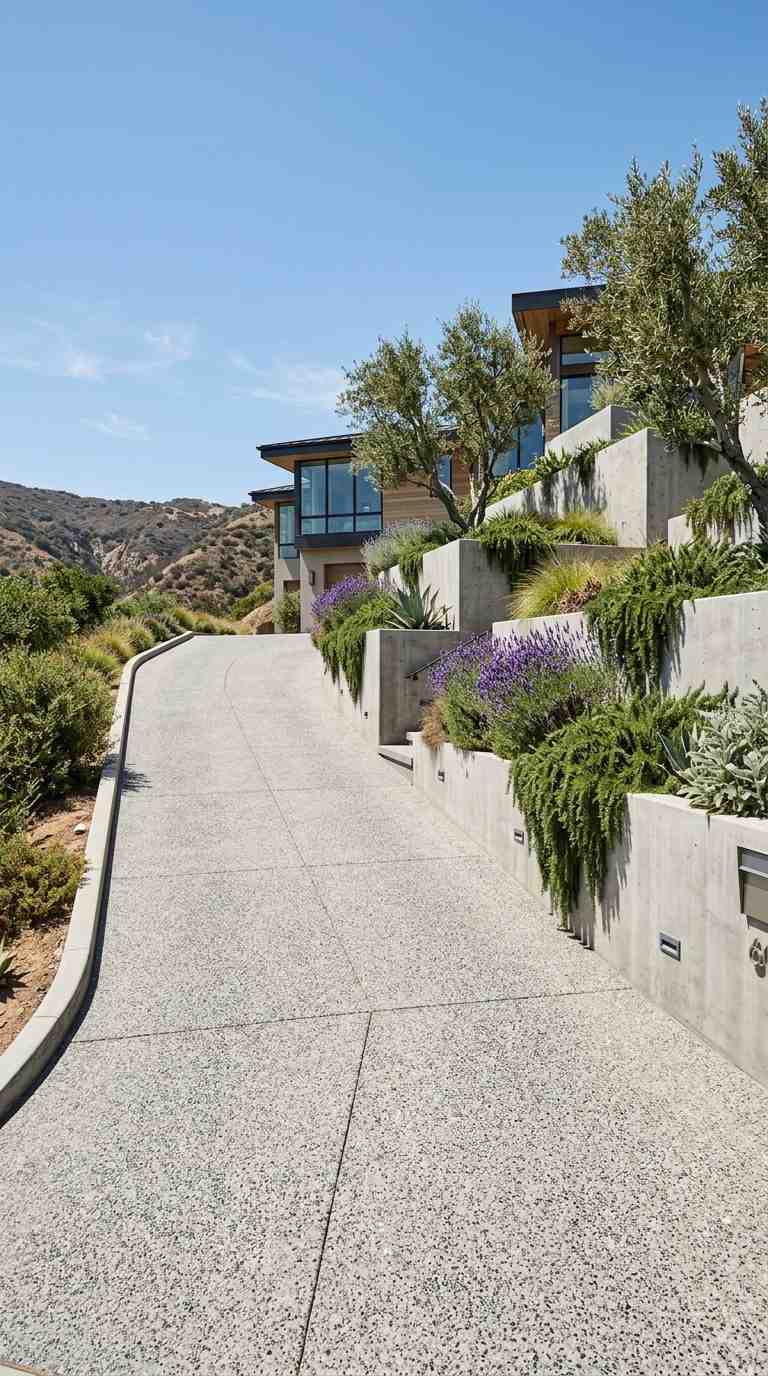
9. Terraced Mediterranean Planting on Sloped Driveways

Terracing with tiered concrete retaining walls along a sloping driveway stabilizes soil and prevents erosion while incorporating drought-tolerant Mediterranean plants like lavender, trailing rosemary, and small olive trees.
These plants’ silvery foliage complements minimalist concrete aesthetics and dry climates.
This method maximizes greenery in limited spaces without cluttering the driveway footprint.
It’s an excellent solution for arid environments, balancing functionality with natural landscaping, and requires minimal irrigation due to plant selection and terracing.
10. LED-Lit Concrete Grids with Evergreen Borders

Integrating recessed LED strip lighting within segmented concrete slabs enhances both safety and modern appeal for driveways.
Bordering the driveway with neatly trimmed evergreen boxwood hedges in beds filled with contrasting white gravel defines edges clearly while suppressing weeds.
The lighting also extends usage into evening hours without glare.
This combination of functional illumination and formal planting creates a low-maintenance, visually compelling layout that maintains clean lines and robust plant health in various seasons.
11. Focal Trees in Minimalist Concrete Planters

Using a sculptural single Japanese maple in a large circular concrete planter concentrates visual impact while keeping driveways uncluttered.
Surrounding the tree base with moss and natural rocks softens the hard edges and adds organic contrast to clean concrete and white gravel surfaces.
Planters allow easy control of soil conditions and protect roots from compaction.
This technique injects color and depth to otherwise uniform spaces while maintaining vehicle clearance and simplifying maintenance around the tree’s base.
12. Floating Concrete Slabs with Succulent Planters

Creating a floating effect in driveways by spacing wide concrete slabs apart and filling gaps with dark gravel adds visual lightness and aids drainage.
Raised concrete planters housing sculptural blue-green agave species flank the driveway for drought tolerance and architectural interest.
Subtle warm LED lighting underneath slabs enhances evening visibility and atmosphere.
Combining minimalist paving with hardy Mediterranean plants like olive trees balances hard surfaces with greenery, reducing water demand while maintaining sleek, contemporary curb appeal.
13. Desert Minimalism with Laser-Cut Metal Screens

Smooth light concrete driveways featuring subtle geometric scoring offer clean, modern lines that complement desert landscapes.
Xeriscaped borders with well-spaced ornamental grasses, agave, and drought-resistant shrubs manage heat effectively and reduce water use.
Incorporating laser-cut metal privacy fencing with artistic patterns adds visual interest and security.
Strategic uplighting highlights both plants and fence textures at dusk, blending aesthetics with functionality in dry climates where minimal irrigation and shade are priorities.
14. Vibrant Linear Gardens Between Driveway Materials

Breaking driveways into dual paths separated by narrow linear garden beds lets vibrant plants like red Kangaroo Paw flowers and contrasting dark-leafed Ophiopogon thrive.
This vertical, colorful layering introduces energy and height to otherwise plain driveways.
Using drought-tolerant plants ensures low maintenance in dry climates.
The careful spacing allows full growth without overcrowding, while the symmetry between paving materials and planted strip improves cohesiveness and draws focus toward intentional greenery.
15. Climbing Ivy on Wooden Slat Fences

Incorporating vertical green elements such as climbing ivy on wooden slat fences softens the hard edges of driveway boundaries and adds color variation over time.
Planting the ivy in narrow beds with smooth river rock mulch enhances drainage and suppresses weeds.
Complementing the other side with ornamental grasses spaced for natural growth maintains balance without overcrowding.
This combination addresses common drainage and weed issues while creating a clean, modern coastal aesthetic that integrates well with subdued gray and green tones.
16. Privacy and Elegance Using Italian Cypress Screens

Tall, narrow Italian cypress trees planted densely form an elegant vertical green screen that enhances privacy while maintaining a clean-lined appearance.
Pairing these with staggered dark gray stone pavers featuring light mortar joints creates balanced texture and geometric interest.
Adding a square fountain surrounded by black river rocks introduces a calming water feature that contrasts with the sculptural cypress.
Ornamental grasses add softness to the edges.
This layered combination suits modern homes seeking refined boundaries and year-round greenery.
17. Gravel Driveways with Corten Steel Edging

Using gray gravel as a permeable driveway surface combines texture with functional drainage and low maintenance, especially when edged with rust-colored corten steel that crisply defines borders.
This warm metallic edge balances cool gravel tones and complements desert plants like agave and yucca.
Generous spacing of desert-adapted plants prevents overcrowding and ensures healthy growth with minimal water use.
This method exemplifies how sustainable xeriscaping merges with contemporary materials for durable, striking arid-climate driveway landscaping.
18. Brick Pavers with Embedded Grass Strips

Breaking up traditional brick pavers with parallel strips of lush grass improves drainage, softens the driveway’s heat-reflective surface, and adds dynamic contrast.
The herringbone brick pattern adds classic texture while enhancing stability.
Bordering the driveway with low ornamental grasses and small trees provides vertical structure and seasonal shade, improved by modern black post lighting that boosts nighttime visibility and curb appeal.
This approach blends function with sustainable aesthetics in suburban settings.
19. Concrete Grids Filled with Vibrant Groundcover

Spacing wide rectangular concrete pavers with bright green, drought-tolerant groundcover such as mondo grass reduces heat retention and prevents monotony in large paved areas.
This creates clean geometry with lush softness.
Complementing with xeriscape beds containing agave, yucca, and boulders adds architectural interest and low-water appeal.
Balanced plant spacing enables healthy growth without overcrowding.
Integrating these elements addresses irrigation concerns while maintaining a modern, minimalist driveway that feels both orderly and inviting.
20. Volcanic Rock Beds with Sansevieria Borders

Defining driveway edges with a linear planting bed of upright Sansevieria (snake plants) offers year-round structure while pairing drought-tolerant succulents and ornamental grasses softens the overall look.
Filling gaps with dark volcanic rock adds contrast and aids moisture retention.
Including a delicate feathery desert tree like Palo Verde introduces height and filtered shade.
This technique balances hardscape materials with xeriscaping principles to create a low-maintenance, drought-resistant driveway border suited to hot, dry climates.
21. Tropical Slim Palms Along Gravel Driveways

Spacing ponytail palm trees evenly along a white gravel bed contrasts sharply with black slate pavers, creating a strong geometric driveway pattern ideal for tropical or warm climates.
Their distinctive swollen trunks add sculptural interest and height.
Underplanting with dense, low green shrubs or ferns provides lush ground-level texture while buffering the hardscape.
This design addresses low-maintenance landscaping needs and heat reflection management by balancing stark paving with vibrant, hardy palms suited for sunny environments.
22. Bamboo Screens for Privacy and Texture

Using dense clumping bamboo in narrow, raised garden beds creates a natural privacy screen that is both visually striking and low-maintenance.
A matte gray stone or concrete edging keeps soil and mulch contained while providing a muted, modern frame.
Covering soil with smooth river rocks supports drainage and adds clean texture.
Interspersing fine ornamental grasses and ferns softens the overall profile and adds year-round interest.
This method efficiently maximizes privacy without sacrificing style or space.
23. Parallel Concrete Strips Framed by Drought Plants

Designing driveways with two parallel concrete strips separated by a lush grass strip balances solid paving with softness and promotes water permeability.
Surrounding these with decomposed granite beds planted with upright red yucca and agave offers a cohesive drought-tolerant scheme.
Natural limestone rocks included sparingly enhance texture and prevent uniformity.
This approach improves drainage, conserves water, and reduces intensive maintenance while providing strong architectural lines that tie into southwestern and desert landscaping styles.
24. Mixed Concrete and Wood Slab Patterns

Replacing typical pavement expanses with alternating large concrete slabs and wooden panels injects warmth and visual rhythm into driveway designs.
Lining the driveway with flowering lavender plants adds fragrance, color, and softness, breaking the hardscape’s sterility.
Terraced retaining walls with green shrubs enhance stability and greenery without overcrowding.
Integrated bollard lighting ensures safety and ambiance.
This blend of natural and structural elements addresses visual harshness and creates a welcoming transition to the home.
25. Decomposed Granite with Corten Steel Beds

Using decomposed granite for driveway surfaces offers natural earth tones and permeability, reducing runoff in desert climates.
Raised beds edged with rusted corten steel provide durable, weathered borders while containing native xeriscape plants like agave, yucca, and prickly pear cactus.
Spacious plant spacing allows healthy growth and highlights individual specimens.
This low-maintenance, water-efficient approach merges materials and plant choices tailored to arid environments, reducing upkeep while enhancing a desert home’s natural character.
26. Golden Barrel Cacti with Volcanic Rock Accents

Creating a desert garden alongside a modern driveway using clusters of golden barrel cacti and tall blue-green yucca provides height and sculptural form.
Volcanic rocks serve as natural accents that add warmth and rugged texture, enhancing the xeriscape’s visual interest.
Allowing ample spacing reduces plant stress and avoids competition, aiding establishment.
This design complements southwestern-style architecture with efficient water use while delivering a clean, bold curb appeal that requires minimal maintenance.
27. Exposed Aggregate Concrete with Layered Drought Plants

Exposed aggregate concrete driveways provide textured durability that hides wear and blends naturally with surrounding softscapes.
Dense planting beds along the edges featuring boxwood, agave, ornamental grasses, and olive trees establish year-round interest and reduce lawn area to minimize upkeep.
Strategic low-voltage lighting accentuates key plants and driveway contours at night for safety and appeal.
The layered planting prevents erosion and simplifies maintenance, achieving a balanced entryway that feels lush yet sustainable.
28. Hydrangea Borders for Soft Curb Appeal

A neat row of large white hydrangeas buffers the driveway, adding seasonal blooms and soft texture that prevent hard surfaces from feeling cold or uninviting.
Mulching retains moisture and suppresses weeds, supporting healthy growth.
Paired with interlocking concrete pavers arranged in a basketweave pattern that varies shades of gray, the design combines durability with natural softness.
This blend enhances curb appeal while addressing common hardscape harshness, suitable for shaded suburban settings.
29. Wood-Effect Stamped Concrete with Tropical Planters

Stamping concrete to mimic weathered wood planks introduces warmth and subtle natural texture to extensive paved areas without sacrificing durability.
Placing sleek rectangular planters filled with ornamental grasses alongside tropical plants like coconut palms adds layered height and lush greenery.
Raised containers create visual interest and serve as a buffer between hard surfaces and garden beds.
This strategy softens large driveways while maintaining modern clean lines, perfect for warm climates needing low-maintenance tropical accents.
30. Brick Paving with Dry Creek Bed Drainage

Using uniform reddish-brown bricks in a running bond pattern lends warmth and classic texture to woodland driveway settings.
Integrating a dry creek bed lined with smooth river rocks manages drainage effectively, preventing soil erosion in shaded, forested environments.
Planting underneath with native shade-tolerant sword ferns and arching ornamental grasses adds lushness and wet soil tolerance.
Moss-covered rocks deepen the naturalistic feel.
This combination creates a sustainable, permeable driveway that harmonizes with dense woodland while addressing runoff challenges.


Leave a Reply