
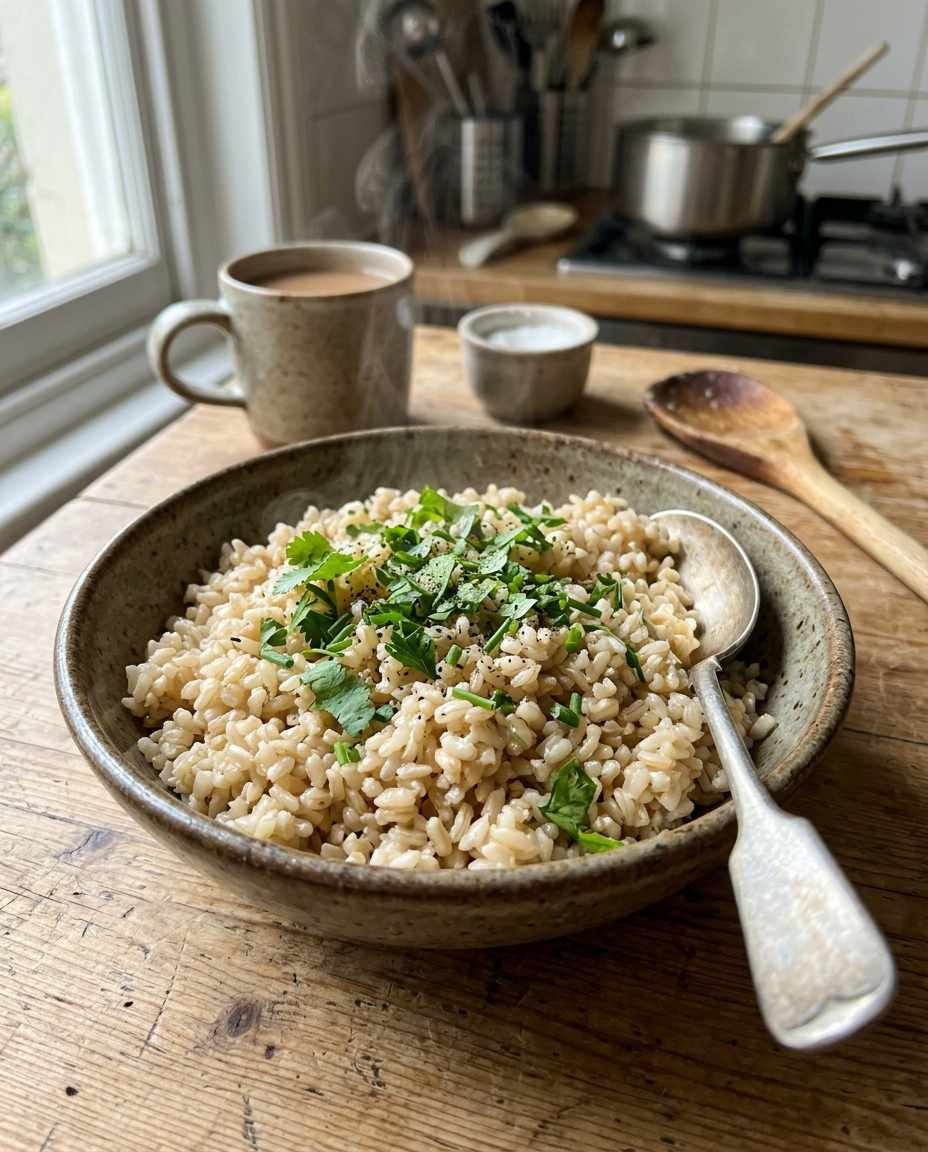
I remember reheating a mound of cold brown rice straight from the fridge, only to end up with a bowl of dry, crumbly flakes instead of the soft, fluffy grains I’d originally cooked.
After countless experiments, I finally mastered the art of reviving leftover brown rice with tenderness and moisture intact.
This guide shares the tested techniques that ensure perfect reheated brown rice every time.
Understanding Brown Rice’s Unique Structure
Brown rice differs significantly from its white counterpart due to its intact bran and germ layers, which influence how it reheats and absorbs moisture.
The bran contains oils that tend to dry out or go rancid more easily, impacting texture and flavor upon reheating.
In practical terms, this means brown rice needs more careful handling to avoid becoming tough or dry when warmed.
One common mistake is treating brown rice like white rice, reheating it without adding moisture, which causes it to harden rather than soften.
When I first started experimenting, I noticed that reheating without considering the bran’s oil content resulted in a noticeable bitterness and dryness.
The oils oxidize when exposed to air and heat repeatedly, making reheated rice less palatable than fresh.
This oxidation is why tossing leftover brown rice in an airtight container is critical to preserve both texture and freshness.
The takeaway is to always incorporate moisture methods and limit reheating cycles to preserve the rice’s natural nutty flavor.
The grain’s bran also acts as a physical barrier that slows water absorption during reheating.
Unlike white rice, brown grains need a bit more time and hydration to rehydrate fully.
This explains why quick microwave reheats often leave some core grains dense or undercooked.
For a consistent finish, you want moisture to penetrate evenly and warm through at a moderate pace.
In sum, brown rice requires reheating strategies that consider bran oil oxidation, bran-layer water absorption kinetics, and heat application rates.
Ignoring these factors almost guarantees disappointing leftovers.
The precise balance of moisture and heat while limiting oxidative damage defines the difference between chewy disappointment and fluffy success.
Microwave Reheating: Balancing Moisture and Heat

Microwaving is the fastest and most common method for reheating brown rice, but it takes practice to avoid drying or uneven heating.
The microwave excites water molecules rapidly, but brown rice’s bran layer resists instant rehydration, so simply nuking it dry leads to hot spots and crunchy cores.
A key principle is to introduce external moisture and cover the rice to create steam, which promotes uniform softening.
From experience, I use a microwave-safe bowl with rice spread in a shallow layer no deeper than 2 centimeters to optimize heat penetration.
Before microwaving, sprinkling 1-2 tablespoons of water per cup of rice and covering the bowl with a damp paper towel or a tight-fitting lid traps steam.
This traps moisture and prevents evaporation, helping the rice rehydrate thoroughly within 1-2 minutes on medium power (about 50-70% wattage).
A typical error is microwaving on full power or for too long, thinking that more heat equals softness.
Instead, overheating causes moisture to escape rapidly, toughening the grain’s outer bran layer and rendering the center chalky.
I recommend pauses every 30 seconds to stir or fluff, redistributing moisture and heat for consistency.
This prevents some grains from overheating while others remain cold.
The takeaway: measure water precisely, cover tightly to enable steam, use medium power for gradual heating, and fluff intermittently.
This method reduces the bran’s heat shock and improves moisture reabsorption, producing soft, fluffy brown rice quickly and reliably in the microwave.
Stovetop Reheating: Gentle Steam Revival
Reheating brown rice on the stovetop is my preferred method when time allows because it mimics the original cooking technique, gently coaxing moisture into the bran layer.
This process uses conductive heat and steam, which better prevents the grain from drying out or burning compared to dry heat methods.
You’ll want to add a small amount of liquid—water or broth—and cover the pan tightly.
I usually start by transferring leftover rice into a medium nonstick skillet or saucepan.
Adding 2-3 tablespoons of filtered water per cup of rice creates a humid environment during reheating.
Setting the burner to low-medium heat ensures gradual warming rather than rapid, uneven heating.
Covering with a heavy lid traps steam and prevents moisture loss.
Many people mistakenly crank the heat up in an effort to speed reheating, which often scorches the bottom layer and leaves the top cold.
That’s because direct heat transfer outpaces moisture diffusion inside the grains.
Waiting about 5-7 minutes with the rice covered allows internal moisture to penetrate the bran and soften the grains thoroughly.
Stirring occasionally also promotes even heat distribution.
The actionable tip is to use a wide, shallow pan for more surface area evaporation control, accurately measure water to avoid sogginess, and maintain moderate heat.
This slow steaming technique revives brown rice’s texture and flavor closely resembling freshly cooked batches, which makes it worth the extra few minutes.
Oven Reheating: Low and Slow Moisture Control

Oven reheating is an excellent option when reheating large portions of brown rice as it ensures even heat distribution and preserves texture over time.
The principle here is convection heat combined with moisture retention.
Unlike microwaving, heat penetrates more evenly throughout, preventing dry edges and cold centers common with direct stovetop or microwave methods.
In my kitchen, I use a 350°F (175°C) oven, transferring rice into a shallow ceramic or glass baking dish no more than 1.5 inches thick.
Adding 2-3 tablespoons of liquid per cup of rice then covering tightly with aluminum foil seals in moisture.
The foil acts like a mini steam chamber, allowing grains to plump under gentle heat.
A classic mistake is skipping the cover or adding too much water, which results in either dry, crusty rice or a soggy mess.
The key is maintaining a delicately humid environment: enough moisture to soften but not enough to waterlog.
I typically reheat for 15-20 minutes depending on volume, stirring halfway to redistribute heat and moisture.
For optimal reheating, preheat the oven first for consistent temperature and use ceramic or glass cookware rated for even heat conduction (no thin metal pans).
This technique works well for batch meal prep and dinner parties where you want reliable results without fussing over timing or constant stirring.
Avoiding Food Safety Pitfalls
One critical but often overlooked concern when reheating brown rice involves proper food safety to prevent Bacillus cereus contamination.
This spore-forming bacterium can survive the initial cooking and multiply rapidly if rice is left at unsafe temperatures too long.
Reheating properly means more than just warming; it involves minimizing time in the temperature “danger zone” between 40°F and 140°F (4°C to 60°C).
In my experience, the single biggest mistake is letting cooked rice cool slowly at room temperature, sometimes leftover rice sits out for hours before refrigeration.
This allows spores to germinate and toxins to form, which reheating will not neutralize.
Always cool rice quickly by spreading it thin in a shallow container, then refrigerate within two hours.
When reheating, be sure to bring the rice up to at least 165°F (74°C) throughout.
Using a digital food thermometer can help confirm this, especially with large portions.
Stirring during reheating also improves even temperature distribution, reducing cold spots where bacteria may survive.
To summarize: cool leftovers rapidly, store airtight in the fridge below 40°F, and reheat evenly to 165°F or higher.
This reduces foodborne illness risk and ensures your reheated brown rice is both delicious and safe.
Alternative Techniques: Using a Rice Cooker or Instant Pot
If you own a rice cooker or Instant Pot, you have excellent reheating options that leverage these devices’ controlled steam environments.
Rice cookers typically feature a keep-warm mode and some have a reheating feature that gradually warms rice without drying it out.
Instant Pots excel in steaming rice gently using the steam function or low-pressure settings.
From personal testing, I find using the rice cooker’s steam basket with a little added water below the basket heats brown rice evenly without overcooking or drying.
The key is layering rice no thicker than 1.5 inches to maximize steam exposure and shifting leftovers gently mid-cycle for even warmth.
Instant Pot’s manual steam for 3-5 minutes followed by a quick release also works well.
A frequent mistake is dumping dry rice directly onto the heating element or applying pressure-cook settings designed for raw rice, which can crush grains or overcook.
Instead, you want to treat leftovers as gently as possible with low heat and indirect steam.
Adding 1-2 tablespoons of filtered water before reheating controls moisture precisely.
If you rely on these appliances, consider the container size, layering depth, and water quantity carefully to replicate the gentle steam environment needed for bran layer hydration and even reheating.
This method is ideal when you want hands-off reheating with minimal texture sacrifice.
Flavor and Texture Enhancements During Reheating

Reheating isn’t just about restoring warmth: it’s an opportunity to refresh brown rice’s flavor and elevate its texture.
Because reheated brown rice can be prone to dullness or dryness, I often add complementary liquids, spices, or fats during the process to reintroduce vibrancy.
Small adjustments make a noticeable difference.
For example, adding a teaspoon of toasted sesame oil or a tablespoon of broth instead of plain water during stovetop or oven reheating enhances richness and mouthfeel without overpowering the rice’s inherent nutty flavors.
I usually mix in a pinch of salt or a squeeze of citrus juice post-reheat to brighten the taste.
These small tricks prevent bland leftovers.
A common oversight is reheating rice in isolation without fresh flavor elements, resulting in a flat palate profile.
Another texture technique is fluffing the rice gently with a fork halfway through reheating to separate grains and restore that freshly cooked, pillowy feel.
This avoids clumping and matting caused by retrogradation—the natural starch crystallization during cooling.
The takeaway is to think beyond reheating as mere warming.
Leveraging seasoning, hydration, and texture reviving steps can transform leftover brown rice into a dish nearly indistinguishable from freshly cooked, enhancing both enjoyment and creativity.
Storage Considerations for Better Reheating Results
Proper storage of cooked brown rice is paramount to successful reheating because it directly affects grain moisture and flavor preservation.
Brown rice contains more natural oils than white rice, which can deteriorate if stored improperly, leading to rancidity and off flavors.
Air exposure and temperature fluctuations accelerate this degradation.
In my kitchen routine, I cool rice quickly by spreading it thinly on a rimmed baking sheet.
Then I transfer it into airtight containers with minimal headspace to limit oxygen exposure.
Using opaque containers or storing in the coldest part of the fridge (usually the back, around 36°F to 38°F) prevents light-induced oil oxidation, preserving freshness for up to 4 days.
Many people store rice in large sealed bags or containers but fail to flatten or portion it into shallow layers.
This traps heat and moisture unevenly, creating bacterial growth spots or hard clumps.
Dividing rice into smaller containers with depth no more than 2 inches is ideal both for cooling speed and efficient reheating.
Also, avoid repeatedly reheating the entire batch; portion out only what you need.
Remember, your reheating success depends heavily on storage quality.
By cooling the rice quickly, sealing it airtight, portioning to shallow depths, and refrigerating consistently below 40°F, you set the stage for soft, flavorful leftover brown rice every time.
Troubleshooting Common Reheating Problems
Despite best efforts, sometimes reheated brown rice still turns out hard, dry, or uneven.
Diagnosing the problem requires considering all variables: moisture content, reheating time and temperature, storage conditions, and grain thickness.
I often trace my own slip-ups to a single overlooked factor rather than a combination.
If brown rice is too dry and crumbly, it’s usually because insufficient water was added during reheating or it was microwaved uncovered.
In one instance, I microwaved leftover rice straight from the fridge without water and it became crunchy rather than soft.
The fix is always to add measured water and cover, regardless of reheating method.
Uneven warming or cold spots come from reheating large, deep portions without stirring or layering.
Using shallow containers and stirring mid-reheat distributes heat and moisture uniformly.
If you experience clumping or gummy texture, it often means the rice was overheated or moisture was excessive, causing starches to gelatinize excessively.
Reducing heat and water amounts resolves this.
The takeaway is to observe grain texture after reheating and adjust water quantity, heat level, coverage, and stirring accordingly.
With practice, your adjustments will become intuitive, producing fluffy, tender brown rice leftovers time after time.




Leave a Reply