
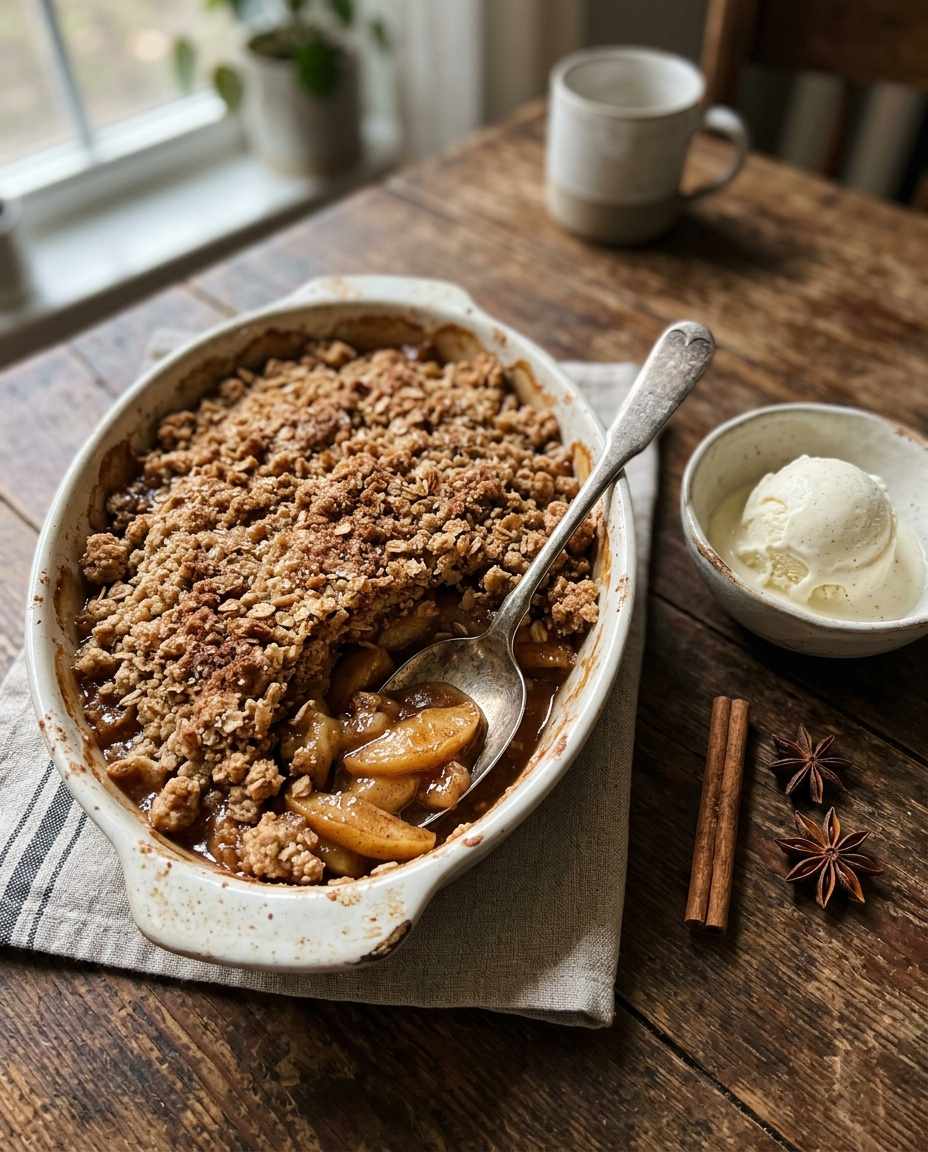
As the warm scent of cinnamon swirled through my kitchen, I slid the bubbling apple crisp from the oven, its golden crumble crackling invitingly beneath my fingers.
That first spoonful, where tender spiced apples meet a perfectly crisp topping, is worth mastering.
This guide unpacks every nuance to elevate your homemade apple crisp to a flawless treat.
Choosing the Ideal Apple Varieties
The foundation of a standout apple crisp is the apple itself, and selecting the right variety is crucial.
I find a balance between tartness and sweetness makes the filling lively on the palate.
Classic choices like Granny Smith bring firmness and acidity that contrast beautifully with sweeter apples like Honeycrisp or Fuji, which add natural sugars and moisture to the mix.
In my early attempts, I used only one type of apple and noticed the texture became mushy rather than pleasantly tender after baking.
Using a blend prevents this, as firmer apples hold their shape, while softer ones break down to create syrupy juiciness.
For example, a 60/40 ratio of Granny Smith to Honeycrisp allows tartness to dominate, balanced by subtle sweetness.
Many home bakers underestimate the importance of evenly sized apple chunks.
If pieces vary too much, smaller ones overcook, leading to a mealy texture, while larger chunks remain underdone.
Aim for uniformly cut chunks about 1/2 to 3/4 inch in size to ensure even cooking throughout.
When prepping, coating the apples in lemon juice prevents premature browning and adds subtle citrus notes that brighten the final dish.
A tablespoon of freshly squeezed lemon juice for every four cups of sliced apples works perfectly.
The key takeaway is selecting at least two complementary apple varieties, cutting them consistently, and acidulating them to lock in flavor and texture.
Mastering the Spiced Filling

Seasoning the apple filling properly is often where crisp desserts falter.
I learned that layering spices rather than relying solely on cinnamon creates a depth often missing from simple recipes.
Incorporating allspice, nutmeg, and a hint of ground ginger alongside cinnamon adds complexity without overpowering the fruit.
A common mistake is overdosing on cinnamon, which can dominate and mask apple’s natural nuances.
I use roughly 1 teaspoon of ground cinnamon, 1/4 teaspoon each of nutmeg and allspice, and 1/8 teaspoon of ground ginger for every 6 cups of apple slices.
This balance celebrates the fruit while evoking warm holiday notes.
Don’t forget controlling sugar levels in the filling.
The key is matching sugar quantity to apple sweetness,too much sugar leads to a syrupy puddle, too little yields blandness.
For slightly tart apples like Granny Smith, I use 1/2 cup of granulated sugar combined with 2 tablespoons of brown sugar to introduce molasses-like richness.
Cornstarch or tapioca is essential to achieve the ideal filling consistency.
I prefer 2 tablespoons of cornstarch mixed with the apples to thicken juices without clouding the filling.
Skipping this results in a runny crisp, and using inadequate thickener leaves uneven cooking.
Always toss apples with dry ingredients before adding wet.
Crafting the Perfect Crisp Topping
The crumble topping transforms an apple crisp from ordinary to extraordinary.
Through trial and error, I discovered that a harmonious balance of flour, oats, butter, and sugar is key to achieving that coveted crunchy yet tender texture.
Rolled oats add chewiness and visual appeal, while cold butter incorporates pockets of flakiness upon baking.
I use 1 cup of old-fashioned rolled oats, 3/4 cup all-purpose flour, 1/2 cup packed light brown sugar, and 1/2 teaspoon fine sea salt for every 9×13 inch pan portion.
Chilling the butter beforehand and cutting it into pea-sized pieces before mixing creates a coarse, crumbly texture rather than a doughy mess.
Avoid using melted butter as it leads to a greasy, dense topping.
Another nuance is the choice between brown and white sugar.
Brown sugar’s molasses content deepens flavor and adds extra moisture, preventing topping from drying out too quickly during baking.
The light brown sugar is preferred for its subtle caramel notes that complement the apple filling without excessive sweetness.
Many overlook the finishing salt sprinkle that elevates the topping’s flavor by balancing sweetness.
A light dusting – approximately 1/8 teaspoon of flaky sea salt after assembling – accentuates texture and flavor contrasts.
The takeaway: measure precisely, keep butter cold, and resist precooking the topping for best results.
Advanced Baking Techniques for Even Cooking
Baking apple crisp is deceptively simple yet demands precise technique to ensure even cooking and textural harmony.
I always preheat the oven fully and prefer baking at 350°F (175°C) to allow gentle caramelization without burning the topping or undercooking the filling.
Higher temperatures risk tough crusts and underdone apples.
One common problem is uneven browning or soggy crust in the center.
To combat this, I position the baking dish on the middle rack with a baking sheet below to catch any drips and promote air circulation.
Rotating the dish halfway through baking ensures uniform color development, a step many skip.
I’ve experimented with blind baking the topping for 5 minutes before adding apples, but this can dry out the topping and reduce cohesion.
Instead, baking all components together ensures the butter melts into the oats while apples release their juices, melding flavors beautifully.
Timing is crucial: I bake between 40 and 50 minutes until the topping is golden brown and filling bubbles at the edges.
Checking for bubbling near the sides, rather than the center, ensures the apples are tender and juices are thickened.
Overbaking shrivels fruit, while underbaking leaves raw starch taste,aim for a visual and textural balance.
Optimizing Texture: Balancing Tenderness and Crunch

Texture is the soul of apple crisp.
Achieving tender fruit without mush alongside a crisp topping requires controlling several interacting factors.
I learned that fruit moisture content and topping composition directly influence the crispness of the final product.
Overripe, juicy apples release excess liquid, turning your topping soggy before it forms a crust.
To counter this, I drain apples for 5 minutes on paper towels after tossing in spices and sugar.
This simple step reduces liquid without drying fruit, yielding a filling that is tender yet not soupy.
In the topping, the oat-to-flour ratio controls structural integrity.
Too many oats create chewiness but reduce crunch, whereas excess flour can result in a dense, cake-like crust.
I maintain about 60% oats to 40% flour for an ideal crispy chew balance, based on multiple recipe iterations.
Lastly, the temperature when serving affects texture perception.
Fresh from the oven, the crisp topping is at peak crunch but fruit filling is scalding hot.
Letting it rest for 15 minutes allows juices to thicken and topping to settle, enhancing contrast on the palate.
The takeaway is to actively manage moisture and textural components throughout preparation and service.
Customizing Sweeteners and Alternative Flours
For home bakers mindful of dietary preferences or seeking nuanced flavors, experimenting with sweeteners and flours offers exciting possibilities.
I have tested substituting granulated white sugar with coconut sugar and maple syrup, each imparting a distinct flavor profile and moisture content.
Maple syrup adds earthiness and moistness, but because it is liquid, I reduce other liquids slightly and increase dry mix by two tablespoons to maintain topping integrity.
Coconut sugar contributes subtle caramel notes and is less processed, though it lacks the brightness of white sugar.
Balancing sugar here ensures the filling isn’t overly dark or wet.
Alternative flours like almond, oat, or spelt bring unique textures and nutritional benefits but challenge traditional structure.
Almond flour’s lack of gluten results in a bleaker crumble that may fall apart without added oat or all-purpose flour.
I often combine 50% almond flour with 50% all-purpose to ensure the right balance of tenderness and crispness.
One key learning is to always weigh your flours when substituting rather than using cup measures alone, as density varies widely.
Weighing allows precise replication and prevents topping inconsistencies caused by dry ingredient imbalances.
Experiment however you want, but stick to weight-based measurements to nail results.
Serving Suggestions and Storage Tips

How you serve and store apple crisp affects its lasting enjoyment.
I serve it warm with a scoop of vanilla bean ice cream or a dollop of fresh whipped cream to balance the spice and acidity of the apples.
The melting cream complements the crisp with cool softness, a combination that elevates even simple recipes.
Leftovers can soften the topping as moisture migrates.
To retain texture, store crisp uncovered at room temperature for up to 24 hours if you plan to consume quickly.
Otherwise, cover and refrigerate up to three days, reheating uncovered in a 350°F oven for 10 minutes to re-crisp the topping.
Freezing cooked apple crisp is possible but requires precautions to preserve texture.
Freeze in airtight containers and thaw in the refrigerator overnight.
When reheating, allow extra time uncovered in the oven to restore topping crunch.
Avoid the microwave as it tends to make the crumble soggy.
A surprising tip is to garnish fresh crisps with a sprinkle of toasted nuts,like chopped pecans or walnuts,right before serving for added crunch and flavor contrast.
Nuts also provide subtle bitterness that offsets sweetness.
Overall, think ahead about your storage needs and serving format to showcase the crisp at its best.
Troubleshooting and Common Pitfalls
Even experienced bakers face challenges perfecting apple crisp.
I often encounter issues like soggy toppings, undercooked apples, or overly sweet fillings and have developed strategies to combat each.
Understanding why these problems arise helps you avoid them outright.
Soggy topping commonly results from excessive fruit juice released during baking or using melted butter in the crumble.
To fix this, ensure apples are lightly drained after mixing and always use cold, diced butter in topping preparation.
This prevents premature melting and promotes a fluffy crumble texture.
Undercooked apples signal insufficient baking time or uneven slicing.
Thin or irregular pieces cook too fast and disintegrate or remain hard.
Stick to uniform chunks about 3/4 inch and bake until the filling bubbles visibly at edges.
If needed, tent with foil to prevent burning while cooking longer.
Overly sweet apple crisp can mask apple’s character and cause an unbalanced dessert.
Calibrate sugar based on your apple selection and recipe scale.
Always taste your fruit mixture before baking to adjust sugar or spices.
Sometimes less is more, letting apple flavor shine through.
With these troubleshooting insights, your crisp will consistently impress.



Leave a Reply