
Ready to dig into gardening without breaking the bank?
These 21 budget-friendly ideas show you how to reuse, recycle, and innovate, turning simple materials into thriving green spaces that nurture plants and your wallet.
Perfect for beginners or anyone looking to garden smart and stylish.
Start Smart with Sustainable Gardening
You should know that gardening on a budget doesn’t mean sacrificing style or productivity.
Using recycled materials, creative DIY solutions, and smart plant management can transform any space into a lush garden oasis without the high costs.
You can also maximize small areas and extend your growing season with affordable techniques.
I love how these strategies emphasize sustainability and resourcefulness.
Incorporating rainwater harvesting, upcycled containers, and indoor propagation not only saves money but adds unique character to your garden.
Starting small and using what you have helps build confidence and creates a rewarding gardening experience.
1. Seedlings in Newspaper Pots

This photo shows delicate seedlings growing in hand-rolled newspaper pots arranged neatly in a black seed tray on a rustic wooden table.
The newspaper is an eco-friendly, cheap, and biodegradable container that reduces plastic use and can be planted directly into the soil, minimizing root disturbance.
You get the benefit of nurturing your plants early without investing in costly plastic starters.
To recreate, simply fold strips of newspaper into small pots and fill them with seed-starting mix.
Keep them moist and watch your greens thrive effortlessly.
2. Egg Carton Indoor Seed Starters

An egg carton repurposed as a planter features newborn green sprouts pushing through moist soil under warm natural light from a windowsill.
This clever hack turns kitchen waste into a mini greenhouse perfect for seedlings or herbs, providing just enough space and drainage.
I find that using egg cartons inside saves money and kitchen space while allowing easy monitoring of young plants.
Once robust enough, you can transplant them outdoors or into larger containers.
Just ensure the carton stays dry underneath to prevent mold.
3. Recycling Wine Corks for Succulents

This creative arrangement uses corks mounted on a black magnetic board indoors as tiny succulents’ homes.
Each cork is hollowed to hold soil and a mini succulent, making for a compact, whimsical vertical garden that doubles as wall décor.
You can collect corks from wine bottles and glue small magnets on the back to achieve the look without spending on pots.
It’s a charming, space-saving idea perfect for bright but compact spots like kitchens or home offices where cuteness counts.
4. Plastic Bottle Vertical Garden

Rows of colorful plastic bottles sliced open and filled with soil hang vertically on a wooden fence, each holding thriving herbs, flowers, or greens.
This vertical setup maximizes limited outdoor space and reuses bottles that might otherwise add to landfill.
This approach works especially well for urban gardeners or those with tight containers.
Cut bottles in half, fill with soil, and tie them securely to a fence or wall.
It’s a fantastic way to grow fresh herbs at eye level while practicing effective waste reduction.
5. Repurposed Rain Barrels for Water Conservation

A bright blue rain barrel stands on wooden pallets surrounded by raised garden beds, collecting rainwater through attached gutters.
This sustainable setup captures natural water runoff, reducing dependence on municipal water and lowering your water bills.
You should install rain barrels near downspouts to easily catch and store rain, then use a hose or watering can to irrigate your garden.
I love how this eco-conscious choice also helps keep plants healthy during dry spells while conserving vital resources.
6. Homemade Compost Bins at Work

A rectangular black compost bin with a lid sits nestled in a flourishing vegetable garden, filled with decomposing organic matter.
Holes in the bin allow airflow, encouraging microbial activity that transforms kitchen scraps into nutrient-rich soil amendment.
You get an excellent way to recycle waste and improve your garden’s fertility at no extra cost.
To start, collect fruit peels, coffee grounds, and yard debris, turn the pile regularly, and watch your plants enjoy enhanced growth thanks to homemade compost.
7. Raised Beds Using Scrap Brick and Wood

Raised garden beds crafted from salvaged red bricks and weathered wood contain a lush mix of vegetables and marigolds.
The bricks create sturdy, edible borders, while the aged wood offers extra support and rustic charm.
You can gather bricks or lumber from construction leftovers, flea markets, or demolition sales.
This combination not only saves money but improves soil drainage and pest control while adding architectural interest to the garden layout.
8. Vertical Herb Pallet Planter

A large wooden pallet leans against a brick wall, transformed into a vertical herb garden bursting with various leafy greens.
This DIY project optimizes vertical space to create a vibrant, fragrant display in a compact footprint.
You should fill each pallet slat with soil and plant different herbs for easy seasonal harvesting.
I find the shelf at the base handy for storing tools or extra pots, keeping everything organized and within reach.
9. Rustic Gardening Workbench Setup

An outdoor gardening nook features terracotta pots, seed packets, and tools arranged on rustic shelves and a work surface inside a small shed or greenhouse.
The natural woods and soil-covered surfaces create an inviting, functional space for potting and seed starting.
You can dedicate a corner of your yard or porch to set up your own workstation using reclaimed materials.
Having a designated spot helps streamline your gardening routine and keeps supplies neatly organized and accessible.
10. Cold Frame DIY for Early Planting

A wooden cold frame bed with a glass lid is propped open to reveal crisp green lettuces and leafy vegetables sheltered inside.
This budget-friendly greenhouse extends the growing season and protects tender plants from cold snaps.
To build one, repurpose old windows or glass panels fitted onto a sturdy wooden frame.
You should place near your garden beds for easy access and open the lid on warm days to prevent overheating, closing it at night for insulation.
11. Protecting Seedlings with Plastic Jugs

Young tender plants are shielded by inverted half plastic milk jugs acting as mini-greenhouses atop a raised garden bed.
These clear jugs trap heat and moisture, creating a nurturing environment for seedlings to establish roots.
You can simply cut out the bottoms of jugs and place them over your babies during early growth.
Remember to remove lids to allow airflow on sunny days and keep humidity balanced.
This trick is an easy, no-cost alternative to commercial plant covers.
12. Container Gardening in Vintage Tin Cans

A quaint bistro table is styled with a collection of herb plants growing in upcycled vintage metal cans bearing nostalgic food labels.
Each can is filled with soil and topped with a matching saucer, arranged neatly outdoors on a stone pathway.
Using old cans breathes new life into discarded items and provides inexpensive pots for herbs or flowers.
You should drill drainage holes and use potting soil to keep plants thriving.
I love how this adds a touch of whimsy and history to any garden corner.
13. Colorful Garden Boots Planters

A cheerful lineup of well-worn rain boots painted in bright hues are converted into planters overflowing with blooming flowers and greenery.
The boots sit side-by-side on a dirt path, creating a playful and eye-catching border.
Reusing old boots provides deep containers suitable for flowers or succulents, and adds character without purchasing expensive pots.
You can use waterproof paint to personalize them and arrange creatively along fences or walkways for instant color and charm.
14. Indoor Water Propagation for Veggies

A glass jar on a kitchen counter holds fresh romaine lettuce with roots submerged in water, ready to regrow.
Natural sunlight filters through the window backing this simple yet effective method for continual vegetable harvesting.
You should place healthy cuttings or stems in jars filled with clean water, changing it regularly to discourage bacteria.
This technique is an easy way to reduce waste and enjoy fresh greens year-round without soil or pots.
15. Upcycled Colander Hanging Garden

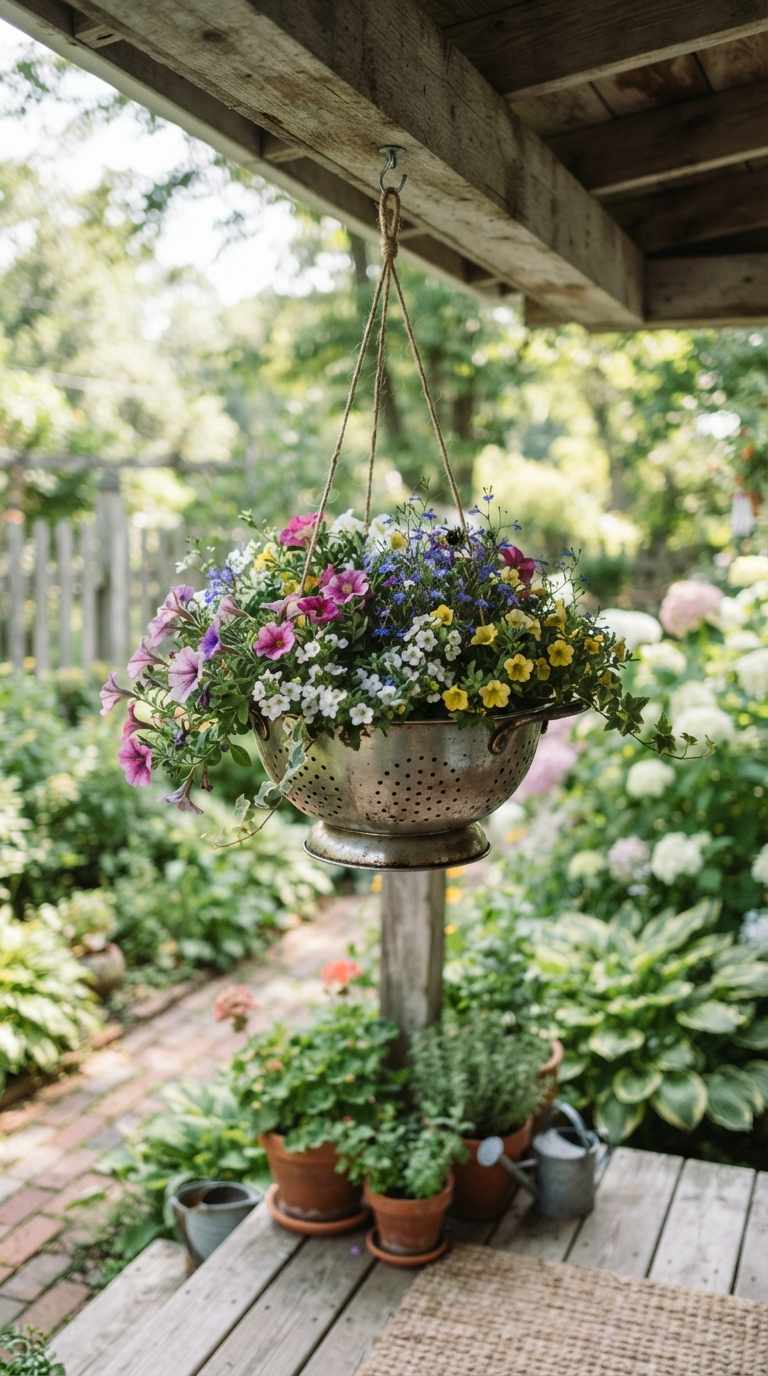
A silver metal colander suspends from a porch ceiling, brimming with pastel petunias, lobelias, and trailing ivy.
Its perforated design provides excellent drainage, making it ideal as a hanging planter.
You can easily convert kitchenware like colanders into dollar-saving planters with little effort.
Just add potting mix, plant flowers or herbs, and use sturdy twine or chains to hang.
This adds a unique touch of charm and brightens porches or patios in budget-friendly style.
16. Small Container Tomato Gardening

A metal bucket houses a healthy, fruit-producing tomato plant with small tools and twine nearby on a wood-chip walk.
This space-conscious container gardening approach fits perfectly in tiny yards or patios.
Growers should use large, well-draining pots filled with nutrient-rich soil and support tomatoes with stakes or cages.
Container planting offers a flexible way to garden when ground soil isn’t available or for renters, giving full control over watering and harvest.
17. Mulched Raised Beds for Moisture Retention

Wooden raised beds display lush vegetable seedlings surrounded by shredded cardboard mulch spread thickly atop the soil.
The mulch blocks weeds, conserves moisture, and slowly decomposes into organic matter, improving soil health.
Using cardboard to mulch is an easy, cost-free way to manage weeds and save on watering.
You should layer it beneath plantings and refill as it breaks down.
This natural material is biodegradable, inexpensive, and makes a big difference in sustainable gardening practices.
18. Creative Garden Paths with Wood Slices

A charming garden pathway made of large, round wood slices laid closely together guides through raised beds and potted plants under an arched trellis.
The natural wood texture adds visual interest and blends organically with the garden environment.
You can source fallen tree rounds or wood offcuts and arrange them over gravel or soil for a durable, rustic path.
This method helps prevent mud and provides a clear walkway while adding character and a personal touch.
19. Vintage Sink Turned Garden Bed

An old farmhouse sink repurposed as a raised planter sits on pallets outdoors, brimming with herbs, lettuce, and small tomato plants.
This creative upcycling adds history and charm while providing a sturdy growing container.
You should find secondhand sinks or tubs at salvage yards to create unique planters.
Ensure proper drainage by drilling holes or elevating on pallets.
This setup is ideal for small spaces and creates a fun conversation piece.
20. Strawberry Vertical Pocket Garden

A wooden fence showcases a hanging strawberry planter made of numerous black grow bags arranged in rows.
Strawberries thrive spilling from the pockets, making the most of vertical space without sacrificing ground area.
You get an affordable, space-saving solution ideal for patios or gardens with limited soil space.
Fill grow bags with soil and arrange singles on a sturdy backing.
Be sure to water often as pockets dry quickly due to their shallow depth.
21. Upcycled Garden Furniture Setup

A rustic wrought-iron table holds potted herbs and gardening tools in a shady, lush outdoor setting flanked by terracotta pots and greenery.
The vintage metal garden furniture adds cozy charm to this productive planting corner.
You can look for vintage or flea market finds for your own gardening station without splurging on new furniture.
It creates a peaceful spot to tend plants, plan your garden, and display containers in style.

Leave a Reply