
Discover the ultimate guide to lawn edging that seamlessly blends style and functionality.
From classic stone to innovative recycled materials, these 30 creative ideas bring structure, charm, and definition to your outdoor space.
Get inspired to transform your garden’s borders with unique textures and colors.
Why Lawn Edging Transforms Your Garden
You should view lawn edging not just as a boundary but as an essential design element that defines your garden’s personality.
Edging prevents grass encroachment, controls mulch, and creates visual balance between lawn and beds.
Choosing the right material and style helps maintain a clean, polished look effortlessly.
I find that combining diverse textures and curves in lawn edging adds dynamic layers to garden design.
Whether you prefer natural stone, rustic wood, or modern metal, edging contributes to overall curb appeal and garden flow.
I love how a simple line or border can elevate even the simplest landscape into something special.
1. Elegant Curved Wrought Iron Fence

This iron fence-style edging shows a stunning combination of function and vintage charm.
The black metal features intricate scrollwork and pointed tops that add an elegant, formal touch to the garden bed.
It clearly defines the lawn edge while creating a subtle height contrast with the plants.
To recreate this look, opt for wrought iron or metal panels anchored securely along a curved edge.
This not only prevents grass invasion but also adds an ornamental barrier perfect for cottage or traditional gardens.
Its openness lets the plants peek through, maintaining a light and airy feel.
2. Modern Gabion Wire Rock Wall

Here, a gabion structure filled with small stones acts as durable edging with an industrial vibe.
The metal mesh cage contrasts sharply with the rich green lawn and soft ornamental plants, highlighting the garden’s contemporary style.
The raised edge creates a robust separation while offering excellent erosion control.
You can build these using galvanized steel mesh baskets filled with river rocks or gravel.
Gabion walls are highly customizable in height and shape, making them ideal for sloped terrain or patios.
This is perfect if you want an edgy, sculptural boundary that doubles as a seating bench or planter base.
3. Cleanly Dug Mulch Trench

This edging technique uses a precise trench to separate mulch beds from lawn.
The trench has been carefully shaped with smooth curves that flow naturally, emphasizing a seamless transition between grass and planting area.
It gives the garden a very neat, understated finish without adding materials.
To achieve this look, use a sharp spade or edging tool to cut a defined trench 4-6 inches deep around your beds.
Regular maintenance will keep grass from creeping in.
This low-cost approach is excellent if you want simplicity and natural soil lines, perfect for rustic or meadow-style gardens.
4. Rustic Corten Steel Border

A standout example of bold, modern edging is the use of rich reddish-brown corten steel that naturally rusts for a weathered aesthetic.
This edging forms sweeping curves that gracefully hug the flower beds, creating a sleek contrast with bright green grass and varied plant textures.
Using corten steel strips allows you to design crisp, flexible edges that resist weather extremely well.
They are ideal for contemporary or minimalist gardens and provide a striking focal line.
Installation requires embedding the steel firmly in the soil to ensure it stays upright and maintains clean curves.
5. Natural Flagstone Path Edging

Here, flat flagstones are laid along the lawn edge, defining a pathway with warm earthy colors and rough natural textures.
The stone path is interspersed with tiny plants, softening the border and lending an organic feel that’s inviting and tactile.
You can place stones directly on leveled soil and stabilize with sand or gravel beneath for durability.
This edging technique doubles as a charming walkway and encourages foot traffic while creating a functional edge that blends seamlessly with the garden’s flow.
6. Sleek Stainless Steel with Blue Glass

This garden edge is a striking fusion of modern materials: brilliant cobalt blue crushed glass inside a stainless steel channel.
The vivid glass adds a jewel-like sparkle and vivid pop of color that contrasts sharply with the deep green grass and earthy planting bed.
To replicate this dazzling look, install metal edging with a channel wide enough to hold decorative glass pieces or stones securely.
This idea adds glamour and personalization while maintaining clean lawn lines, perfect for contemporary or artistic gardens seeking a visual wow factor.
7. Classic Brick Herringbone Edging

This edging uses weathered red bricks laid in a herringbone pattern creating a timeless, textured border.
The warm terracotta tones complement the greens and purples of the adjacent plants, while the carefully angled bricks offer strong visual interest along the lawn edge.
Lay bricks on a prepared gravel and sand base, ensuring they are firmly set for durability.
This method works well in traditional or cottage gardens, and the detailed pattern elevates the simplicity of brickwork into a decorative feature.
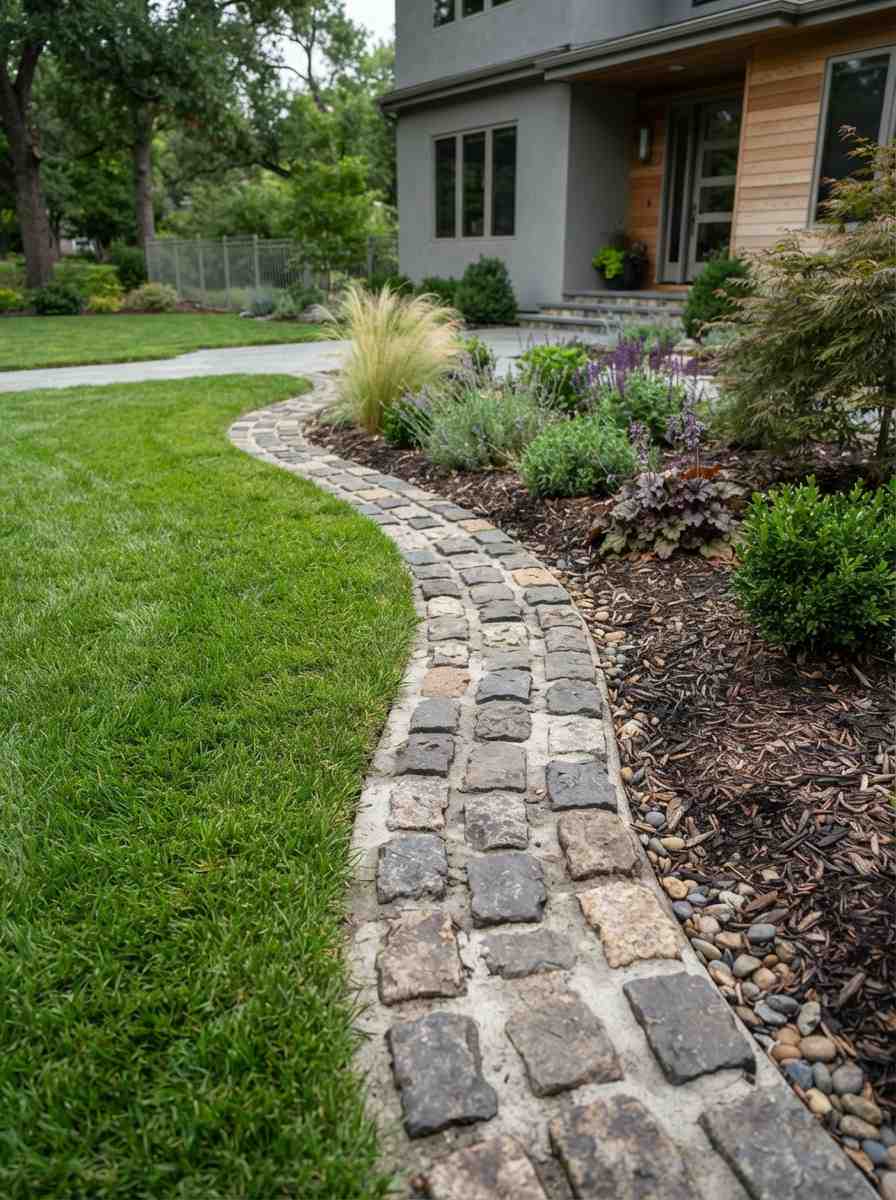
8. Rustic Cobblestone Rock Border

Here, a mix of square and rounded cobblestones form a charming edging with a pleasant rustic vibe.
The varied gray tones and natural textures add depth to the garden edge, while the gentle curve keeps the border inviting and organic.
To install, set stones into a trimmed edge with a compacted base of gravel to secure them firmly.
It’s perfect if you want durable, low-maintenance factored with old-world character that adds a subtle layered detail to your lawn.
9. Recycled Bottles as Creative Edging

An eco-friendly and whimsical alternative, this edging uses upside-down glass bottles lined end-to-end along the garden bed.
The mix of green, amber, and clear glass creates a colorful, textured boundary that doubles as a conversation starter.
Use sturdy stakes or a metal strip beneath the bottles for stability.
This DIY approach suits casual or artistic gardens and is a smart way to recycle materials while adding distinct personality and color to your edges.
10. Classic Stone Block Border

This design features neatly stacked granite blocks forming a low stone wall that edges the garden bed with natural solidity.
The roughly hewn, light-gray stones contrast softly with green foliage and offer a clean, curated form that resists lawn creep.
Stack or set the blocks firmly in the soil, packing soil and mulch behind to keep them steady.
This timeless method is excellent for both formal and informal gardens, yielding a well-defined edge and structural appeal over time.
11. Curved Plastic Lawn Edging Strips

This example showcases flexible black plastic edging held in place by stakes, bending effortlessly in soft, sweeping curves.
The clean black line crisply separates mulch and lawn in a minimalist, almost invisible way, blending well with the natural surroundings.
Plastic edging is budget-friendly, easy to install, and low maintenance,perfect for gardeners seeking simple but effective lawn borders.
It’s great for curvy landscapes where you want neatness without adding bulk or distraction.
12. Natural Log Round Fence

Using sliced tree trunks vertically embedded to form a rustic fence edge, this garden border exudes woodland charm and warmth.
The varying sizes and natural bark textures create a lively, earthy border that complements the lush planting.
This method requires durable logs and a firm foundation in soil for stability.
It’s ideal for naturalistic backyard gardens or cabin-style homes where organic, recycled elements reinforce a connection to nature.
13. Clean Minimalist White Stone Bed

Crisp white river stones edged with sleek black metal create a striking modern border that brightens the bed and contrasts profoundly with the vibrant plants and fresh lawn.
This look is sharp and refreshing, offering a polished, clean boundary.
Regularly replenish stones to maintain brightness and prevent grass takeover.
This contemporary edging is excellent near patios or modern homes where you want clarity and airy lightness in your garden structure.
14. Artistic Mosaic Tile Border

A narrow strip of intricate mosaic tiles runs along this garden bed, combining earthy browns, blues, and cream hues in swirling patterns.
The tile edging adds handcrafted artistry that elevates the garden’s aesthetic with rich color and texture.
Install tiles in a concrete or mortar base for durability.
This approach works brilliantly for small to medium borders where artistic detail is desired, blending cultural craft traditions into outdoor spaces spectacularly.
15. Stone and Pebble Drainage Border

This edging uses a defined trench filled with medium river pebbles framed by subtle stone borders, serving both aesthetic and drainage functions.
The natural stones vary in warm tones that blend seamlessly with surrounding mulch and plants.
Incorporating a gravel trench can improve water runoff while adding visual texture, especially along lawn perimeters near buildings.
It’s a smart choice for gardens that need practical solutions without sacrificing style.
16. Smooth Concrete Curve Edging

A modern, sleek concrete edging with smooth rounded edges defines this lawn border.
Its light-gray tone complements the natural greens and brown mulch, while the continuous curve gives a feeling of flow and order.
This permanent solution requires professional installation but pays off with durability and a clean aesthetic.
It works great for contemporary landscapes emphasizing structured formality combined with natural curves.
17. Colorful Vertical Pipe Edging

Painted ceramic pipes in soft pastels stand vertically along this edge, offering a quirky, tactile border bursting with color and playfulness.
The uniform height and alignment create rhythm, while the bright colors contrast beautifully with greenery.
This creative idea is fantastic to repurpose unused pipes or ceramics and inject personality into garden design.
Ensure pipes are partially buried for stability and consider sealing interiors for longevity, creating a durable art-inspired edging.
18. Weathered Railroad Tie Retaining Edge

Vintage railroad ties stacked to form a raised bed edge lend this garden a sturdy, rustic character.
Their rough-hewn wood texture and deep brown patina bring a natural warmth and sense of history to the landscape.
Railroad ties are perfect for creating raised borders that need structural strength and durability.
Treat and seal them to resist rot, and use heavier-duty stakes for additional support in soft soils.
They work well in country, woodland, or farmhouse-style gardens.
19. Knotted Rope and Post Edging

This design uses sturdy wood posts connected with thick knotted rope, making for a naturalistic fence that guides the eye along the garden bed without closing off space.
The rope softens the hard edges and adds a nautical or coastal vibe.
Posts should be firmly planted with secure rope ties for safety and longevity.
This is ideal for informal gardens or pathways needing gentle boundaries that maintain visibility while defining edges clearly.
20. Simple Black Plastic Strip Border

This flexible plastic edging strip forms a neatly maintained but unobtrusive curve that defines garden beds simply and effectively.
The black color blends with the mulch, making the lawn’s green tone visually pop.
These strips are easy to install by pressing into a shallow trench and securing with stakes.
They’re cost-efficient and great for DIY gardeners wanting tidy borders without additional bulk or complexity.
21. Stacked Natural Stone Wall

A carefully stacked dry stone wall edges this garden bed, offering substantial height and textural appeal with unique varied stones.
The rough gray slabs contrast beautifully with soft planting and freshly mown grass, creating a grounded, classic look.
Building a dry stone wall requires skill to interlock stones securely but results in a charming, enduring border.
It’s perfect for landscapes that demand stone durability with rustic elegance, providing protection as well as beauty.
22. Thick Stone Blocks with Raised Edge

Large rectangular stone blocks create a sturdy raised border with a natural limestone look.
Their beige tones warm up the garden while the roughly textured faces add visual interest.
The height helps contain mulch and defines beds prominently.
Stone block edging works well for formal or terraced gardens where extra containment or planting depth is needed.
Proper foundation and leveling are crucial for durability and even appearance.
23. Shell and Pebble Natural Border

This unique edging is crafted from large seashells neatly arranged along the lawn’s edge, mixed with smaller pebbles.
It creates a beachy, coastal atmosphere with varied textures and off-white tones contrasting green grass and brown mulch.
If you want to bring a seaside vibe to your garden, collect shells or purchase large decorative ones, and secure them in a shallow trench filled with gravel for stability.
This natural edging works beautifully for cottage or seaside-themed gardens.
24. Slate Rock Sliver Border

Flat, elongated slate stones laid vertically create a slender, sharp-edged border with a sophisticated charcoal-gray palette.
The close packing and regular shaping emphasize clean lines and a contemporary feel while maintaining natural stone qualities.
Use this edging for gardens aiming for refined modernity with an organic touch.
Slate is durable and relatively easy to work with, although it requires steady foundations to keep stones upright and aligned.
25. Stacked Pebble Retaining Wall

A smooth, rounded pebble wall rises gently to define the garden bed, offering natural texture and an understated sculptural effect.
The stones’ earthy tones integrate beautifully with surrounding plants and mulch.
Building this kind of pebble wall demands patience and craftsmanship to stack stones securely without mortar.
It’s perfect for gentle slopes or borders needing a rustic yet carefully crafted edge that blends with natural surroundings.
26. Rustic Timber Beam Border

Massive weathered timber beams set horizontally form this hearty garden edge.
The dark browns and rough grain textures inject earthy warmth and create a strong physical separation between lawn and bed.
These beams work well in large gardens or rural landscapes where durability and strong lines are desired.
Installing requires solid soil embedding or anchoring to prevent shifting, and sealing extends the wood’s life against moisture and insects.
27. Curved Woven Willow Fence

A charming, hand-woven willow fence gently defines this garden edge, adding soft curves and natural texture.
The light brown interwoven branches provide an artisan touch that blends perfectly with lush planting.
W willow fencing is an excellent choice for gardeners who want a biodegradable, sustainable border with a cottage garden feel.
Choose flexible fresh willow branches and weave tightly around stakes for a lasting, decorative barrier.
28. Black Steel Edging with Lighting

A sleek black steel strip edging the garden bed is paired with modern, ground-mounted landscape lights.
This combination enhances garden visibility and atmosphere at night while maintaining clean, contemporary lines by day.
Installing integrated lighting along metal edging creates dual functionality,defining edges and adding safety or ambiance.
Invest in quality solar or low-voltage LED fixtures and plan wiring carefully to spotlight your garden’s best features.
29. Stacked Stone Retaining Wall

This garden features a skillfully stacked stone retaining wall with dark slate and limestone pieces layered precisely.
Their varied natural hues and textures provide visual richness and a solid, earth-friendly edge that enhances the planting bed.
Stone retaining walls require proper excavation and drainage planning.
I recommend consulting with a masonry expert to ensure longevity and stability, especially for higher or sloped beds where soil containment is critical.
30. Natural Wood Beam Lumber Edge

Here, broad natural wood beams form a ground-level border with a rustic yet orderly look.
The timber’s weathered texture and warm tones create a cozy feel, balancing softness with definition along the grass.
These beams suit gardens that want a low, linear boundary with a woodland cottage style.
Secure them with stakes or concrete footings to avoid shifting, and treat to prevent deterioration caused by weather and pests.


Leave a Reply