
When my friend remodeled her kitchen last spring, she chose bamboo cabinetry and reclaimed wood accents.
The transformation was gorgeous and environmentally conscious.
I want to show you how simple changes like these can elevate your home while reducing your footprint.
Why Choose Eco-Friendly Upgrades
You should think of eco-friendly upgrades as an investment in your home’s future and the planet.
These improvements not only reduce energy and waste but often add warmth and timeless style.
I find that incorporating sustainable materials like reclaimed wood or low-VOC paints makes your space feel fresher and more inviting.
You get longevity and healthier indoor air all in one.
1. Use Reclaimed Wood

Reclaimed wood instantly adds character to a room with its weathered texture and unique grain patterns.
You can use it for flooring, accent walls, or furniture to bring warmth and history into your space.
I love how reclaimed oak or pine looks paired with matte black hardware for an industrial yet cozy vibe.
It feels high-end because each board tells its own story, making your home truly one of a kind.
Choosing reclaimed wood keeps perfectly good timber out of landfills and reduces demand on old-growth forests.
Bonus: sealed properly, it lasts decades without warping.
2. Install Energy-Efficient Windows

You can dramatically cut heating and cooling costs by switching to double-pane or triple-pane energy-efficient windows.
Look for frames made from sustainable materials like wood or recycled aluminum.
I personally recommend windows with low-E coatings that reduce harmful UV rays while letting in natural light.
They make your home feel brighter but keep your utility bills low.
The sleek, slim profiles of modern eco windows blend seamlessly into both traditional and contemporary designs, so you never sacrifice style for sustainability.
3. Opt for Low-VOC Paints

You should select low-VOC or zero-VOC paints to improve indoor air quality while beautifying your walls.
These paints come in rich, saturated colors without that harsh chemical smell.
I love how eggshell or matte finishes in earth tones feel sophisticated and calming in living spaces.
They make rooms look polished without the toxicity.
Choosing eco-friendly paint is especially important in bedrooms and nurseries where air purity matters most for health and wellbeing.
4. Add Solar Panels

Installing solar panels on your roof can significantly reduce reliance on fossil fuels.
Modern panels are sleeker and more efficient than ever, some even blending with roof tiles.
I find that tracking your energy production via apps adds a fun, engaging dimension to green living.
You get to see real impact every day.
Plus, solar panels increase your property value while slashing electric bills, making them a smart financial and environmental choice.
5. Use Sustainable Insulation

You can improve your home’s energy efficiency by replacing old insulation with sustainable options like recycled denim or sheep’s wool.
These materials are non-toxic and offer excellent soundproofing.
I personally recommend natural fiber insulation because it regulates humidity better than fiberglass.
This keeps your indoor air fresher and your home comfortable year-round.
Installation is straightforward, and the eco-friendly factor feels rewarding knowing you’ve reduced landfill waste while boosting comfort.
6. Choose Bamboo Flooring

Bamboo is a fast-growing grass that makes a durable, renewable alternative to hardwood flooring.
Its smooth, clean grain and warm honey tones elevate any room’s aesthetic.
I find that strand-woven bamboo floors have a rich, dense feel underfoot that rivals traditional oak in luxury.
They age beautifully and resist scratches.
Switching to bamboo floors is a visible commitment to sustainability without compromising on classic high-end style.
7. Install Low-Flow Fixtures

You should replace showerheads and faucets with low-flow models that conserve water without sacrificing pressure.
Many come in brushed nickel or matte black finishes that look sleek and modern.
I love how switching to these fixtures instantly updates bathrooms with a spa-like vibe.
They reduce water waste and your monthly utility costs.
Plus, installation is quick and unobtrusive, making this a simple yet impactful eco-upgrade.
8. Use Recycled Glass Tiles

You can add stunning backsplashes or shower walls using recycled glass tiles that shimmer subtly in natural light.
They come in jewel tones or soft frosted finishes for varied styles.
I find those tiles visually elevate kitchens and baths with their handcrafted, artisanal look.
They feel upscale thanks to the reflective quality and tiny imperfections.
Choosing recycled glass not only reduces waste but creates a focal point that sparks conversation.
9. Incorporate Natural Fibers

You should decorate with rugs, curtains, and upholstery made from natural fibers like organic cotton, jute, or hemp.
These materials are biodegradable and sustainable.
I love how these textures bring warmth and depth to rooms with a refined, earthy elegance.
They pair well with wood and stone for a timeless look.
Switching to natural fibers feels like wrapping your home in comfort that’s healthy for both you and the planet.
10. Add Green Roofing

Green roofs covered with moss, sedum, or native grasses provide insulation and reduce stormwater runoff.
They also add a touch of nature to urban settings.
I find that walking on a lush roof garden is a unique pleasure you must experience firsthand.
Green roofs improve air quality and extend roof lifespan.
The visual softness and vibrant greens contrast beautifully with concrete or metal architecture for a truly modern eco aesthetic.
11. Choose Eco-Friendly Cabinets

You can opt for cabinets made from FSC-certified wood or reclaimed materials finished with natural oils instead of chemical varnishes.
The results are durable and less toxic.
I personally recommend shaker-style cabinets with natural walnut finishes for a clean, elegant look that never goes out of style.
The tactile matte finish feels luxurious and authentic.
These choices make kitchens and bathrooms feel fresh and grounded in sustainability.
12. Use Smart Thermostats

Installing a smart thermostat helps optimize heating and cooling, reducing wasted energy while maintaining comfort.
Many models learn your schedule automatically.
I find the ability to control temperature remotely through apps adds convenience and peace of mind.
It’s a small tech addition with a big eco impact.
Visually, these sleek devices blend effortlessly with modern interiors, often featuring minimalist interfaces.
13. Install Rainwater Harvesting

Rainwater harvesting systems collect runoff for irrigation or non-potable indoor use.
This conserves municipal water and reduces your environmental impact.
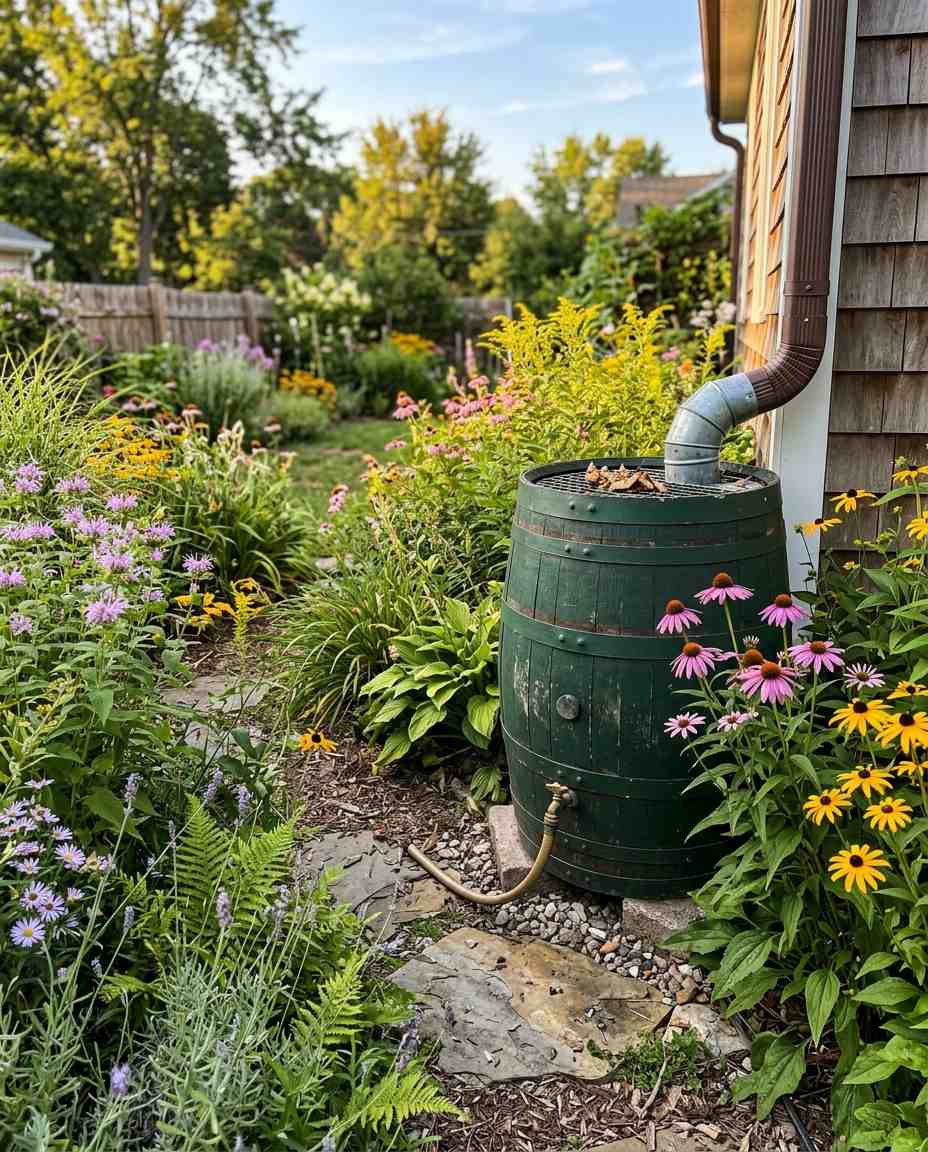
I love how discreet modern rain barrels can be, blending into gardens with natural wood finishes or deep green colors.
They help create a lush, self-sufficient yard.
Installing a rainwater system also connects you more deeply to seasonal rhythms and natural resources.
14. Choose LED Lighting

You should swap out incandescent bulbs for LED lighting, which uses far less energy and lasts much longer.
LEDs come in warm or cool tones that flatter any room.
I personally recommend dimmable LED options with stylish matte or brushed metal fixtures for a chic, sustainable upgrade.
Effective layering of light adds depth and comfort.
This is a quick, visible eco improvement that immediately reduces your home’s carbon footprint.
15. Install Compost Bins

Having a designated compost bin in your kitchen reduces food waste sent to landfills.
Choose models made from recycled stainless steel or biodegradable materials.
I find that placing a compost bin within easy reach encourages daily use and supports sustainable habits.
The sleek containers with carbon filters keep odors at bay.
Compost enriches your garden soil naturally, closing the loop between indoor living and outdoor growth.

Leave a Reply