

Transform your front yard this summer with the best foundation plants that blend beauty, texture, and structure.
These 30 carefully curated options suit a variety of home styles and climates, ensuring your entrance is lush, inviting, and effortlessly stylish all season long.
Choosing the Right Foundation Plants
You should pick foundation plants that complement your home’s architecture while providing consistent seasonal interest.
Consider factors like size, texture, and color in relation to your yard and house style to create a balanced, welcoming look.
Grouping plants with contrasting leaf shapes and colors creates dynamic borders and focal points.
I find that layering various types of shrubs, grasses, and flowering perennials offers both structure and softness.
I love how evergreens add year-round greenery, while flowering shrubs bring bursts of color and fragrance in summer.
The right foundation plants not only frame your home beautifully but also boost curb appeal effortlessly.
1. Evergreen Variety Bed with Textural Contrast

This modern front yard shows a well-organized collection of evergreen shrubs and conifers in varying shapes and colors.
The black mulch enhances the greens and blues, while the stones add natural texture.
Combining a dense, rounded boxwood with spiky blue spruce and soft, drooping pines creates a layered, forest-like feel without overwhelming the walkway.
To recreate this, use a mix of coniferous plants with different growth habits near your foundation, ensuring some are low-story and others taller to build depth.
The dark mulch brings out the plant colors brilliantly and keeps soil moisture intact.
2. Classic Boxwood Hedges for Formal Charm

Perfectly clipped boxwood hedges border the minimalist pathway leading to a sleek modern entrance.
The tight, leafy texture of the boxwood adds an air of sophistication and intentionality that frames the clean lines of the architecture.
Gravel between the stepping stones adds soft contrast without detracting.
This evergreen shrub performs exceptionally well trimmed, making it ideal if you love a neat, classic look.
Regular pruning will keep it dense and tidy.
Use as straight hedges to guide visitors or as geometric shapes to emphasize pathways.
3. Vibrant Blue Hydrangea Blooms

A profusion of bright blue hydrangea flowers lends vivid color against pale concrete and white siding.
The mophead blooms burst at the foundation’s base, softening the structured corner and inviting warmth.
Underplanting with hostas and ferns increases texture variety and shades of green.
Hydrangeas thrive in partial sun with moist, rich soil.
To get those intense blue flowers, adjust soil pH for acidity.
This shrub adds undeniable charm with its large blooms and leafy backdrop for a cottage or traditional home.
4. Tall Evergreen Pillars for Entrance Framing

Two stately evergreen columns dramatically flank the concrete path leading up to a modern two-story residence.
Their verticality contrasts beautifully with the house’s horizontal wood and stone cladding.
The garden bed weaving ornamental grasses and flowering perennials creates a layered plot that blends natural and curated elements.
Use tall, slender evergreens like arborvitae or juniper near entrances to define spaces and add height.
Multi-layered planting beds enhance visual complexity but keep height transitions soft to avoid abrupt shifts.
5. Lush Japanese Forest Grass Groundcover

A riot of dense Hakonechloa Japanese forest grass spreads out in front of a sharp slate pathway.
Their bright chartreuse foliage contrasts with deep purples from other foliage plants, including heucheras and ferns.
The wet, slightly reflective slate adds sophistication and allows the grasses to sway freely.
This is an easy, noise-reducing groundcover that thrives in shade or filtered light.
Its cascading blades add movement and complement architectural stone or wood.
Use alongside darker-leaf shrubs for contrast and a dynamic, garden-like compostion.
6. Compact Red Barberry Accent

Here a tidy, compact shrub with burgundy-red leaves stands out against concrete pavers and neutral-toned modern siding.
Blue-flowering perennials and ornamental grasses border it, emphasizing its rich leaf color and the garden’s crisp geometries.
Mulch and stones create a clean base layer.
Barberry shrubs provide striking year-round color and tolerate sun well.
Their thorny branches deter unwanted foot traffic too.
Great for planting next to patios or walkways to add vivid color and interest without overwhelming space.
7. Dark Purple Smokebush Near Foundation

A smoky purple leaf smokebush (Cotinus) nestles under large, modern windows, creating a rich jewel-toned statement.
Its rounded, informal shape contrasts beautifully with the straight lines of the contemporary home and stone pathway.
Small accent plants balance with varying textures below.
Smokebushes are drought tolerant and fast growing, making them great for dramatic foundation planting.
Their dark foliage adds depth, especially when planted next to lighter-colored siding or stone.
Regular pruning encourages fullness and vibrant new growth.
8. Symmetrical Boxwood Border Pathway

A classic, winding concrete path is flanked by impeccably clipped boxwood hedges, guiding visitors directly to the front door.
Mulch and stone beds soften the base while naturalistic grasses and flowering plants fill out the garden sides.
The geometric shape contrasts with the more organic plant shapes beyond.
Boxwoods are perfect if you want a structured, formal foundation plant that will maintain its look with regular trimming.
Use them to create pathways, entry borders, or low garden walls that frame your yard design with crisp lines.
9. Rounded Evergreen Shrubs Near Front Steps

Dense, rounded, and bright green evergreen shrubs cluster under a covered porch, softening the solid architectural lines.
Their tight foliage adds texture and volume close to the house while maintaining a neat, approachable look.
Wood accents in the background provide warmth to the overall palette.
Use these compact shrubs like boxwood or dwarf holly around stoops or porch edges to create an inviting foundation without crowding walking areas.
Mulching around the base with stones or bark keeps roots cool and moist.
10. Purple Coral Bells in Urban Planters

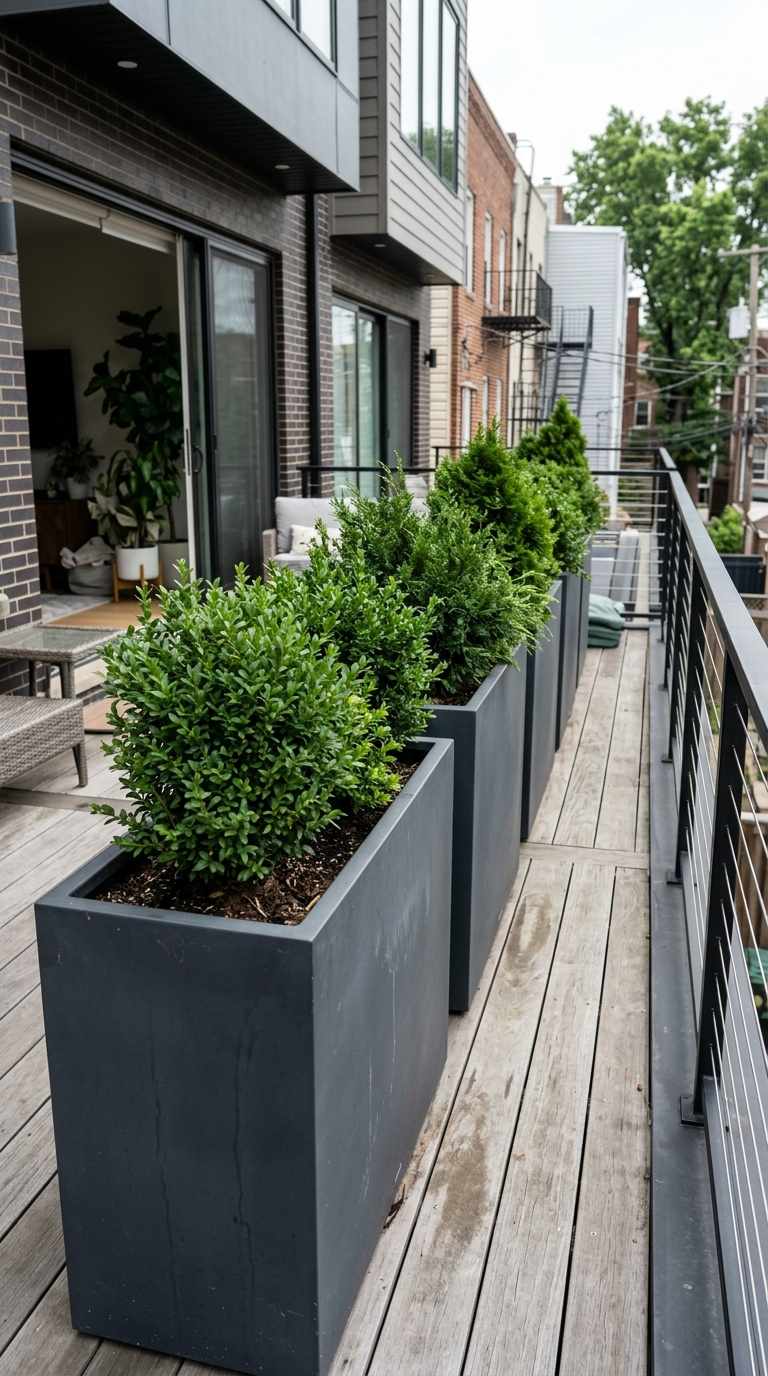
A line of concrete planters along a city sidewalk features vibrant purple coral bells (Heuchera) with delicate flower spikes rising above.
Their rich foliage provides intense color and softens the hard edges of concrete and glass buildings.
This setup also functions as a subtle barrier and aesthetic feature for the entrance.
Coral bells thrive in containers and partial shade.
Their colorful leaves and airy blossoms make them versatile for urban front yards or small patios.
Pair with neutral pots and stones to anchor the composition and maximize impact.
11. Low-Growing Juniper Border

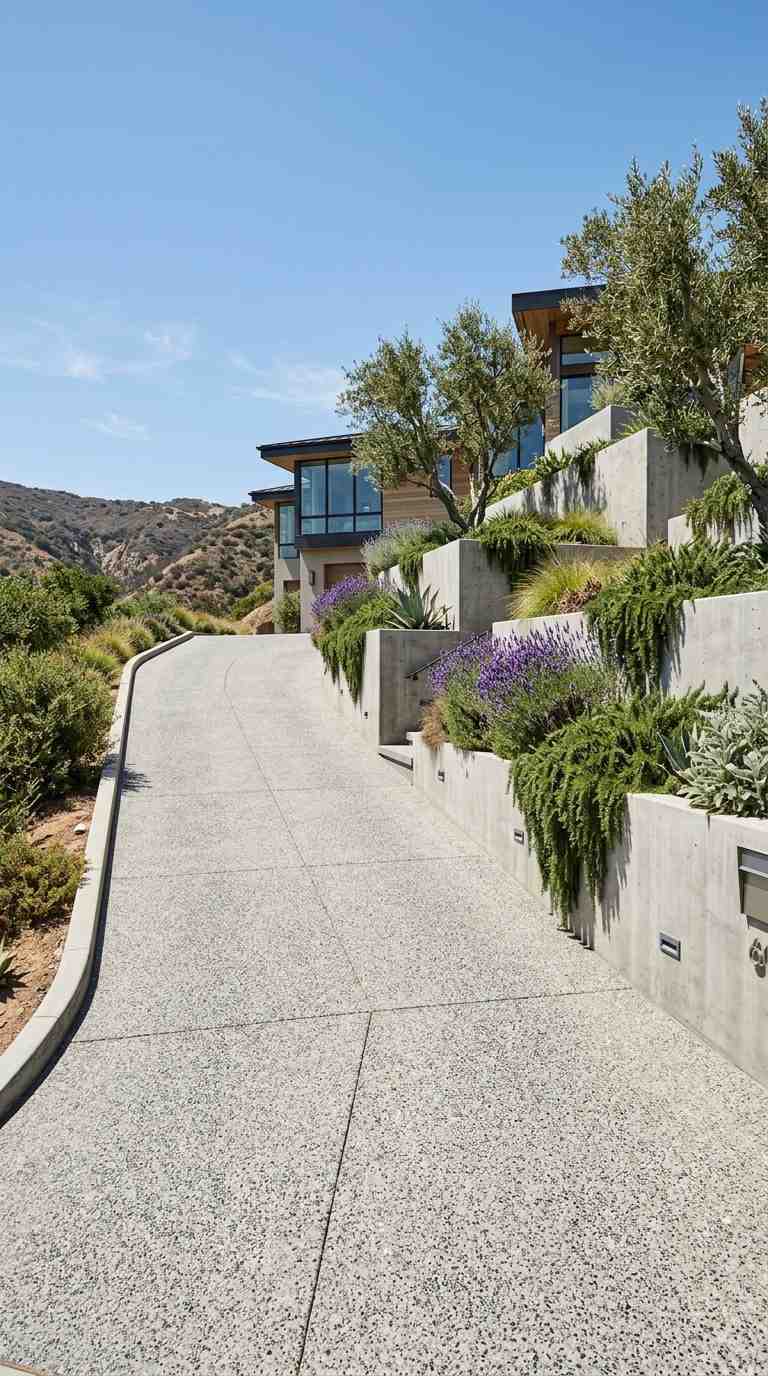
A low, trailing juniper variety flows along the edges of a stepped concrete sidewalk, creating a soft green border.
The dense needle foliage is a cool blue-green that contrasts subtly with the hard gray concrete and stone.
Ornamental grasses peek out above the groundcover, contributing more texture.
Junipers are perfect for erosion control and low-maintenance borders near walkways.
Their sprawling habit fills gaps and prevents weed growth.
Consider combining with taller grasses for depth and seasonal change.
12. Delicate White-Flowering Deutzia

A white-flowered Deutzia shrub cascades gently along a rusted steel garden bed edging.
Its profusion of star-like blossoms adds softness and brightness beside modern concrete walkways.
Behind it, ornamental grasses and other flowering perennials build a layered summer garden.
Deutzia offers beautiful, fragrant summer blooms, ideal for adding a light touch near hardscapes.
It’s a great choice if you want something that is visually delicate yet hardy enough to thrive in a variety of soils.
Prune lightly after flowering for best shape.
13. Lavender-Blue Catmint Pathway Border

Bright lavender-blue catmint (Nepeta) lines a loose gravel pathway, creating a wave of cool-toned blooms that feel both welcoming and low-maintenance.
The plant’s loose, airy structure balances rustic gravel with a contemporary house backdrop.
Silver-green foliage complements the flower color beautifully.
Catmint is drought-tolerant and attracts pollinators, ideal for sunny areas.
Use it en masse to soften edges of paths or driveways.
It’s easy to propagate and stays vibrant with just occasional cutting back to avoid legginess.
14. Structured Viburnum for Shade and Privacy

A solid, well-maintained viburnum shrub with dense dark green leaves stands against a modern wood and stone exterior.
This plant provides both summer privacy screening and year-round greenery.
The layered planting with golden ornamental grasses at the base adds softness and seasonal movement.
Viburnums are excellent all-around foundation shrubs, tolerant of sun and partial shade.
They flower subtly before summer, then provide bulk and structure.
Keep the base mulched with gravel or stones to prevent moisture issues and highlight textural contrasts.
15. Massive Daylily Perennial Borders

Bright yellow daylilies surge in sleek, endless bands beside a sweeping concrete drive, creating vibrant waves of summer color.
This uniform border design contrasts with the neutral tones of the stone and wood house exterior, highlighting the vivid blooms.
Daylilies are easy to grow, low maintenance, and attract pollinators, making them perfect for long borders and driveways.
Plant in mass for a unified look that pops.
They tolerate sun well but appreciate mulching to maintain soil moisture.
16. Arching Cotoneaster with Berries

A graceful cotoneaster spans over a rustic stone wall, its long branches arching down with vibrant red berries highlighting summer and fall interest.
The dark green leaves contrast nicely with the grey stone, creating a naturalized yet cultivated appearance.
Cotoneaster is an excellent planting choice for sloped areas or raised beds where cascading vines help stabilize soil.
Its berries also feed wildlife, adding ecological value.
Prune lightly to contain spread as needed.
17. Ornamental Grass Mass with Soft Plumes

Tall ornamental grasses with feathery beige plumes sway gently along a sidewalk next to a dark-clad modern home.
The grasses’ verticality adds rhythm and a breeze-responsive element to the foundational planting.
River rocks beneath create a clean, finished look while aiding drainage.
Plant ornamental grasses like Miscanthus or Feather Reed Grass in groupings to emphasize their movement.
Their hearty nature works well on edges where space is limited but you want visual height and softness.
Add a rock base to retain moisture and discourage weeds.
18. Fragrant Gardenia Foundation Shrub

A compact gardenia bush with creamy white flowers sits near a contemporary wood-sided home.
The shiny green leaves and sweetly scented blossoms bring timeless elegance and summer fragrance.
Smooth stones and blue-grey ornamental grasses form a neighboring border.
Gardenias demand well-drained, acidic soil and partial shade to thrive.
Use them near entranceways or patios to enjoy their intoxicating scent.
Regular feeding and watering yield the best bloom profusion.
19. Lavender Border Defines Modern Path

Rows of dense lavender frame a straight walkway leading to a contemporary home entrance, creating a striking purple ribbon effect.
The rustic bark mulch grounds the planting beds, while plant height stays low and uniform for a manicured, coastal vibe.
Lavender’s drought tolerance and deer resistance make it an unbeatable front-yard staple.
It’s ideal for borders thanks to the compact growth and spike flowers that attract pollinators.
Trim after flowering to keep its neat shape and promote fresh new growth.
20. Soft Yellow-Green Hedge for Structure

A vibrant hedge of yellow-green shrubs graces the edge of a stone sidewalk next to a white stucco home.
The bright foliage draws attention and contrasts gently with the dark exterior cladding.
Low dark-leafed plants beneath add layered dimension and balance.
Choosing a golden-leafed shrub like Spiraea or Dogwood adds instant color brightness to shady or neutral front yards.
Their moderate height is perfect for foundation planting that fills space without blocking views.
21. Purple Coneflower and Prairie Garden

A wildflower-inspired front bed bursts with magenta echinacea (purple coneflowers), yellow black-eyed susans, lavender Russian sage, and ornamental grasses.
Beds are bounded by rusty metal edging for tidy structure, while pathways remain raw stone.
This native prairie style planting supports pollinators and thrives without fuss.
Perfect for eco-conscious gardeners who want naturalistic, vibrant summer color.
Combine with structural grasses to add texture and keep interest through various seasons.
22. Blue Salvia Spikes in Mulched Bed

Vertical spikes of blue salvia stand prominently in a mulched front bed, surrounded by low green foliage with silver accents.
The sunlit scene conveys a lush yet disciplined planting style that complements the stone driveway and rustic garage backdrop.
Salvia is an easy-to-grow, pollinator-friendly perennial with dramatic flower stalks.
Plant in groups near foundations or walkways for vertical interest.
It’s drought tolerant and pairs beautifully with silver-leaf plants like lamb’s ear.
23. Rhododendron’s Broad Leaf Texture

Large-leaf rhododendron shrubs provide a deep green, glossy backdrop for a modern commercial-style building entrance.
The size and rounded form create presence while surrounding ornamental grasses add a wild softness.
Rhododendrons prefer moist, well-drained acidic soil and partial shade.
They offer excellent foundation coverage with evergreen foliage and showy flowering in spring.
Use where you want lush, textural greenery year-round with minimal maintenance.
24. Lavender-Blue Russian Sage Flowing Border

A lush thicket of Russian sage spills over the edge of a modern concrete wall, softening the hard urban feel with airy purple flowers and silvery foliage.
Its natural form adds a relaxed, cottage garden appeal within a contemporary setting.
Russian sage thrives in full sun and dry soil, perfect for hot, sunny front yards that need drought-tolerant plants.
It grows tall and airy, so pair with shorter shrubs in front for layering.
Regular pruning after bloom ensures fresh, compact growth.
25. Sedum Grouping in Gravel Garden

Clusters of mature sedum plants sit within well-defined gravel beds edged with corten steel in a xeriscaped front garden.
Their fleshy, rounded leaves and large flower clusters add succulent texture and warm autumnal color.
Sedums are extremely drought resistant and require minimal care, ideal for hot, sunny areas where traditional shrubs might struggle.
Use them in gravel or rock gardens to add thickness and floral interest late in the season.
Groupings create greater impact with an organized look.
26. Winterberry Holly’s Bright Red Berries

This neatly trimmed row of evergreen holly shrubs surprises with bright red berries scattered throughout the dark green foliage, offering year-round visual interest.
The plants hug the sidewalk closely, creating a natural border and festive curb appeal.
Winterberry hollies are deciduous but prized for their berry production in fall and winter.
They add color to otherwise green foundation landscapes and are relatively low maintenance.
Position where pedestrian traffic is limited to avoid fruit drop and use paired selections for cross-pollination.
27. Colorful Variegated Nandina Shrubs

A cascading cluster of variegated nandina domestica (heavenly bamboo) offers bright pink and cream foliage that is both delicate and bold.
The plant sits next to concrete stairs, breathing life and cheerful color into an otherwise monochrome foundation.
Nandina is a versatile, slow-growing shrub that tolerates sun or shade, with colorful seasonal foliage changes and red berries in winter.
Use it as an accent plant near entries or in mixed foundations for uplift and softness.
Regular pruning encourages fullness and vibrant color.
28. Golden Spirea Breezy Border

A row of low spirea with golden leaves lines a paved walkway beside contemporary black wood siding.
The lush, sunlit foliage contrasts dramatically with the dark exterior, while smaller textural plants underneath soften edges.
Golden spirea is hardy, drought tolerant, and brightens shady or neutral yards.
It thrives in full sun and requires little maintenance, fitting perfectly in multifaceted foundation beds.
Combine with purples or dark colors beneath for a lively color scheme.
29. Hosta’s Luxurious Leafy Spread

A beautiful grouping of hostas demonstrates volume and textural variety with variegated green and cream leaves clustered in front of a charming wood-and-stone home.
Ferns and heucheras surrounding the hostas enhance the lush woodland garden effect.
Hostas are shade-loving perennials that add infinitely rewarding foliage interest.
They thrive in moist, well-drained soils and are perfect against shaded foundations or under deciduous trees.
Mix different varieties to add color contrast and texture.
30. Fine-Textured Upright Viburnum

A dense, large-leaf viburnum forms a tidy, rounded shrub at a modern front door, its rich leafy green offering foundation screening.
Underplanting of ornamental grasses and golden spiky foliage adds dimension.
This type of viburnum offers privacy, greenery, and year-round form near entryways.
It responds well to pruning to maintain size and shape and thrives in well-drained, fertile soil.
Good for medium-sized foundation plantings.
Leave a Reply