
From urban balconies to sprawling backyard retreats, these vegetable garden designs showcase bold creativity and practical brilliance.
Whether you love high-tech vertical gardens or dreamy rustic terraces, this list has inspiring ideas that make growing your own food both stunning and doable.
Innovative Garden Designs For Every Space
You should consider how your garden space interacts with its environment before planting.
Whether you have a small city balcony or acres of land, designing with purpose allows you to maximize growth, aesthetic appeal, and functionality.
Raised beds, vertical walls, and raised terraces can optimize access to sunlight and help with maintenance ease.
I find that integrating natural materials and clean geometric patterns elevates both the beauty and sustainability of a garden.
Creative container choices and layering techniques keep small spaces productive and stylish.
I love how combining ornamental plants with veggies attracts beneficial pollinators and adds year-round charm.
These ideas show that good garden design is as much art as science.
1. Sunlit Espalier Fruit Tree Borders

This design uses a tidy row of espaliered apple and pear trees along a gravel pathway, backed by an inviting wooden cabin.
The trees are trained flat against wires, maximizing fruit production in a narrow space and creating an elegant, garden-defining hedge.
Bright red apples and small bunches of yellow pears add seasonal color.
Adding climbing vegetables and flowers like tomatoes and nasturtiums to the fence line brings diversity and fills gaps.
This layout works beautifully for dividing spaces while providing fresh produce and curb appeal.
Use sturdy posts and a simple trellis to espalier your own fruit trees for a neat, space-saving orchard feature.
2. Classic Symmetrical Raised Beds

This wonderfully organized raised bed garden clusters beds into a radial pattern around a central bird bath.
Each bed is filled with a mix of leafy greens, colorful flowers, and herbs, creating a vibrant, welcoming look.
The gravel pathways between beds keep the area dry and accessible.
Symmetry makes this garden easy to navigate and visually pleasing, perfect for those wanting order without sacrificing variety.
You can recreate this by combining perennials with seasonally rotating crops.
Adding a bird bath or sculpture anchors the space and encourages beneficial wildlife visits.
3. Compact Indoor Aquaponic Garden

A sleek, high-rise aquaponic system next to urban windows uses fish waste to fertilize leafy greens grown hydroponically above.
The vibrant greens contrast with the exposed brick walls and polished concrete floor, blending industrial style with efficient food production.
This method saves space and water indoors, perfect for city dwellers with limited room.
To recreate, choose fish species suited to home aquaponics and focus on fast-growing salad greens or herbs.
Supplemental lighting boosts plant growth in limited natural light.
4. Terraced Seating with Raised Beds

This backyard garden cleverly integrates robust stone terraces with raised beds, creating separate zones for vegetable growing and socializing.
A seating area with modern chairs and a firepit is nestled among lush beds edged by rustic stone walls and surrounded by forest trees.
The terracing addresses slope challenges while defining cozy outdoor rooms that encourage time in the garden.
You can design terraces with durable materials like natural stone and incorporate fire or water features to foster a relaxing atmosphere amid productive planting.
5. Season-Extending Cold Frame Beds

This shows a tidy vegetable garden with cold frame raised beds that feature clear glass lids.
These lids provide warmth and protection, enabling earlier planting and extended harvests in cooler climates while maintaining ease of access.
Using cold frames in your garden helps shield tender seedlings from frost and pests.
Choose adjustable lids for ventilation control and always orient your beds to catch maximum sunlight.
This design fits well in small yards or tight urban environments concerned with climate seasonality.
6. Rustic Metal Raised Beds in Dry Climate

Using weathered corten steel to form hexagonal raised beds brings strong geometric interest, contrasting with the soft desert plants and rocky landscaping around a modern home.
The rusty tones naturally complement the arid environment.
Metal raised beds are durable and help soils warm faster in spring.
Their vertical edges prevent spread into gravel and simplify pathways for irrigation installation.
This design is excellent for drought-tolerant gardens or areas requiring hardscape resilience with striking visual appeal.
7. Radial Vegetable Garden with Focal Center

Aerial view reveals a circular garden divided into equal pie-shaped beds arranged around a central stone planter with herb pots.
This radial layout clearly defines each growing section, making it easy to rotate crops and tailor soil treatments.
Fencing around the entire garden offers protection from animals and adds structural cohesion to the design.
For your own garden, using natural materials for paths enhances accessibility while maintaining an organic feel.
Centerpieces anchor the space and promote intuitive planting cycles.
8. Grid-Style Raised Beds for Maximum Order

This neat patch of multiple raised beds arranged in a grid creates uniform sections punctuated with vibrant heads of lettuce and other leafy vegetables.
Wide gravel paths provide clear access and help prevent soil compaction.
Grid-style gardens emphasize methodical planting and make implementing crop rotations straightforward.
They also facilitate irrigation planning and pest management.
Use simple wooden frames and maintenance-friendly ground cover to keep your garden orderly and productive.
9. Vine-Covered Arched Trellis Entry

Rustic wooden arches draped with green bean vines form an enchantingly verdant tunnel-like entrance leading deeper into a mixed vegetable and flower garden.
Bright blossoms and yellow squash flowers peek through the canopy.
This archway encourages vertical growth and serves as a defining transition point, making the garden feel like a secret, immersive experience.
To recreate, use sturdy curved supports and select vigorous but manageable climbers that add both yield and color.
10. Mirrored Raised Beds for Illusion

Sharp, modern raised beds covered in reflective mirrored panels visually double the greenery and flowers inside, making this small space appear larger and brighter.
The clean gravel walkways keep the design minimalist and chic.
Mirrored surfaces can increase sun exposure to plants and confuse pests, though you should avoid direct glare on neighbors’ windows.
This idea is perfect for urban gardeners wanting a dramatic, contemporary look that plays with perception while growing a bounty.
11. Sleek Raised Beds with Native Desert Plants

Raised beds edged with rusted steel sit amid a xeriscaped yard full of succulents, ornamental grasses, and desert-friendly shrubs.
Within each bed, lush vegetable plants stand vibrant against the muted earth tones and stone paths.
This blend suits dry climates where water conservation is critical.
Integrate a drip irrigation system paired with mulching to maintain soil moisture.
Combining native greenery with food crops supports local ecosystems and creates an eye-catching garden habitat.
12. Natural Raised Beds with Free-Standing Structures

Large rustic wooden raised beds form the layout of this country-style garden, complemented by a trellis for climbing beans and cherry tomatoes.
Gravel paths wind gently between beds, adding natural texture.
Natural materials like aged wood enhance a garden’s charm and filter moisture gently into soil.
Choose rot-resistant timber and line beds to extend longevity.
Trellises boost vertical space and air circulation, improving plant health and yields.
13. Floating Pool Herb Garden

An innovative hexagonal floating garden sits serenely in a pool’s shallow corner, filled with aromatic herbs and assorted greens.
The water surrounding the planter reflects sunlight, brightening the lush leaves.
Floating beds can be an eye-catching conversation starter and easy to reposition.
They facilitate passive irrigation and keep soil cooler.
If you have a water feature, experiment with floating planters to grow delicate herbs and lettuces.
Just ensure they don’t disturb swimmers.
14. Indoor Garden Path with Tropical Plants

This indoor garden walkway uses white gravel to create a bright, airy path surrounded by tropical foliage and broad-leaf plants.
Floor-to-ceiling glass walls bring in ample natural light and urban skyline views.
Indoor garden paths define separate zones while encouraging daily interaction with greenery.
Tropical plants thrive in high humidity and filtered light spots.
For your projects, use path materials contrasting with plant textures to highlight lush foliage and increase indoor air quality.
15. Modular Hexagonal Concrete Planters

A striking series of hex-shaped concrete planters fit together like puzzle pieces, each filled with diverse salad greens and herbs.
The muted gray tone contrasts beautifully with the vivid greens and edible flowers.
Concrete is incredibly durable and perfect for cold or wet environments.
Using modular shapes allows you to reconfigure beds seasonally or as needs change.
To create, cast your own planters or buy pre-made versions and move them to adjust sun exposure or garden layout.
16. Circular Raised Bed with Compost Core

This circular stone bed features a compost cage at its center surrounded by lush vegetable plantings, marrying soil renewal with production seamlessly.
Stone pathways provide easy access while blending naturally with the surrounding lawn.
A compost core enriches soil right where plants need it, cutting down on labor and waste hauling.
This design fits well for gardeners wanting an integrated approach to sustainability.
Just remember to rotate growing areas annually to avoid nutrient depletion.
17. Vertical Grow Racks with Futuristic LED Lighting

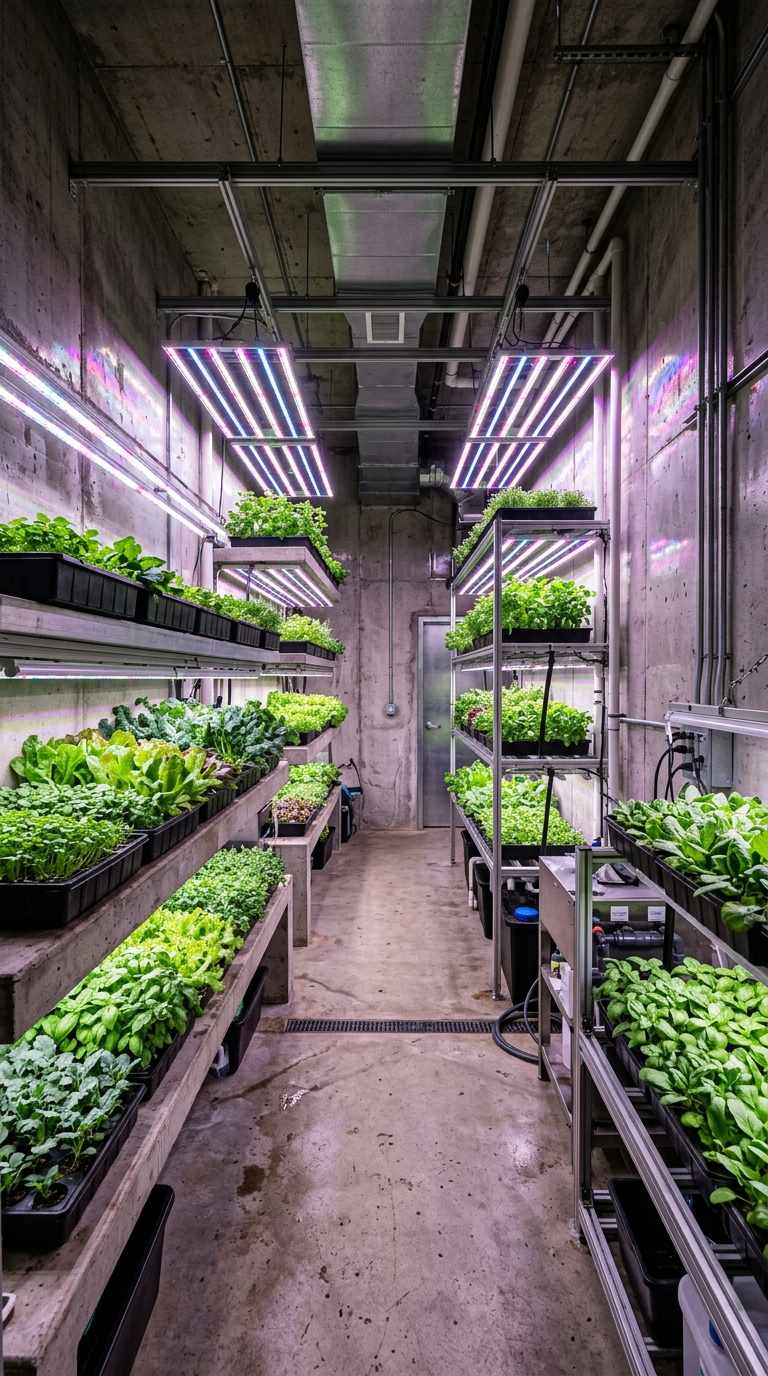
A compact indoor vertical garden room uses multiple tiers of black shelving lined with seedlings and baby greens below bright, evenly spaced LED grow lights inside a stark concrete room.
This space-saving design is ideal for year-round growing and quick propagation with precise light control.
Invest in adjustable height lights and quality hydroponic trays for best growth.
It’s a professional-grade setup that ambitious gardeners will appreciate to optimize yield in minimal square footage.
18. Raised Bed Market Garden Layout

Expansive grids of wooden raised beds stretch across a pastoral plot, surrounded by rustic fencing and outbuildings.
Each bed is planted densely with diverse vegetables in well-managed rows.
This market-style farm design maximizes planting while maintaining easily navigable pathways.
Raised beds improve soil drainage and prevent compaction from machinery or foot traffic.
Smaller garden plots can adapt this framework for succession planting and intensive growing schemes.
19. Modern Greenhouse Elevated Beds

Inside a sleek glass greenhouse, metal-framed elevated beds hold healthy peppers, tomatoes, and cucumbers organized in straight rows, bathed in sunlight filtering through tall windows.
Greenhouses extend your growing season and protect vulnerable plants from pests and weather extremes.
Elevating beds indoors supports better drainage and reduces bending strain.
Add automated watering systems and ventilation for a highly productive, low-maintenance vegetable haven.
20. Rolling Raised Beds for Urban Patios

Weathered wooden planters equipped with caster wheels line an urban patio built from stone pavers, filled with abundant herbs, lettuces, and cherry tomatoes.
The urban brick facade complements the garden’s rustic tones.
Mobile garden carts offer great flexibility for sunlight shifting, seasonal storage, and protecting plants from shade or wind.
This idea fits small city terraces and balconies where space is premium.
Ensure you choose sturdy wheels and weatherproof wood for year-round functionality.
21. Sleek Black Raised Bed Alley

A narrow garden path flanked on either side by black-painted wooden raised beds packed with diverse vegetables and herbs borders a modern home with a tidily fenced backyard.
Dark-colored beds can absorb additional heat, which warms soil faster in cooler seasons.
They also create a striking contrast drawing the eye along the garden’s length.
For a similar effect, use non-toxic, weatherproof paints and consistent planting themes to maximize visual unity.
22. Vertical Garden on Shipping Container

A creative re-purposing of a shipping container provides vertical wooden planters on multiple sides, overflowing with leafy greens, flowers, and herbs.
The container sits between several outdoor seating areas and blends rustic charm with urban agriculture.
Vertical planters save space, increase plant density per square foot, and add dramatic height to gardens.
This design works well for recycling industrial elements and creating multifunctional garden hubs.
Ensure adequate irrigation and choose hardy container-friendly plants for best outcomes.
23. Rooftop Raised Bed Garden With City Views

Rows of neat, wooden raised beds stretch out on a city rooftop patio, bursting with tomato vines, kale, and marigolds.
The iconic downtown skyline provides a striking backdrop against bright blue skies.
Rooftop gardens offer green oasis with easy access for urban residents.
Bed soil should be lightweight, well-draining, and nutrient-rich to support heavy crops.
Automated drip irrigation systems help reduce watering time.
Don’t forget regular fertilizing to maintain productivity in shallow soils.
24. Smart Raised Bed With Integrated Sensors

A modern wooden raised bed incorporates smart technology with soil moisture sensors, drip irrigation, and mounted grow lights.
The clean lines of the bed complement the architectural style of the home behind it.
Tech integration eliminates guesswork in watering and fertilizing schedules, minimizing waste and boosting yields.
Beginners and busy gardeners benefit by syncing apps with garden devices.
Look for weatherproof components and easy consult guides for installing smart systems in DIY beds.
25. Spiral Stone Herb Garden

A striking spiral wall built from smooth river stones creates tiered planting pockets filled with aromatic herbs and flowering plants.
The spiral structure anchors a charming modern farmhouse garden with native grasses planted around.
Spiral gardens maximize space by planting many microclimates,hot, cool, dry, shaded,in one compact footprint.
Rocks absorb heat and extend the growing season for sun-loving herbs.
Construct your own spiral with durable stones or bricks, remembering to layer soil by moisture preference from top to bottom.
26. Grid Raised Bed for Intensive Planting

A large wooden raised bed divided into a grid of small square sections contains various herbs and vegetables, all thriving in meticulously organized spaces.
The bed rests upon stone pavers, creating a neat paved garden area.
Grid planting helps with crop rotation and companion planting by giving each plant a dedicated cell.
It also aids tracking and maintenance.
Installing grids over your beds encourages precision and yields healthier plants with less overcrowding.
27. Gabion Basket Raised Beds

Modern gabion-style raised beds,cages filled with rocks,bring architectural weight while holding rich soil for abundant tomato vines and climbing nasturtiums.
Multiple stacked layers create a dramatic tiered effect in a hillside garden.
Gabions offer durable, erosion-resistant garden structures and excellent drainage.
The visual weight grounds the garden design beautifully in natural landscapes.
These beds require careful foundation and secure cages but last decades with minimal maintenance.
28. Saucered Terrarium Planters Indoors

A group of geometric glass terrariums hangs on delicate chains at various heights inside a sunny room, filled with succulents and miniature edible plants.
The light plays through the angles, adding modern elegance.
Terrariums provide year-round indoor greenery in limited spaces and are perfect for small herbs or microgreens.
Choose low-maintenance succulent varieties to minimize watering needs and position near bright windows.
Hanging designs release floor space and add visual intrigue.
29. Stone Terraced Vegetable Garden

Natural stone retaining walls create ascending terraces filled with leafy greens, kale, and seasonal vegetables against a backdrop of mature trees and mountains.
The rugged stone contrasts beautifully with lush green beds.
Terracing slows water runoff on sloped sites and allows layering of soil types and microclimates.
Wide steps and paths between terraces enable easy harvesting access.
Use local stone for better integration into the landscape and to support native wildlife.
30. Covered Raised Beds With Pergola

A sleek black metal pergola frames raised wooden beds filled with thriving leafy greens, providing shade and structure against a backdrop of forest greenery.
The stone pavers ground the garden with natural character.
Shade structures protect delicate plants from summer sun and extend seasonal usability.
A pergola can also support vine crops or climbing flowers for additional beauty.
Design pergolas using rust-resistant materials and position beds for the best sun-shade balance.
31. Wall-Mounted Indoor Vertical Garden

Inside a modern lobby or café space, a large vertical wall of modular planting trays filled with green and red leaf vegetables brings garden freshness to urban interiors.
Concrete columns and floor-to-ceiling windows create an industrial yet inviting background.
These living walls improve air quality and make vivid design statements.
For success, use modular trays with individual irrigation and moisture sensors.
Ideal locations have good indirect sunlight.
Vertical walls suit restaurants, offices, or homes with limited horizontal space.
32. Compact Wall-Mounted Outdoor Garden

A narrow multi-pocket wall planter clings to a home’s exterior wall, densely planted with romaine, kale, herbs, and other leafy greens.
The lush greenery softens the modern architectural façade.
This space-conscious option maximizes vertical growing area on sunny exterior walls and fits balconies or patios perfectly.
Waterproof backing and drip irrigation are critical for maintenance.
Choose shade-tolerant plants if the wall receives limited direct sunlight.
33. Window Box Gardens with Urban Vibe

Rustic wooden window boxes at several stories high overflow with cherry tomatoes, herbs, and leaf vegetables.
The concrete and glass exterior of the building along a busy sidewalk juxtaposes natural growth with urban grit.
Window boxes turn unused space into productive gardens and improve city living air quality.
Choose lightweight soil mixes and install reliable watering systems to prevent runoff.
Select trailing and compact plant varieties for maximum impact in narrow troughs.
34. Sinuous Boardwalk Through Vegetable Garden

A captivating wooden boardwalk winds sinuously through lush vegetable beds bordered by climbing beans and sunflowers.
Deep green forest trees encircle the space, suggesting a garden tucked into a woodland setting.
Curved paths create a journey-like experience and soften the hard edges of square beds.
Raised railings help you harvest without stepping on soil and guide visitors delightfully through the garden.
This design highlights landscaping’s power to inspire beyond functionality.
Leave a Reply