
Crabgrass can invade and ruin even the most carefully tended lawns.
In this definitive guide, you will learn how to identify crabgrass, understand its growth habits, and choose effective treatments to keep your turf healthy and vibrant.
We cover essential prevention, application techniques, and troubleshooting common mistakes.
Understanding Crabgrass and Turfgrass Differences

To effectively combat crabgrass, you need to recognize what sets it apart from your lawn’s healthy turfgrass.
Crabgrass is a broadleaf weed with coarse, light green, and hairy leaves, often sprawling in clumps.
In contrast, turfgrass such as Kentucky bluegrass has fine, smooth, dark green blades that grow upright and dense.
Knowing these anatomical differences helps you target treatments without harming desirable grasses.
Characteristics like visible midribs, leaf texture, and blade width can be subtle but essential features to identify.
For instance, crabgrass often shows a hairy surface and lacks the membranous ligule present in turfgrass.
Meanwhile, turfgrass holds a smooth surface with a folded vernation pattern, contributing to its resilience and appearance.
Misidentifying your grass can lead to applying herbicides that damage the lawn, so take time to compare these distinguishing traits.
Early identification allows for prompt intervention before crabgrass spreads extensively.
This approach helps maintain a lush and even lawn while minimizing the need for aggressive chemical treatments.
Understanding these anatomical and growth differences forms the foundation of crabgrass control.
It enables you to apply the right products with confidence, preserving healthy turf while eradicating invaders efficiently.
This section does not use images, but you can benefit from detailed botanical illustrations or labels to reinforce learning.
Effective Crabgrass Killers and Herbicide Selection

Choosing the right crabgrass killer is crucial for successful lawn care.
You need a product that targets crabgrass without harming surrounding grass species.
Pre-emergent herbicides work by preventing crabgrass seeds from germinating, ideal for spring application before weeds appear.
Post-emergent herbicides target actively growing crabgrass but require careful timing to avoid turf damage.
In the photo presented, a rustic wooden table holds a variety of products: a white gallon jug labeled “CRABGRASS DESTROYER,” a smaller spray bottle marked “SPOT WEED & CRABGRASS KILLER,” and a sturdy 1-gallon Chapin pump sprayer.
Work gloves lie alongside, emphasizing safety and precision.
This setting suggests preparation and careful handling of herbicides, key to preventing accidental lawn injury.
When selecting herbicides, look for formulations with active ingredients like quinclorac or fenoxaprop, which are effective on crabgrass but safer for common turfgrasses.
Spot treatments allow targeting small patches, reducing chemical usage and preserving beneficial plants.
Application tools such as pump sprayers ensure even coverage, crucial for the herbicide’s effectiveness.
The takeaway is to research products specifically labeled for crabgrass and suitable for your lawn type.
Combine this with proper application equipment and safety gear, as visualized in the photo, to maximize results and minimize risks.
Identifying Crabgrass in Your Lawn

Recognizing crabgrass early in your lawn is a critical step for effective control.
Crabgrass appears as coarse, light green leaves that spread flat along the ground in a star-like clump formation.
This aggressive growth pattern contrasts with the tighter, more upright blades of healthy turf, allowing crabgrass to outcompete other grasses for nutrients and space.
One image shows a close-up view of crabgrass in the lawn, highlighting its sprawling habit and serrated, hairy leaf blades.
Dew or moisture accentuates the rough texture of these broad leaves against the softer grass backdrop.
This detail is important because crabgrass spreads quickly in moist and warm conditions, indicating when intervention is most needed.
Misidentification can result in applying treatments too late or choosing ineffective methods.
Many weeds can appear similar, but the sprawling structure and coarse texture are distinctive crabgrass signs.
Regular inspection of your lawn during the growing season helps catch crabgrass when small, enabling more targeted, less invasive treatments.
Understanding how crabgrass visually dominates your lawn informs when and where to apply herbicides or manual removal.
This precise identification, supported by the clear visual in the photo, can save time and lawn vitality.
Applying Herbicides Safely and Effectively
Correct herbicide application is essential to kill crabgrass and protect your lawn.
Timing plays a vital role; pre-emergent treatments should be applied when soil temperatures reach 55 degrees Fahrenheit, often early spring.
Post-emergent herbicides are best used when the crabgrass is young and actively growing, generally early summer.
Application requires evenly covering affected areas following product label instructions to avoid chemical overuse or lawn injury.
The equipment shown earlier, including the pump sprayer, allows controlled, consistent spraying.
Spot treatment techniques minimize environmental impact and reduce chemical exposure to desirable plants.
Avoid applying herbicides before rain or heavy irrigation, as runoff can reduce effectiveness or contaminate water sources.
Protective gloves and clothing, seen in the photograph on the wooden bench, prevent skin irritation and accidental chemical spread.
It is essential to wash hands and equipment post-use to maintain safety.
The takeaway is to carefully follow label guidance, use appropriate tools, and consider weather conditions for herbicide application.
This ensures that crabgrass is effectively targeted while maintaining a healthy turf environment.
Dealing with Crabgrass Damage and Lawn Recovery

Even after herbicide treatment, crabgrass leaves behind visible damage in your lawn that requires attention.
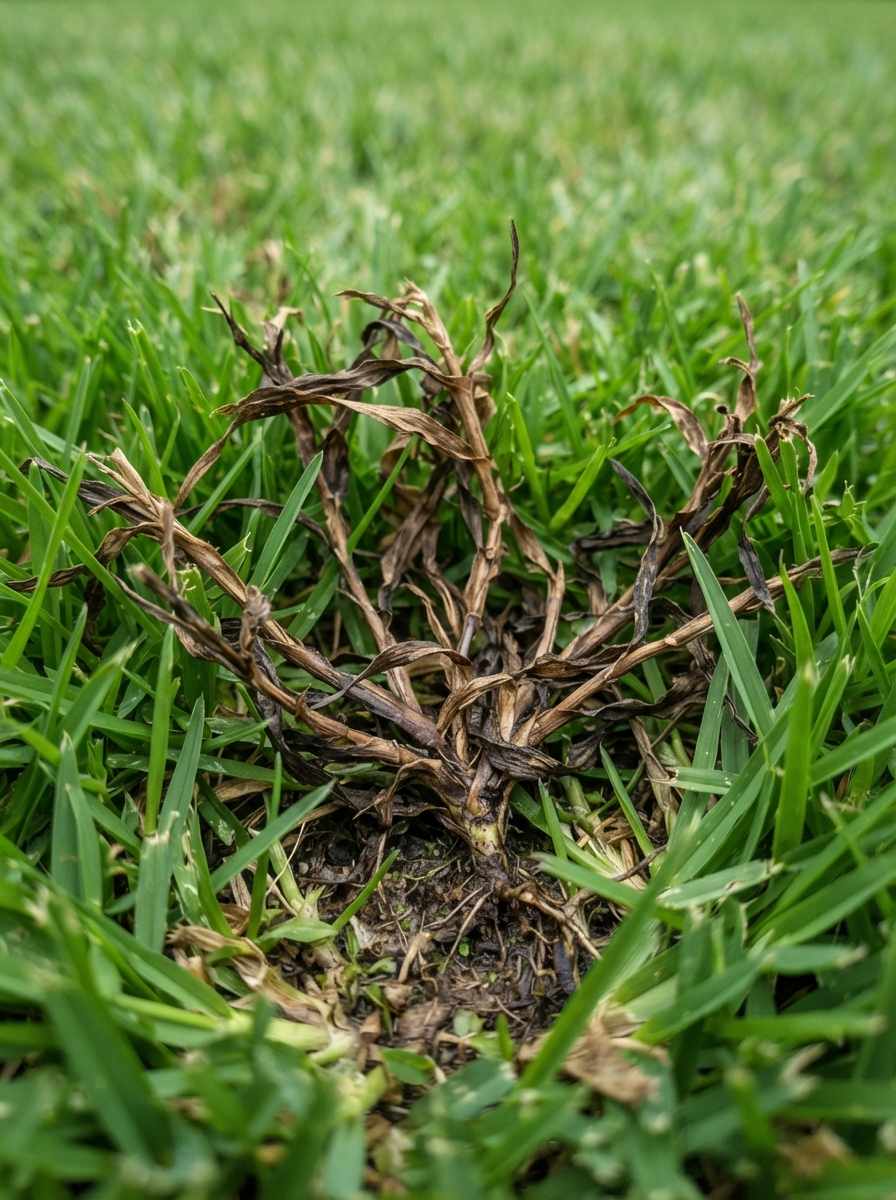
A photograph depicts a patch of dried, brown crabgrass stems amid fresh, green turfgrass.
This image highlights the aftermath of successful herbicide application where the weed is dead but the area must be restored.
Crabgrass kills off turfgrass through aggressive shading and nutrient competition, so recovery involves overseeding or patch reseeding to fill bare spots.
Soil preparation before reseeding, including raking dead material and loosening compacted soil, enhances seed germination.
Reseeding with the same grass species as the surrounding lawn maintains uniform color and texture.
Water the restored patches gently and regularly to encourage healthy root development without washing away seeds.
Avoid heavy foot traffic on newly seeded areas until grass establishes.
Timely lawn fertilization tailored to your grass type supports vigorous growth to outcompete future crabgrass invasions.
Understanding both the visible signs of damage and how to rehabilitate your lawn ensures long-term health.
The brown, brittle crabgrass remnants in the photo serve as a clear sign it is time to support lawn recovery efforts for a vibrant, even yard.
Common Mistakes in Crabgrass Control
Many lawn enthusiasts fall into common traps that hinder crabgrass management.
One typical error is using post-emergent herbicides too late, after crabgrass has become mature and more resistant.
Applying chemicals in drought-stressed or overly wet conditions also lowers effectiveness and risks damage to desired turf.
Another mistake is neglecting proper identification, leading to treatment of other weeds or damaging healthy grass.
Over-application of herbicides can cause chemical runoff and environmental harm, exceeding label recommendations without better results.
Skyrocketing weed resistance can occur when the same chemical is used repeatedly.
Skipping lawn care basics like proper mowing, watering, and fertilization also weakens turf’s ability to compete against crabgrass.
Thick, dense, and well-fertilized lawns are natural barriers to crabgrass invasion, making cultural practices as vital as herbicides.
By understanding these pitfalls, you can adjust timing, product choice, and lawn maintenance practices, setting yourself up for long-term success in crabgrass control.
Enhancing Lawn Health to Prevent Crabgrass
Prevention is the most effective strategy for managing crabgrass.
Promoting a strong, vibrant lawn through proper cultural practices minimizes crabgrass establishment and spread.
Mowing at the recommended height for your turfgrass species keeps sunlight levels low at the soil surface, limiting crabgrass seed germination.
Regular watering encourages deep roots and drought resistance, but overwatering creates favorable conditions for weeds.
Balanced fertilization with nitrogen, phosphorus, and potassium tailored to your grass type supports dense growth, effectively choking out crabgrass seedlings.
Soil testing can guide precise nutrient management for optimal conditions.
Aeration reduces compaction and increases oxygen availability to roots, enhancing turf resilience.
You can also overseed thinning areas with desirable grass to prevent crabgrass from filling gaps.
When combined with proper herbicide use, these practices make for an integrated, sustainable approach.
Focusing on holistic lawn health creates a formidable defense against crabgrass, saving effort, expense, and reducing chemical reliance in the long run.



Leave a Reply