
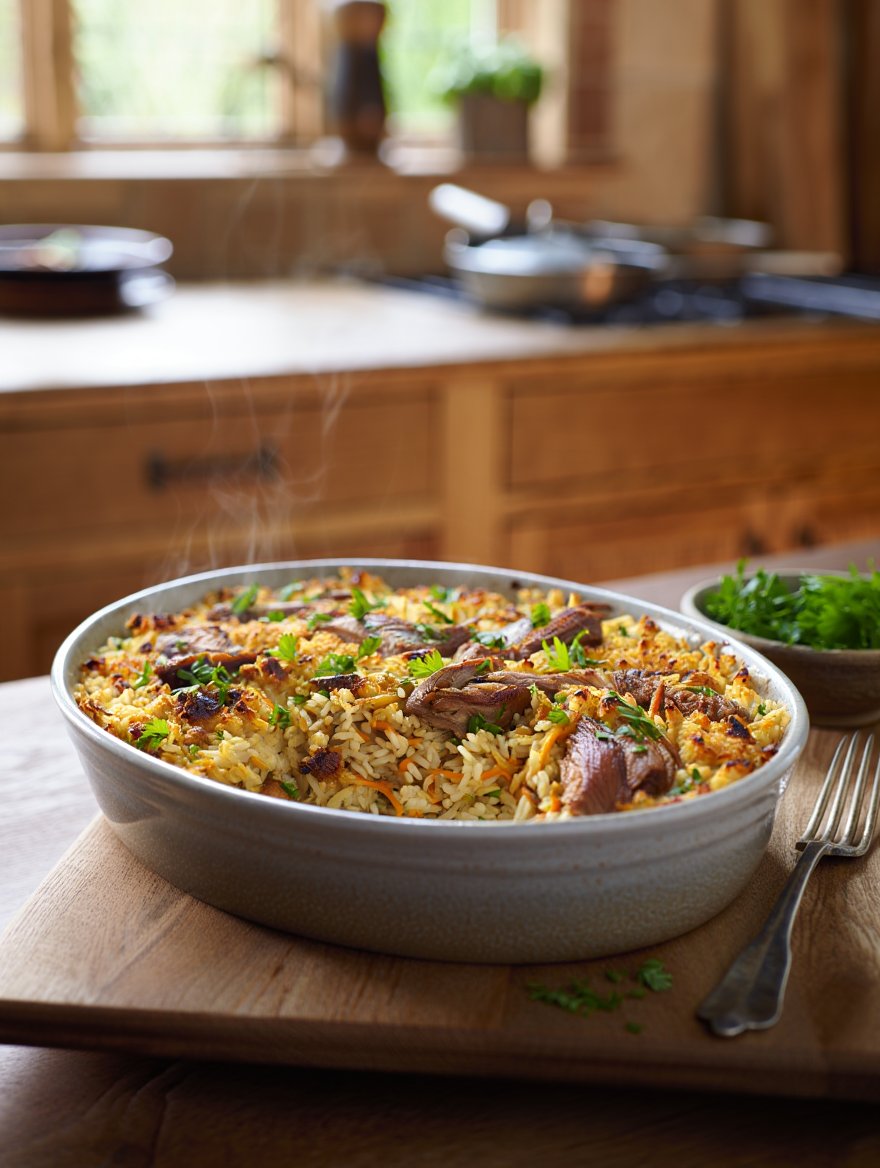
I vividly remember my first bite of duck rice casserole at a quaint restaurant during a cozy winter evening.
The rich flavors and melting textures instantly captured my heart.
In this article, I will guide you through creating your own hearty duck rice casserole that radiates warmth and comfort.
Exploring the Origin and Flavor Profile of Duck Rice Casserole
Duck rice casserole is a dish rooted in the culinary traditions of various cultures, often celebrated for its hearty and comforting nature.
Originating from places like Asia and European influences, this casserole combines the luxurious taste of duck with the humble satisfaction of rice.

I was surprised by how well the flavors melded together, lifting this dish to new heights.
The flavor profile of a hearty duck rice casserole is rich, savory, and deeply satisfying.
Using duck provides a unique taste that elevates the typical rice casserole to gourmet status.
I personally find the blend of spices and seasonings to complement the duck wonderfully, creating layers of flavor that dance on your palate.
A few standout ingredients make this casserole unforgettable.
Think garlic, thyme, and a zesty splash of wine to enhance the duck’s delectable essence.
When preparing this dish, you will notice how each ingredient interacts, resulting in a warm, inviting aroma that fills your kitchen as it bakes.
For success, I always recommend using fresh, high-quality ingredients.
The better your duck and vegetables, the more vibrant your casserole will turn out.
Don’t rush the seasoning process; it’s key to ensuring your dish is packed with flavor.
Gathering Essential Ingredients for Your Casserole

Before diving into preparation, it’s crucial to gather all your ingredients for a seamless cooking experience.
For this recipe, you will need duck legs or breasts, uncooked rice, stock, onions, garlic, and your choice of fresh herbs.
I recommend using long-grain rice for the best texture, as it holds up beautifully throughout the cooking process.
You will also want to include carrots, bell peppers, and perhaps some peas for a touch of sweetness and color.
Fresh herbs like thyme and rosemary give the dish an aromatic quality that is hard to resist.
If you enjoy a hint of spice, adding a pinch of red pepper flakes could be a delightful twist.
Do not forget your seasonings.
Salt, black pepper, and a splash of white wine are vital for enhancing the duck’s natural flavors.
I often keep a good quality stock on hand for the perfect base; homemade stock is even better if you can find the time.
Make sure to check your pantry for any additional spices and flavor enhancers.
Ingredients like soy sauce, ginger, or even a touch of orange zest can add a unique flair to your casserole.
Preparing your ingredients ahead of time will streamline the cooking process, making it more enjoyable.
Preparing Your Duck and Flavor Base with Care

Once you have gathered your ingredients, the next step is to prep your duck.
Begin by patting the duck pieces dry; this helps achieve a crispy skin when seared.
Season generously with salt and black pepper.
I find that letting the duck sit for about 15 minutes to absorb the seasoning enhances the flavor significantly.
Heat a large skillet over medium-high heat and add a splash of oil.
Once shimmering, add your duck skin-side down.

Allow it to sear for about 8 to 10 minutes until golden and crispy.
The rendered fat from the duck will contribute to the casserole’s richness, so don’t discard it,use it for sautéing your vegetables.
In the same skillet, reduce the heat to medium and add chopped onions and minced garlic.
Sauté them until fragrant and translucent, about 5 minutes.
This step builds the flavor foundation for your casserole.
I love this part; the combination of sizzling duck fat and aromatic vegetables really sets the stage for a delicious meal.
Once the onions are softened, add the diced carrots and bell peppers.
Allow them to cook for an additional 5 minutes, stirring occasionally.
Incorporating a splash of white wine at this stage will deglaze the skillet, lifting any brown bits from the bottom.
This enhances the flavor profile of the base, making it truly irresistible.
Layering Ingredients into Your Casserole Dish

Now that your flavor base is ready, it is time to assemble your hearty duck rice casserole.
Preheat your oven to 350 degrees Fahrenheit (175 degrees Celsius) while you prepare the dish.
In a large, greased casserole dish, spread the uncooked rice evenly across the bottom.
I like to use a mixture of jasmine and basmati rice for a delightful aroma and texture.
Next, carefully pour the sautéed vegetable mixture over the rice, spreading it evenly.
This will create a delicious layer that gives the rice plenty of flavor as it cooks.
Now, place the seared duck pieces on top, skin-side up, allowing the fat to baste the rice below as it cooks.

Pour in your choice of stock until everything is just covered, about 3 to 4 cups.
Feel free to add a splash more wine for extra depth.
I recommend tasting the stock; if it lacks flavor, consider seasoning it before pouring.
The liquid is essential for cooking the rice properly.
Finally, sprinkle freshly chopped herbs over the top.
Cover the casserole dish tightly with foil or a lid, ensuring no steam escapes.
This steam will create a moist cooking environment, allowing the rice to absorb all the delicious flavors as it cooks.
Serving Suggestions and Flavor Variations to Delight

After about one hour of cooking, uncover your casserole and check for doneness.
The rice should be tender, and a fork should easily pierce the duck meat.
If you desire an extra crispy skin, broil the dish for an additional 3 to 5 minutes.
Once done, allow it to rest for about 10 minutes before serving; this helps all the flavors settle.
Serving this hearty duck rice casserole is straightforward; simply scoop a generous portion onto a plate.
The inviting presentation, with colorful vegetables and decadent duck perched on top, is sure to impress.
I always serve this with a simple green salad to balance the richness of the casserole.
For variations, consider swapping in different proteins like chicken or even a plant-based option like mushrooms or tofu.
You can adjust the seasoning to suit your taste, perhaps adding some smoked paprika or a hint of lime juice for brightness.

Experimenting with seasonal vegetables is also a fantastic way to keep this dish fresh and exciting.
Lastly, don’t forget about leftovers!
This casserole can be reheated beautifully, making it a perfect meal prep option.
Store it in an airtight container in the fridge for up to four days, and simply reheat in the oven.




Leave a Reply